

More news on this day
Norwegian Aqua, Norwegian Cruise Line’s newest Prima Plus class vessel, is set to reach New York later in the day than many departing cruisers expect, prompting questions about why its inaugural 2026 turnaround in the United States is running so close to the clock.
Get the latest news straight to your inbox!
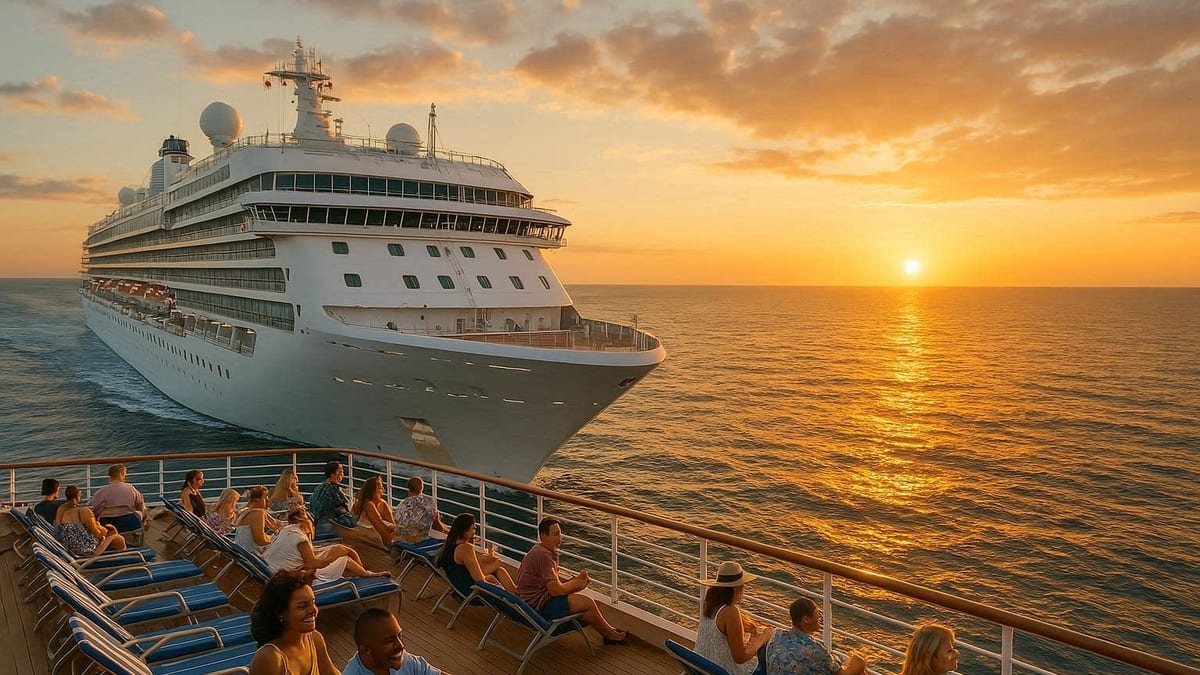
Image by International Cruise News: Latest Cruise Line & Cruise Ship News
A Compressed Window Between Miami and New York
Publicly available schedule data and cruise forums indicate that Norwegian Aqua is due to disembark guests in Miami on April 16, 2026, before repositioning to New York for a new series of Bermuda cruises beginning April 18. That timing leaves roughly two days for the 156,300‑gross‑ton ship to clear passengers in Florida, sail up the U.S. East Coast and prepare for boarding in Manhattan.
For many large cruise ships, the run from South Florida to New York typically takes close to two full days at sea at normal operating speeds. With port clearance, provisioning and crew changeover included, the margin for an early morning arrival narrows. Norwegian Aqua’s schedule therefore leaves limited flexibility, making an afternoon appearance at the Manhattan terminal more likely than a dawn tie‑up.
This compressed repositioning window appears to be at the heart of the late‑arrival advisories that have circulated to booked guests. Rather than a last‑minute operational problem, the timing is largely baked into how the line has structured the ship’s spring deployment between its Caribbean and Bermuda seasons.
Guest Emails Flag an Unusually Late Embarkation Start
In recent days, travelers booked on Norwegian Aqua’s April 18, 2026 departure from New York have shared copies of email notices on cruise discussion boards. The messages describe an “important update” to embarkation, stating that the vessel is scheduled to arrive at the pier in the afternoon and that the cruise terminal will remain closed during the morning, with doors not opening before 3 p.m.
The communication further emphasizes that guests should arrive only at the time selected during online check‑in. Commenters familiar with Norwegian Cruise Line’s usual practices note that most voyages from New York start processing passengers late in the morning, with many arriving ahead of their assigned slot and often being accommodated. In this case, travelers are being told plainly not to come early, underscoring how tight the turnaround is expected to be.
While late afternoon embarkations are not unprecedented for the industry, the level of advance detail is drawing notice. For first‑time cruisers, the idea that check‑in halls will be locked until mid‑afternoon in one of the world’s busiest cruise gateways has fueled speculation that something more serious may be wrong with the ship. Current information, however, points toward scheduling and logistics rather than mechanical trouble.
A Ship With a Recent History of Schedule Shifts
Norwegian Aqua has already seen its share of timetable adjustments since entering service. Industry coverage of the ship’s 2025 transatlantic crossing from Southampton to the United States documented a significant change: instead of concluding in Boston on April 4, that maiden voyage was extended by three days and rerouted to terminate in New York on April 7, reportedly due to severe weather concerns over the North Atlantic.
Reports from that voyage describe Norwegian Cruise Line offering full refunds to guests who chose to cancel and modifying air arrangements for travelers who had planned to fly home from Boston. The company framed the longer sailing and the diversion to New York as a safety‑driven decision, but the episode highlighted how quickly an inaugural schedule can shift when conditions do not cooperate.
Subsequent months brought further minor adjustments typical of a new ship settling into service. Cruise commentary has referenced delayed dockings at individual ports due to berth availability and occasional late starts to embarkation when customs processing or terminal congestion slowed operations. These incidents have contributed to a perception among some travelers that Norwegian Aqua’s itineraries are more fluid than those of long‑established fleetmates.
Operational and Infrastructure Pressures in a Tight Market
The current New York timing issues are unfolding at a busy moment for the broader Norwegian fleet and for East Coast cruise infrastructure in general. The line has been taking delivery of new Prima‑class ships, including Norwegian Luna in early 2026, while also adjusting deployment plans and cancelling select sailings on older vessels in response to changing market conditions. Each redeployment ripples through terminal allocations, pilotage slots and berth reservations at major U.S. ports.
Separately, cruise industry coverage has pointed to pier and terminal work at several North American facilities, as operators upgrade or expand to handle larger, more complex ships. Construction‑related limits at some private island piers and regional terminals have already prompted schedule tweaks on other Norwegian itineraries. Although New York’s core cruise facilities remain in regular use, they are operating within a crowded calendar that leaves limited slack for last‑minute changes.
Within that context, Norwegian Aqua’s late same‑week arrival from Miami appears to be one of many moving pieces in a tightly choreographed network. Rather than risk early‑day congestion in the terminal or a repeat of chaotic, last‑minute delays seen on other ships, the line is signaling a later start and leaning on assigned check‑in times to spread arrivals into the evening.
What Passengers Can Expect on the Day
For travelers booked on Norwegian Aqua’s April 18 New York departure, the practical outcome of this unusually late arrival is a shifted rhythm to embarkation day. With the ship expected alongside in the afternoon and terminal doors scheduled to open no earlier than mid‑afternoon, guests are being encouraged to treat the morning as free time in the city rather than an opportunity to line up at the pier.
Experienced cruisers commenting on forums suggest that a later boarding could have upsides: staterooms are more likely to be ready on arrival, public spaces may be less crowded during the initial rush, and luggage handling can be staggered more evenly. The trade‑off is a shorter first evening onboard before departure, and the need for travelers to plan meals and luggage storage ashore if they arrive in New York early.
Industry observers point out that Norwegian’s ticket terms and conditions give the company broad discretion to adjust arrival and departure times for reasons ranging from weather to port operations. In this case, the line appears to be using that flexibility proactively, steering expectations well ahead of sailing. For Norwegian Aqua, a ship still building its reputation in North American waters, a smooth if later‑than‑usual first embarkation in New York may be the priority over squeezing in a few extra hours at the pier.