

More news on this day
While geopolitical tensions, sluggish global growth and shifting travel patterns weigh on many destinations, Thailand’s Andaman coast is charting a different course, with Phuket and neighboring Phang Nga reporting some of their strongest tourism numbers on record.
Get the latest news straight to your inbox!
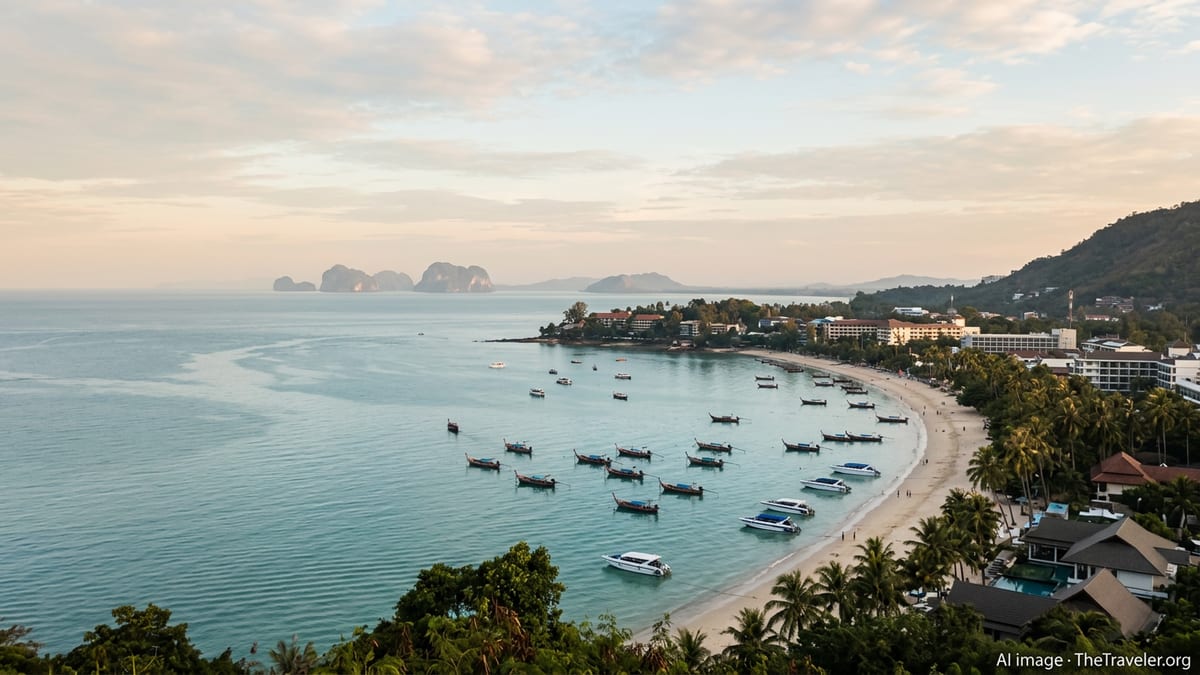
A Safe, Stable Haven in an Uncertain World
Publicly available tourism data show that Thailand welcomed around 35.5 million foreign visitors in 2024, placing it among the world’s busiest destinations even as many countries grappled with weaker demand and higher travel costs. Against this backdrop, Phuket and Phang Nga have emerged as stand-out beneficiaries, helped by Thailand’s reputation for relative political stability in recent years and a perception among travelers that the country offers good value at a time of inflation and currency volatility in other markets.
Travel industry reporting indicates that long-haul travelers in particular are seeking destinations that feel predictable, connected and easy to navigate, with robust healthcare and well-tested tourism infrastructure. Phuket, long one of Thailand’s most developed resort hubs, fits that profile closely, with a dense network of hotels, hospitals and transport links that many visitors view as a buffer against wider global uncertainty.
Regional comparisons also play a role. Some competing beach destinations in the Middle East and parts of Europe have been affected by security concerns, higher prices or capacity constraints. Analysts note that this has redirected both charter and scheduled capacity toward Thailand’s Andaman coast, where operators see resilient demand and a clear track record of absorbing large visitor volumes.
At the same time, Thailand’s decision to prioritize “value over volume” has encouraged investment in higher-end products in Phuket and Phang Nga, from branded residences to upscale eco-resorts. This strategy is attracting travelers who are willing to spend more per trip as they consolidate long-haul holidays amid global economic headwinds.
Record Arrivals Put Phuket Back at the Top
Phuket’s recovery has not only been strong, it has been unusually rapid. Market reviews from tourism consultancies and provincial data compiled in 2024 and 2025 indicate that international arrivals to Phuket grew by roughly 23 percent in 2024 compared with the previous year, reaching about 8.65 million visitors and pushing tourism revenue to an estimated 14 billion US dollars, the highest of any Thai province.
Subsequent reports from local tourism associations show that this momentum has carried into 2025 and early 2026. One summary of airport and hotel data points to more than 5.8 million visitors between January and May 2025 alone and a new daily record of nearly 400 flights and over 70,000 passengers handled at Phuket International Airport on a single day in early 2026. Authorities have set a working target of around 14 million annual visitors for Phuket, suggesting confidence that the island can sustain volumes close to, or above, pre-pandemic peaks.
The composition of Phuket’s market has also shifted in ways that support resilience. Hotel and tourism market reviews note that European and Russian travelers have helped offset a softening in Chinese arrivals, while India, the Middle East and Southeast Asian neighbors are supplying growing numbers of regional visitors. This diversified mix reduces exposure to any single source market and spreads demand more evenly across seasons.
On the ground, the impact is visible in hotel performance indicators. Industry analyses for late 2024 and early 2025 point to rising average daily rates and occupancy levels across Phuket’s major beach districts, while a surge in residential-led hospitality projects suggests that visitors are staying longer and, increasingly, buying into the destination.
Phang Nga’s Rise From Quiet Neighbor to Hot Ticket
Just north of Phuket, Phang Nga has transformed from a quieter alternative into one of Thailand’s fastest-growing coastal provinces. A dedicated hotel and tourism market review released in May 2025 reported that Phang Nga recorded more than 4.1 million guest arrivals at accommodation establishments in 2024, a year-on-year increase of 23 percent. European travelers accounted for nearly four out of five international visitors, underlining the province’s growing appeal as a long-haul leisure destination.
The same analysis highlighted that Khao Lak, Phang Nga’s best-known resort strip, achieved a 30 percent jump in revenue per available room compared with 2019, with occupancy in the wider province climbing to around 79 percent in 2024. Those figures indicate not just a rebound, but an expansion beyond pre-pandemic performance.
Part of Phang Nga’s success lies in its positioning. Travelers looking to avoid the densest crowds of Phuket can reach Khao Lak and the mainland coast in little more than an hour by road from the island’s international airport. Once there, they gain access to quieter beaches, national parks and offshore attractions such as the Similan Islands, without sacrificing connectivity or service standards.
Real estate trends are amplifying that shift. Industry reports describe a steady appreciation in land values in Phang Nga driven by new luxury resorts, branded residences and villa developments, alongside planned infrastructure such as an Andaman-region airport and improved road links from Phuket. That combination is turning the province into a natural extension of the Phuket tourism ecosystem rather than a secondary option.
Visa Policies and Connectivity Give Thailand an Edge
Policy changes at the national level have been another decisive factor drawing visitors to Phuket and Phang Nga during a period of global uncertainty. Thailand has pursued a more liberal visa regime, expanding visa-free access to around 90 countries and offering temporary waivers or simplified procedures for several key markets. A reciprocal visa exemption agreement with China that took effect in March 2024, along with relaxed entry for markets such as Russia, India and parts of Europe, has lowered the friction for long-haul and regional travelers alike.
Apart from easing paperwork, these policies have sent a signal that Thailand is open and competing actively for international tourism. Airlines and tour operators have responded by increasing capacity into Phuket, which functions as the main international gateway for both the island and Phang Nga. Industry data show that charter and scheduled flights from Europe, Russia and the Middle East have expanded steadily over the past two winter seasons, helping fill hotels even as global economic sentiment has cooled.
Improved intra-Asian connectivity has further strengthened Phuket’s hub role. Low-cost carriers linking the island with secondary cities in India, Malaysia, Singapore and Vietnam are channeling shorter-stay visitors into the Andaman coast, while domestic routes from Bangkok and Chiang Mai ensure a consistent base of Thai travelers. This web of connections allows Phuket and Phang Nga to draw from a wide catchment area at a time when some destinations remain reliant on one or two long-haul markets.
Digitalization has also played a supporting role. The rollout of electronic arrival processes and the gradual replacement of paper forms with digital systems have shortened immigration queues at major Thai airports, at least relative to the peak congestion seen during reopening. For travelers navigating volatile global conditions, smoother border formalities are another incentive to choose well-connected hubs like Phuket.
From Short Beach Breaks to Longer Lifestyle Stays
Beyond headline arrival numbers, behavioral shifts are reshaping how visitors use Phuket and Phang Nga. Market intelligence from hospitality firms suggests that a growing share of arrivals are combining work and leisure, taking advantage of Thailand’s relatively affordable cost of living, upgraded broadband access and extensive stock of serviced apartments and villa rentals.
Developers have responded with a pipeline of branded residences, mixed-use resorts and condominium projects designed to accommodate longer-stay guests. In Phuket, analysts describe “residential-led hospitality” as a defining trend, with traditional hotel operators partnering with property developers to offer ownership options that can be placed into rental pools. Phang Nga is now seeing similar models emerge around Khao Lak and other coastal districts.
These structural changes help explain why Phuket and Phang Nga are performing strongly even as Thailand’s overall arrivals have shown signs of softening compared with 2024. Longer stays and higher per-visitor spending can offset modest declines in headline visitor counts, making the Andaman coast more resilient to global economic swings or temporary drops from individual source markets.
At the same time, both provinces are placing more emphasis on events and experiential tourism. Cultural festivals, sports competitions, marine conservation activities and the Thailand Biennale contemporary art program in Phuket are designed to spread demand across the calendar and broaden the appeal beyond traditional sun-and-sea packages. For travelers seeking meaningful experiences during a turbulent period for global travel, those layers of culture and nature are proving a powerful draw.