

More news on this day
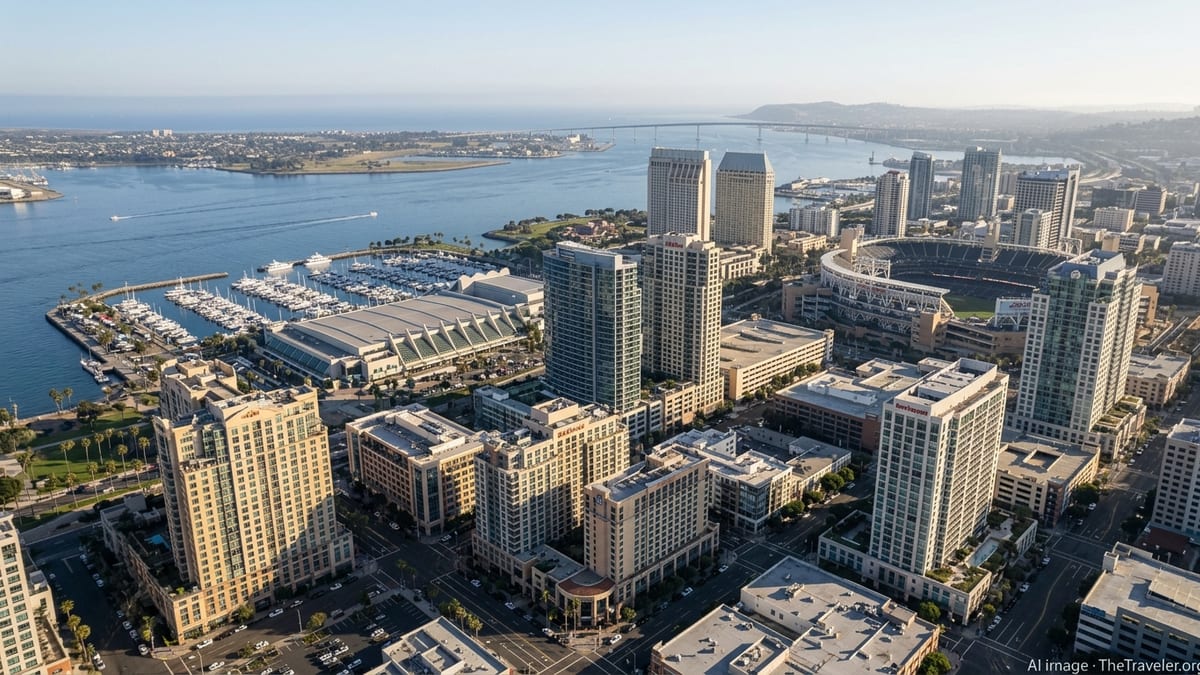
San Diego’s hotel market is attracting renewed attention from investors, as fresh data on visitor spending, room demand and new development confirm the city’s reputation as one of the strongest and most resilient lodging destinations in the Western United States.
Get the latest news straight to your inbox!
Tourism Fundamentals Remain a Powerful Draw
Recent tourism figures show why investors continue to favor San Diego over many competing coastal markets. Publicly available information from the San Diego Tourism Authority indicates the region hosted roughly 32 to 32.5 million visitors in 2024, with visitor spending approaching or exceeding the mid-teens in billions of dollars. That spending supports tens of thousands of jobs and feeds a robust base of demand for hotels across price points, from beachfront resorts to urban select-service properties.
Industry research from local tourism organizations also highlights that visitor spending has set or neared record highs, even when total visitor volumes have not fully surpassed pre-pandemic peaks. Analysts note that travelers are staying slightly longer and spending more per trip, which translates into higher revenue per available room and more consistent occupancy for hotel operators.
San Diego’s mix of demand drivers further reduces volatility for investors. The destination combines year-round leisure travel, a well-established convention and events calendar, nearby military installations, and a growing base of life science and technology businesses. This combination helps smooth out seasonal swings and cushions the lodging market during broader economic slowdowns.
For investors comparing West Coast cities, that stability stands out. While some major urban markets have struggled to fully rebuild their visitor base, San Diego’s balance of beaches, cultural attractions, sports, and business travel has allowed local hotels to maintain comparatively strong occupancy and rate performance.
Investment Reports Highlight Competitive Returns
Recent analysis from hospitality consulting firm HVS describes San Diego as one of the West Coast’s most attractive hotel investment markets, citing resilient performance and a diversified economic base. According to this research, investors are responding to the market’s ability to sustain room rates while gradually expanding supply, particularly in waterfront and convention-oriented submarkets.
Separate coverage of statewide hotel sales shows that San Diego has outperformed some other major California destinations in terms of transaction activity and pricing. In survey data on 2023 hotel sales, San Diego registered an increase in total dollar volume even as the number of individual deals declined, a pattern that suggests larger and higher-value assets have been trading hands at relatively strong prices.
Industry observers point out that this pattern reflects confidence in long-term cash flows rather than speculative bets on rapid appreciation. Investors are increasingly focused on markets where steady tourism demand and constrained new supply can support durable income streams, and San Diego’s recent transaction history indicates that many see the region meeting those criteria.
In addition, lenders and institutional capital providers have generally viewed the San Diego market favorably compared with other urban California locations. Publicly available commentary in business media indicates that debt and equity remain available for well-located projects, even as financing terms have tightened nationwide.
New Development and Infrastructure Shape the Next Wave
San Diego’s pipeline of new hotels and tourism infrastructure is also influencing investor sentiment. One of the highest-profile recent openings is the Gaylord Pacific Resort and Convention Center in Chula Vista, which debuted in May 2025 with approximately 1,600 rooms and extensive meeting space. Industry coverage notes that the property is now among the largest hotels in California, signaling confidence in the region’s ability to attract major group and convention business.
Beyond large-scale resorts, adaptive reuse projects are reshaping parts of downtown. Plans reported for the conversion of Tower 180, a 25-story office building on Broadway, into a dual-branded Hyatt Place and Hyatt House illustrate how investors are repositioning older commercial assets into lodging to capture demand around the city center, waterfront and forthcoming transit improvements.
Hospitality analysts point out that while such projects add rooms to the market, the overall pipeline remains measured relative to the region’s size and demand trends. HVS research anticipates moderate growth in lodging demand in 2026, with stronger gains projected later in the decade as group travel continues to normalize and airport and convention-related upgrades take hold.
These investments are occurring alongside broader tourism-focused initiatives by regional marketing and tourism districts, which allocate hotel fee revenues to attract major events and sports tournaments. Recent reporting notes that events ranging from college football games to emerging sports competitions are being used to fill rooms in need periods, supporting year-round occupancy levels.
Economic Diversity and High-Value Sectors Support Resilience
Investors also point to San Diego’s underlying economy as a key reason for the market’s appeal. Public documents and economic reports emphasize the region’s sizable life sciences, defense and research sectors, anchored by institutions such as the University of California San Diego and a concentration of biotech firms. These industries provide a steady stream of business travelers and long-stay guests who bolster midweek demand.
Military and defense-related activity plays a similar stabilizing role. The presence of major naval facilities and defense contractors generates recurring government and contractor travel, which helps keep select-service and extended-stay properties near bases and industrial corridors performing consistently even when leisure demand softens.
At the same time, San Diego’s growing profile as a technology and innovation hub is drawing conferences, investor meetings and corporate retreats that benefit higher-end hotels. Industry research indicates that as these sectors expand, they often cluster near existing amenities and waterfront districts, tightening demand around neighborhoods that already command premium room rates.
For hotel investors, this economic diversity reduces dependence on any single tourism segment. It can also support a range of asset strategies, from luxury resorts catering to executive retreats to limited-service brands targeting project-based travelers in suburban office and research parks.
Policy Shifts and Cost Pressures Factor into Investment Decisions
Despite its advantages, San Diego is not without challenges for hotel owners, and current policy developments are closely watched by investors. In 2025, the City Council approved a phased increase in the minimum wage for hospitality and tourism workers to 25 dollars an hour, a roughly 45 percent rise over the general city minimum wage. Reporting from regional outlets indicates that the higher wage will be implemented over several years and will affect employees at larger hotels and major attractions.
Industry groups and business organizations have raised concerns about the effect of higher labor costs on operating margins, particularly for properties with significant staffing requirements. However, some analysts note that San Diego’s ability to maintain relatively high average daily rates, combined with strong occupancy, may help many hotels absorb increased expenses more easily than in lower-rated markets.
Hotel investors are also monitoring legal and political developments surrounding tourism marketing assessments and transient occupancy tax revenues, which fund destination promotion and city services. While disputes over funding mechanisms have surfaced periodically, court decisions to date have generally allowed key tourism marketing programs to continue, preserving support for visitor demand that benefits the lodging sector.
These policy shifts add complexity to underwriting and asset management, but they have not yet altered the fundamental view among many institutional buyers that San Diego offers a favorable mix of revenue potential and long-term market resilience compared with other coastal U.S. cities.