

More news on this day
Santiago, the Chilean capital long treated as a gateway to Patagonia or the Atacama Desert, is increasingly attracting travelers who are choosing to stay put and explore it slowly and alone, drawn by a mix of relative safety, efficient transport and a laid-back urban culture that suits independent exploration.
Get the latest news straight to your inbox!
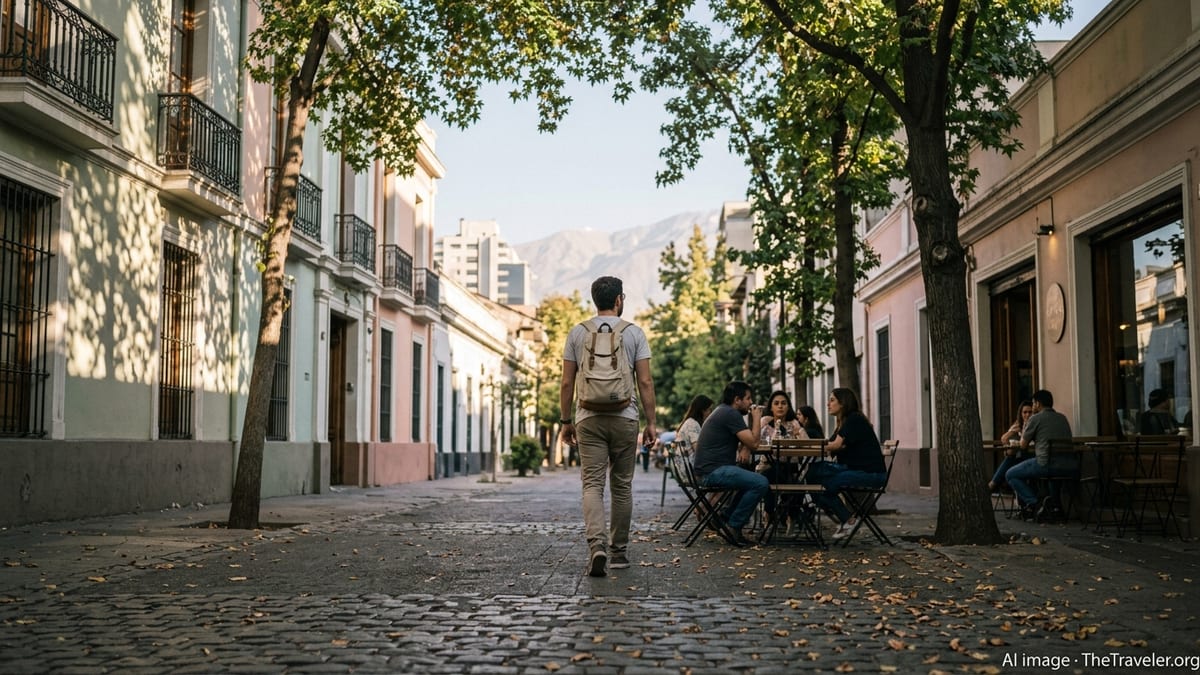
A Capital City Where Solo Travel Feels Manageable
For many first-time visitors to South America, big cities can feel overwhelming. Publicly available information on Chile’s tourism rebound in 2024 and 2025 points to a steady rise in international arrivals, with Santiago functioning as the main entry point and hub for onward travel. Yet a growing share of visitors are opting to dedicate more days to the city itself, treating it less as a transit stop and more as a base for solo urban travel.
Recent assessments of Chile as a destination describe it as one of the region’s more stable and orderly countries, and Santiago reflects that reputation. Solo travelers typically encounter familiar infrastructure, clear signage and widely used digital payment systems. Spanish is dominant, but service staff in hotels, major museums and many cafes have at least basic English, which lowers the barrier for those exploring independently.
Reports from travel analysts note that visitor growth is pushing urban authorities and tourism operators to keep improving central areas, public spaces and lighting. For solo travelers, especially those new to Latin America, that translates into a city center that feels busy but generally navigable by day, provided common-sense precautions are followed around valuables and phones.
Social demonstrations and petty theft are still mentioned in most safety briefings, particularly in some central districts and around transport hubs. However, guidance aimed at foreign visitors consistently classifies Santiago as suitable for solo travel when travelers stay informed about current events, avoid isolated streets at night and rely on reputable taxis or ride-hailing services after dark.
Neighbourhoods That Reward Exploring Alone
The appeal of solo travel in Santiago lies in its walkable neighborhoods, each with a distinct rhythm. In and around Barrio Lastarria, a compact area of restored townhouses, leafy plazas and galleries, solo visitors can spend a full day moving between museums, independent bookstores and sidewalk cafes without needing a car or tour. The area’s density of dining options makes it easy to eat alone without feeling out of place.
Across the Mapocho River, historic Barrio Bellavista, set between the river and San Cristóbal Hill, is better known for nightlife, street art and live music. During the daytime, its murals, handicraft markets and tree-lined streets attract independent travelers with cameras and sketchbooks. Guides aimed at female and solo visitors generally recommend enjoying Bellavista in daylight or early evening and using registered transport for late-night returns.
Further east, districts such as Providencia and Ñuñoa are frequently highlighted in travel coverage as comfortable bases for longer solo stays. These residential areas mix mid-rise apartment blocks with coffee shops, co-working spaces and small parks, creating a softer, more local-feeling alternative to the high-rise financial quarter of Las Condes while remaining well linked to the metro.
For travelers who enjoy mixing city and nature, Santiago’s geography is another advantage. San Cristóbal Hill, reachable from Bellavista by funicular or by foot, offers panoramic views of the Andes-framed skyline, while the Metropolitan Park’s trails provide low-commitment hikes that are popular with solo joggers and walkers in daylight hours. On clear days, the contrast between the snow-capped cordillera and the dense city below is one of the highlights of an unhurried solo itinerary.
Getting Around: Public Transport, Payments and Practicalities
Santiago’s integrated public transport system is a key reason the city works well for solo travelers. The metro network now spans seven lines and more than 140 stations, linking central neighborhoods with residential zones and major bus terminals. Buses fill in the gaps, and both are unified under the Red Metropolitana de Movilidad system, which uses the reloadable Tarjeta bip contactless card for fare payments.
Recent updates from the city’s transport operators describe new bip card vending machines at the international airport and continued integration across buses and metro, allowing travelers to transfer within a set time window on a single fare. For solo visitors, especially those on longer stays or tight budgets, this means predictable costs and the ability to move flexibly between districts without relying on taxis.
Airport connections are another practical advantage. Publicly available guides point to frequent airport buses linking Arturo Merino Benítez International Airport with key urban terminals, where metro lines continue into central neighborhoods. Ride-hailing platforms operate legally and are widely used by locals, giving solo travelers backup options for late-night arrivals or departures.
Digital payments are deeply embedded in daily life in Santiago, with contactless cards and mobile payments accepted in most supermarkets, pharmacies and large cafes. Smaller neighborhood kiosks and markets still work heavily in cash, so solo travelers are advised to withdraw pesos from bank ATMs on arrival and avoid carrying large sums. Tap water in much of the city is treated and generally considered potable, which simplifies day-to-day logistics for independent travelers.
Safety, Seasonality and When to Go Alone
Current safety advice for Chile emphasizes that the country is broadly safe for tourism while noting that Santiago, like any large metropolis, has areas where visitors should remain alert. Travel advisories typically recommend that solo travelers avoid flashing expensive electronics, keep bags zipped and close to the body, and stay cautious around busy bus stations and certain stretches of the historic center after dark.
Neighborhood-level information shared in travel forums and city guides often singles out sectors such as parts of Santiago Centro and Estación Central as places where solo visitors may feel less comfortable at night due to opportunistic crime. At the same time, these same sources highlight that thousands of international students, digital workers and long-stay visitors live independently across the city, including women traveling alone, by following local habits and sticking to well-lit, populated streets.
Seasonality also shapes the solo experience. Santiago sits in a Mediterranean climate zone, with hot, dry summers from roughly December to March and cooler, sometimes smoggy winters. For walking-focused itineraries, shoulder seasons such as late March to May and September to November are often described as ideal, with milder temperatures and less crowded public spaces. During the Southern Hemisphere summer holidays, some residents leave the city, subtly changing the energy of central districts.
Chile’s position outside major tropical storm belts and its relatively robust infrastructure mean that weather-related disruptions in Santiago itself are uncommon, though winter rain can occasionally affect air quality and views of the Andes. Solo visitors who hope for clear mountain vistas are advised to plan multiple days in the city to increase their chances of a pollution-free horizon.
Day Trips and Longer Stays From a Solo Base
One of Santiago’s biggest advantages for solo travelers is how easily it links to other parts of central Chile. Frequent buses connect the capital to coastal cities such as Valparaíso and Viña del Mar, allowing independent visitors to make day or overnight trips without renting a car. Intercity bus terminals are reachable by metro, and published timetables show departures throughout the day and evening.
Within the metropolitan region, wineries in the Maipo and Casablanca valleys market tastings and tours that can be booked online, many of which include transport from Santiago. While organized excursions are not strictly necessary for experienced independent travelers, they can be appealing to solo visitors who prefer not to navigate rural transport alone yet still want a low-stress way to experience Chile’s wine culture.
Travel trend reports indicate that Santiago is also emerging as a multi-week base for remote workers, with an expanding supply of serviced apartments and co-working spaces in districts such as Providencia, Ñuñoa and Las Condes. Reliable broadband, an increasing number of cafes with work-friendly setups and a relatively stable political environment are frequently cited reasons for choosing the Chilean capital over some of its regional peers.
For solo travelers willing to look beyond the better-known capitals of the continent, Santiago offers a mix of urban comfort, mountain scenery and authentic neighborhood life that is well suited to slow, independent exploration, whether for a long weekend or a longer stay.