

More news on this day
As peak summer fares and crowded hubs push transatlantic prices higher, Saudia Airlines is emerging as an unexpectedly savvy choice for US travelers heading to India, combining competitive fares with a unique Saudi stopover program that folds visas, hotel nights and family-friendly comforts into a single long-haul itinerary.
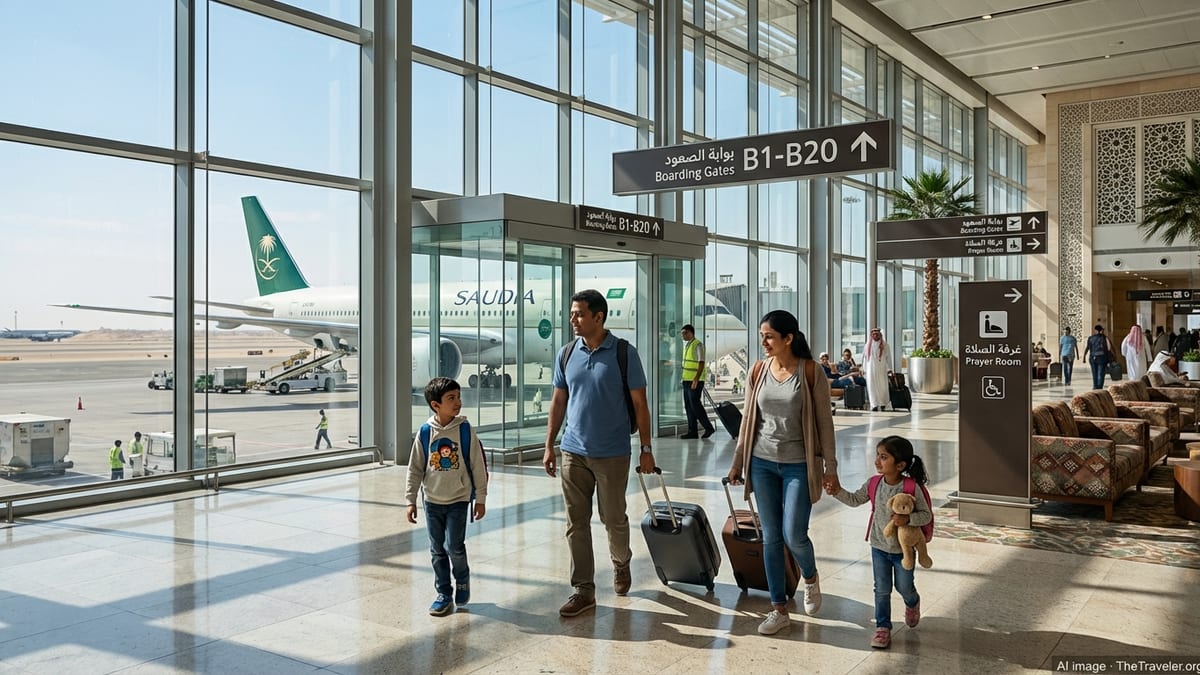
A New Middle Eastern Connector for Price-Sensitive US–India Travel
Saudia, the national carrier of Saudi Arabia, has steadily expanded its long-haul network between North America and the Indian subcontinent, positioning itself as a quieter alternative to the big Gulf superconnectors. For US travelers bound for major Indian cities, itineraries via Jeddah or Riyadh are increasingly showing up among the most competitively priced options in fare searches, especially outside peak holiday periods. Travel agents in key US gateways report that Saudia’s published fares to India often undercut larger rivals while still including generous checked baggage allowances that appeal to visiting-friends-and-relatives traffic.
The airline’s strategy overlaps with Saudi Arabia’s wider push to transform itself into a global tourism and transit hub under Vision 2030. As more seats are deployed on routes linking the United States, Saudi Arabia and India, capacity growth is helping to keep a lid on prices. For budget-conscious families, especially those booking multiple tickets from cities such as New York, Washington, Los Angeles or Chicago to Delhi, Mumbai, Hyderabad or Kochi, Saudia’s combination of pricing and perks is becoming a compelling proposition.
Industry analysts note that the carrier is consciously targeting the value segment rather than competing head-to-head with the flashiest premium cabins in the Gulf. The focus instead is on practical comfort, simplified connections at modern Saudi hubs, and a suite of transit benefits that can turn what used to be a tiring layover into an added-value mini break.
The 96-Hour Stopover Visa That Changes the Math
At the heart of Saudia’s appeal is a relatively new stopover visa framework that Saudi authorities rolled out in 2023 and have steadily refined. The policy allows eligible passengers flying on Saudia to obtain an electronic stopover visa valid for up to 96 hours, effectively turning a standard connection into a short four-day visit. Crucially for cost-conscious travelers, the visa itself is issued free of charge, with only modest administrative and mandatory insurance fees collected during the booking process.
US-based passengers can apply for the stopover visa during the Saudia booking flow once they select an itinerary that routes through Jeddah, Riyadh or another Saudi gateway. The application is designed to be completed in a matter of minutes, and approvals are typically returned quickly by email. The visa is generally valid for three months from issuance, provided travelers respect the single-entry and 96-hour stay limits. For those traveling on to India, the stopover must be clearly reflected in the ticketed itinerary.
The arrangement has particular resonance for Indian diaspora families transiting from the United States. Many are now using the Saudi stopover to break a long journey into more manageable segments, recover from jet lag and, if they wish, perform Umrah or visit the holy cities of Makkah and Madinah during the layover. Reports in regional media indicate rising uptake of the free transit visa among India-bound passengers, with Saudi tourism officials hailing it as one of the most generous stopover schemes currently on offer.
Free Hotel Nights and Bundled Transit Perks
Beyond the visa itself, Saudia’s stopover ecosystem is being bolstered by a growing network of partner offers that effectively lower the total cost of a US–India trip. Under arrangements promoted by Saudi tourism authorities and travel wholesalers, many Saudia itineraries booked with a stopover qualify for at least one complimentary hotel night in Saudi Arabia, typically in a four-star property close to the airport or in the city center. For travelers facing a long daytime connection, the ability to rest in a hotel room at no extra accommodation cost can be a decisive factor.
Recent trade circulars aimed at the North American market highlight offers valid for passengers originating in the United States or Canada and continuing to a third country via Saudi Arabia, including India. These packages, available through selected consolidators and retail agencies, commonly bundle one free overnight stay, shared airport transfers and support with the required stopover visa, subject to blackout periods during peak religious seasons. While the specifics vary by promotion, the direction of travel is clear: Saudi tourism planners are working closely with Saudia and intermediaries to make a stop in the Kingdom financially attractive rather than a burden.
In parallel, some agency-led campaigns in Europe and Asia are advertising free Umrah add-ons for Saudia passengers, including a night in Makkah and transport elements included in the fare when flying beyond Saudi Arabia. Even travelers who choose not to undertake religious visits can often opt for a complimentary city stopover in Jeddah or Riyadh instead. For US families counting every dollar on a multi-ticket itinerary to India, these built-in perks can offset incidentals like meals and airport transfers that other routings leave entirely at the traveler’s expense.
Modern Saudi Hubs Designed for Long-Haul Connections
Saudia’s growing role as a bridge between the United States and India is underpinned by a rapid transformation of Saudi Arabia’s own airport infrastructure. Jeddah’s King Abdulaziz International Airport and Riyadh’s King Khalid International Airport have invested heavily in new terminals, upgraded transit facilities and passenger experience enhancements. The aim is to create hubs that can handle large volumes of connecting traffic without the congestion and bottlenecks that characterize some older regional gateways.
Travel industry reports point to features such as airside transit hotels, quiet rest zones, sleeping pods available by the hour, and extensive lounge capacity as key selling points for long-haul passengers. At Jeddah’s main terminal, a dedicated transit hotel allows connecting travelers to book short stays without passing immigration, which is particularly valued on overnight routings between North America and India. Free Wi-Fi, prayer rooms and a range of international and local dining outlets round out the offering, reflecting Saudi Arabia’s effort to align its hubs with global best practice.
These upgrades are designed not only to accommodate rising traffic but also to support the stopover strategy. A traveler using the 96-hour visa can step out to explore historic Jeddah, modern Riyadh boulevards or coastal promenades before returning to a terminal that is set up for seamless onward boarding. For parents managing tired children across multiple time zones, the combination of calmer airports and relatively straightforward terminal layouts can make a tangible difference compared with some of the world’s busiest hubs.
Family-Friendly Comfort on Board for the Long Haul
While price and stopover benefits are driving many bookings, Saudia’s approach to family comfort is another factor drawing attention among US-based Indian travelers. Reviews from recent passengers highlight that even in economy class on long overnight sectors, the airline routinely provides personal care kits with basic amenities, helping travelers freshen up between segments. On ultra-long itineraries such as New York to Hyderabad or Los Angeles to Delhi via Saudi Arabia, these small touches can significantly improve the sense of well-being on arrival.
The carrier has also invested in tailored offerings for younger passengers. Children under 12 on many routes receive dedicated activity packs with books, games and coloring items designed to keep them engaged through lengthy flights. Coupled with kid-friendly meal options and cabin crews experienced in serving multi-generational families, the product mix is tuned to the realities of long-haul travel between the US and India, which often involves grandparents, parents and children traveling together.
Cabin configurations typically feature competitive seat pitch in economy and lie-flat or near lie-flat seats in business class on flagship widebody aircraft. While Saudia may not yet match the global profile of some rivals in marketing its premium products, travelers and agents report that the core comfort metrics on key US–Saudi–India routes compare favorably given the price point. For many families, the decision ultimately boils down to value, and Saudia’s blend of inclusive services and family-sensitive touches is helping it to win repeat business.
Religious Tourism, Diaspora Travel and a Strategic Corridor
The stopover initiative is closely linked to Saudi Arabia’s ambition to expand both leisure and religious tourism. The free 96-hour visa explicitly permits eligible travelers to perform Umrah during their layover, subject to registering appointments through the official Nusuk platform that coordinates access to the holy sites of Makkah and Madinah. For Muslim families in the United States traveling to India, this creates a new possibility: combining a long-awaited visit to relatives with a brief spiritual journey, all within a single ticket and visa framework.
At the same time, the airline is actively courting non-religious travelers who simply want an efficient and reasonably priced way to reach India. Saudi authorities have opened up heritage districts in Jeddah and Riyadh, as well as coastal and desert attractions, to short-stay visitors using the stopover visa, promoting the concept of a “taster” trip that could lead to a longer return visit. This dovetails with the needs of India-bound traffic, which often prefers short transit times but is becoming more open to turning connections into micro-holidays if the logistics and costs are manageable.
Analysts see the US–Saudi–India corridor as strategically important for Riyadh, allowing it to tap into one of the world’s largest and most resilient flows of visiting-friends-and-relatives travel. With millions of Indian-origin residents in North America and robust two-way business links, demand for seats between the US and India continues to grow. By positioning Saudia as a practical, family-friendly connector on this axis, Saudi planners hope to divert a meaningful share of traffic that might otherwise pass through older Gulf or European hubs.
How US Travelers Can Leverage Saudia’s Stopover Advantage
For American travelers weighing options to India, the emergence of Saudia as a value-focused connector raises a practical question: how to harness the stopover advantage without adding complexity. Travel advisors recommend starting with flexible date searches that specifically include Saudia and routes via Jeddah or Riyadh, then checking whether candidate itineraries qualify for the 96-hour stopover visa and associated hotel offers. In many cases, choosing a slightly longer connection time can unlock eligibility for a complimentary night and a more relaxed pace of travel.
Prospective passengers are also urged to pay attention to blackout dates around Ramadan, Eid and the Hajj season, when both visa rules and hotel availability can tighten and certain promotional stopover packages may not apply. For itineraries that do qualify, travelers should be prepared to submit passport details and a digital photograph during the booking process to secure the e-visa, and to keep an eye on email for confirmation documents that must be printed or saved for presentation on arrival in Saudi Arabia.
Experts caution that the 96-hour limit is strictly enforced, meaning that onward flights to India must depart well within the visa’s validity window. Families should build in a buffer for potential delays and ensure that accommodation, transfers and any Umrah or city tours are planned with the time constraint in mind. When used correctly, however, the program can convert a standard one-stop US–India journey into a richer experience, splitting travel time, lowering incidental costs and enabling a glimpse into a rapidly evolving Saudi Arabia.