

More news on this day
Slovenia is moving from quiet insider tip to headline destination, as rising visitor numbers, fresh international awards and a sharpened focus on sustainable, boutique travel push the small Alpine nation toward the top tier of European tourism.
Get the latest news straight to your inbox!
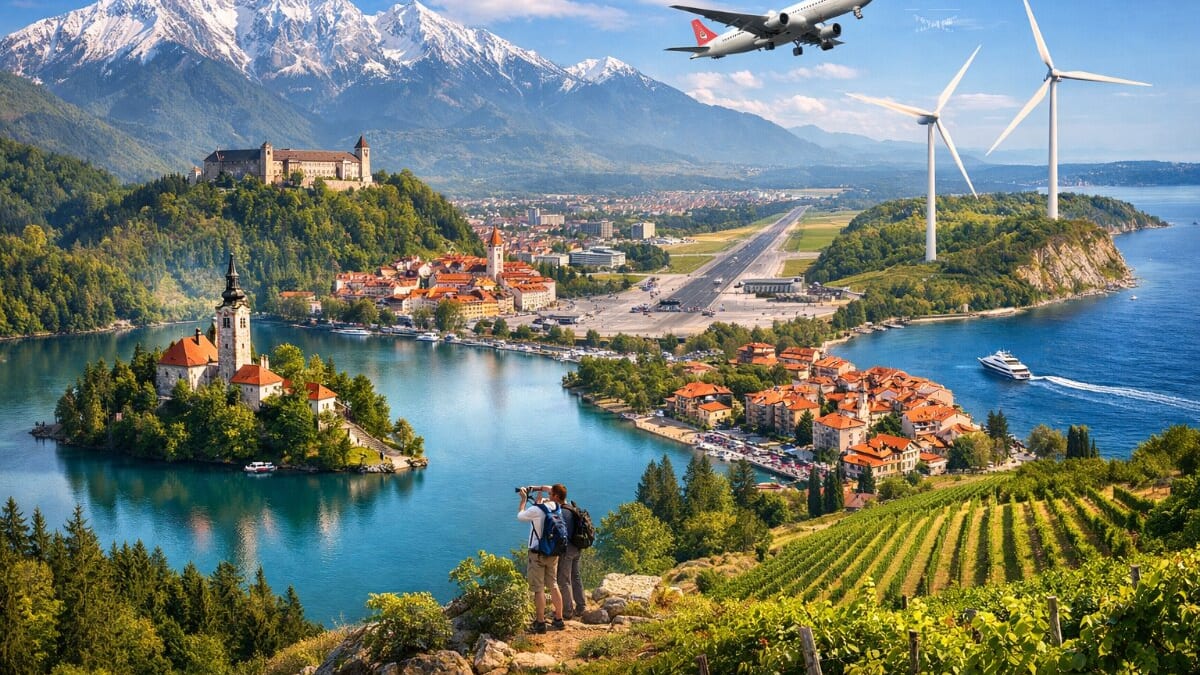
Image by Travel And Tour World
Tourism Numbers Rebound As Europe Looks Beyond Traditional Hotspots
Recent European tourism data show that travel across the continent has not only returned to pre‑pandemic levels, but is increasingly spreading beyond long‑dominant destinations such as France, Italy and Spain. Within this broader shift, Slovenia is emerging as one of the fastest rising markets, with tourism arrivals and overnights outpacing regional averages according to Eurostat and OECD summaries of 2022 and 2023 performance.
Publicly available statistics indicate that Slovenia, a country of just over two million residents, is now welcoming several million tourists a year, approaching or surpassing its 2019 benchmarks and gaining a larger share of European travel flows. Analysts point to a combination of pent‑up demand for nature rich escapes and growing interest in lesser known destinations as visitors seek to avoid overcrowding and price pressures in traditional coastal hubs.
The timing has favored Slovenia. The country’s compact size, mix of Alps, wine regions and Adriatic access, and relatively modest price levels compared with Western Europe align closely with post‑pandemic travel preferences. Reports from regional tourism observatories describe a steady rise in overnight stays not only in classic postcard sites such as Bled and Bohinj, but also in smaller spa towns, wine regions and mountain valleys.
At the same time, global tourism recovered strongly in 2024, with United Nations tourism updates noting that international arrivals worldwide broadly returned to 2019 levels. Slovenia’s upswing is unfolding within this wider rebound, but its growth rate and positioning as a sustainable, small scale destination suggest a structural shift rather than a short‑term bounce.
Sustainability Branding Turns A Niche Into A National Strategy
One of Slovenia’s most distinctive advantages has been its early and coordinated move into green branding. National tourism information highlights that Slovenia was recognized as a green destination at a country level, and that its Slovenia Green certification scheme now covers hundreds of destinations, accommodations and tourism providers. The scheme assesses everything from energy efficiency and waste management to cultural preservation and community involvement.
According to sustainability reports released by the Slovenian Tourist Board, more than 280 stakeholders across the country have obtained some tier of the Slovenia Green label. Several destinations, including Ljubljana, Bohinj and Laško, have achieved the top platinum category, signaling comprehensive sustainability practices in areas such as mobility, water and nature protection.
This framework has allowed Slovenia to present a coherent narrative to international travelers and media outlets that increasingly prioritize low impact tourism. Coverage in global travel magazines and platforms frequently references the country’s emphasis on green mobility, preserved landscapes and local food systems, positioning Slovenia as an antidote to overtourism stories from elsewhere in Europe.
Independent initiatives reinforce the message. Case studies compiled by European tourism platforms highlight Slovenian cities and regions for integrating smart cards, public transport and visitor services into seamless systems that reduce car dependence. Municipal sustainability reports from mid‑sized destinations show investments in cycling infrastructure, protected areas and heritage conservation, adding depth to the countrywide brand.
Ljubljana Leads With Awards, Mobility And Smart Tourism Tools
Slovenia’s capital has become the most visible showcase of this transformation. Ljubljana, which earlier received the European Green Capital title, has continued to collect European awards related to sustainability and smart tourism. The city has been profiled as a category winner for sustainability in European smart tourism competitions, and more recently recognized among leading global sustainable urban destinations.
According to descriptions published by European institutions and city tourism bodies, Ljubljana has systematically pedestrianized its historic center, expanded cycling routes and upgraded public transport while preserving a high share of green areas per resident. Visitors encounter a largely car free old town, a riverfront lined with cafés and cultural venues, and easy access to nearby hills and parklands.
Digital tools play a growing role in the capital’s appeal. Ljubljana has integrated public transport, attraction admissions and visitor services into smart cards and apps that simplify movement across the city and encourage the use of lower impact options. European tourism best practice repositories cite these systems as examples of how technology can support both visitor experience and environmental aims.
The capital’s creative positioning is also gaining international attention. In early 2026, Ljubljana was named Europe’s best creative city destination by an international creative tourism award program, outcompeting more than 200 cities. Organizers highlighted its blend of cultural institutions, festivals, design focused districts and community based creative experiences, reinforcing the perception of Ljubljana as a compact yet culturally dense city break alternative to larger European capitals.
Global Accolades And Media Attention Multiply
Slovenia’s tourism surge is also being driven by a steady stream of international rankings and features. National Geographic included Slovenia on its Best of the World list for 2023, drawing attention to the country’s protected landscapes, wine regions and culinary scene. The same coverage underlined the breadth of the national green certification program and framed Slovenia as a model for sustainable destination development.
Major guidebook publishers and travel platforms have also spotlighted Slovenia and its regions in recent annual lists of recommended countries and sustainable destinations. While these lists change each year, they serve as influential signals for independent travelers and tour operators. Slovenia’s recurring presence among highlighted European spots, often alongside much larger tourism markets, has expanded its visibility far beyond its traditional source markets.
International travel fairs and award programs have amplified the message. Reports from global industry events in London and elsewhere describe how Slovenian destinations are promoted as offering authentic, small scale experiences centered on nature, wellness and local culture. Shortlisted nominations for categories such as sustainable destination of the year and outdoor adventure region reinforce the perception of Slovenia as a rising star in Europe’s competitive tourism landscape.
This accumulation of endorsements has tangible effects. Travel media coverage, influencer content and word‑of‑mouth reports increasingly reference Slovenia as a place that combines the scenic drama of Alpine countries, the coastal charm of the Adriatic and the cafe culture of Central Europe, but in a more relaxed, less crowded setting.
Experience First: From Lakes And Caves To Wine Hills And Rural Retreats
Beyond branding and awards, the core of Slovenia’s appeal lies in the variety of experiences available within short travel distances. Classic icons such as Lake Bled, the Soča Valley and the Postojna and Škocjan cave systems remain major draws, especially for first time visitors. However, tourism data and regional development reports indicate growing interest in wine regions, thermal spa towns and mountain villages that were once peripheral on the tourist map.
Regional tourism organizations in areas such as the Julian Alps and eastern wine hills report increases in overnight stays and extended shoulder seasons as visitors seek quieter stays focused on hiking, cycling, wellness and gastronomy. National promotion describes Slovenia as a “green, boutique” country, and itineraries increasingly emphasize farm stays, vineyard guesthouses, local food tours and outdoor activities over rapid sightseeing.
This experience led approach aligns with broader trends among European travelers who are prioritizing slower trips, fewer destinations per journey and lower impact activities. Rural Slovenia, with its network of small family owned accommodations and traditional farms, is well positioned to benefit from this shift. Anecdotal reports from travelers circulating in online communities frequently describe the country as offering strong value for money compared with more saturated Alpine and Mediterranean regions.
Infrastructure improvements are supporting the move toward dispersal. Investments in cycling routes, regional rail links and hiking trail maintenance, documented in local development plans and EU funded project summaries, are making it easier for visitors to explore beyond the capital and the most photographed lakes. As capacity pressures rise at iconic viewpoints, these improvements will be critical to sustaining growth without sacrificing the qualities that made Slovenia attractive in the first place.
Balancing Growth With The Promise Of “Green, Boutique, Local”
With international arrivals and overnight stays rising, Slovenia now faces the challenge of preserving the intimacy and environmental quality that underpin its appeal. Publicly available strategic documents from the Slovenian tourism sector emphasize managed growth, higher value experiences and strict adherence to sustainability criteria, rather than a pursuit of volume alone.
Experts who track European tourism trends note that smaller countries can be particularly vulnerable to the side effects of rapid growth, from housing pressure in popular cities to strain on fragile ecosystems. Slovenia’s nationwide certification system, along with local destination management plans, is being positioned as a key tool to monitor carrying capacity, guide investment and keep benefits flowing to local communities.
As Europe’s travel recovery matures, Slovenia’s trajectory suggests how a destination can convert a long standing sustainability vision into a competitive edge. Its current surge reflects not just a global desire for new places, but a conscious strategy to channel that demand toward experiences that are smaller in scale, rooted in place and designed to last beyond the current travel cycle.
How effectively the country manages this next phase will determine whether Slovenia becomes a lasting member of Europe’s top tier of travel destinations or a brief trend. For now, the combination of strong recovery figures, international recognition and a clear green narrative is pushing the country rapidly up the list of must visit European spots.