

More news on this day
Not every airline chief executive is content to watch a new flagship widebody roll in from a terminal window. On a handful of high-profile Airbus A350 deliveries, the person in the left or right seat has not only represented the carrier in a ceremonial role but also signed the checks: the airline’s own CEO.
Get the latest news straight to your inbox!
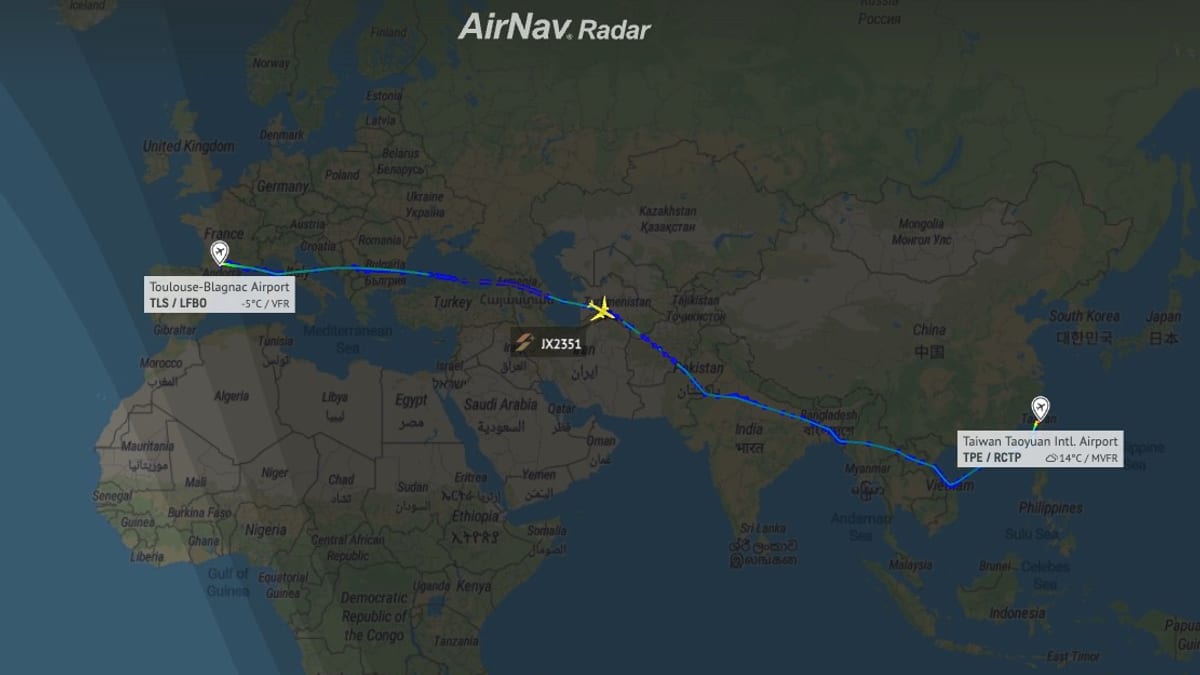
Image by airlive.net
From boardroom to flight deck on delivery day
Delivery flights for brand new Airbus A350s typically feature senior pilots, engineers and a small contingent of airline managers, with executives greeting the aircraft at home base rather than flying it. In a few notable cases, however, leaders with airline transport licenses have stepped into the cockpit to help ferry aircraft on the long sector from Airbus facilities in Toulouse to their home hubs.
Publicly available information shows that these occasions are the exception rather than the rule, but they attract outsized attention across aviation media and social platforms. The A350 family, which serves as a long-haul flagship for many full-service airlines, has become a focal point for such appearances, combining cutting-edge technology with high marketing value.
Industry coverage indicates that when a chief executive does fly, they usually do so as part of a larger, fully qualified crew, following standard operating procedures and type-rating requirements. The presence of a senior leader in the cockpit is symbolic, yet it remains firmly nested within the airline’s safety and regulatory framework.
The Starlux example: a pilot-chairman at the controls
One of the most closely watched cases in recent years comes from Taiwan-based Starlux Airlines. Public profiles of founder and chairman Chang Kuo-wei describe him as a career aviator with type ratings on the Airbus A350 along with other widebody and narrowbody types. Coverage of the airline’s fleet strategy notes that he has been directly involved in many of its aircraft introductions.
According to reporting on Starlux’s growth, Chang has flown delivery flights for the carrier’s new jets, including its A321neo narrowbodies, A350-900s and, most recently, the larger A350-1000. Reports indicate that the January 2026 ferry of Taiwan’s first A350-1000 from Toulouse to Taipei, a roughly 13-hour sector, once again featured the pilot-chairman on the flight deck.
For Starlux, which launched with a premium-focused model in a competitive long-haul market, the sight of its founder at the controls of a factory-fresh A350 has proved highly shareable. Aviation enthusiasts track the delivery routings in real time, while mainstream coverage frames the flights as a sign of hands-on leadership in a young airline trying to stand out.
Symbolism, safety and regulatory reality
Although the image of a CEO flying home a brand new A350 is powerful, the practical context is far more routine. Regulatory requirements in major jurisdictions oblige any pilot occupying a flight deck seat on a commercial transport aircraft to hold the appropriate licenses, medical certification and type rating, regardless of corporate title.
Industry documentation and pilot accounts emphasize that delivery flights, while often celebratory, are operated under the same technical and procedural disciplines as any long-haul sector. The aircraft may fly with a non-revenue callsign and a lighter payload, but crews still adhere to standard checklists, fuel calculations and contingency planning. An executive with pilot qualifications effectively joins or leads the crew as any senior captain would.
This framework helps explain why such flights remain relatively rare. Most airline chiefs today come from commercial or financial backgrounds rather than flying careers, and few have kept current on modern widebody types like the A350. Those who do appear in delivery cockpits typically maintain active flying status or hold senior pilot roles alongside their management responsibilities.
Brand storytelling in the age of the A350
Even when they are operationally ordinary, delivery flights featuring a CEO in the cockpit carry strong marketing weight. The A350, promoted by Airbus as a fuel-efficient, passenger-comfort-focused flagship, is often central to an airline’s long-haul branding. Images of a leader flying the aircraft home fit neatly into narratives of innovation, commitment and passion for aviation.
Media coverage of such events tends to highlight the contrast between the high-tech flight deck and the personal story of the executive at the controls. For younger or boutique carriers, especially in Asia and the Middle East, the combination of a new-generation widebody and a flying founder can reinforce an image of agility and aviation-first culture.
Established network carriers, by contrast, more often spotlight cabin products, route announcements and environmental performance when they introduce the A350. In these cases, chief executives are usually present at ceremonies on the ground, while test and delivery pilots handle the ferry flights in line with long-standing corporate practice.
A niche tradition likely to endure
Looking ahead, the number of airline chiefs qualified to fly an A350 is expected to remain small, but the visibility of any such flights is likely to stay high. Every new A350 customer, from start-up leisure operators to large national carriers transitioning from older widebodies, faces pressure to differentiate its story at launch.
When a CEO with an active type rating chooses to join a delivery crew, the event resonates well beyond the aviation community. It signals a level of personal investment in the fleet and offers a tangible image to passengers who may otherwise see airline leadership as distant from day-to-day operations.
For the broader industry, these high-profile flights underscore the enduring link between the technical and corporate sides of commercial aviation. The Airbus A350 has emerged as one of the few modern aircraft where that link occasionally becomes literal, as some airline leaders trade the boardroom chair for the captain’s seat on the most important flight of a new jet’s life: the journey home.