

More news on this day
As international travel rebounds in 2026, many American tourists are sharing stories of countries that feel less than friendly. Yet closer examination suggests that what is often labeled as rudeness or hostility abroad is more accurately a clash of cultural expectations about hospitality, service and everyday politeness, rather than an outright rejection of visitors from the United States.
Get the latest news straight to your inbox!
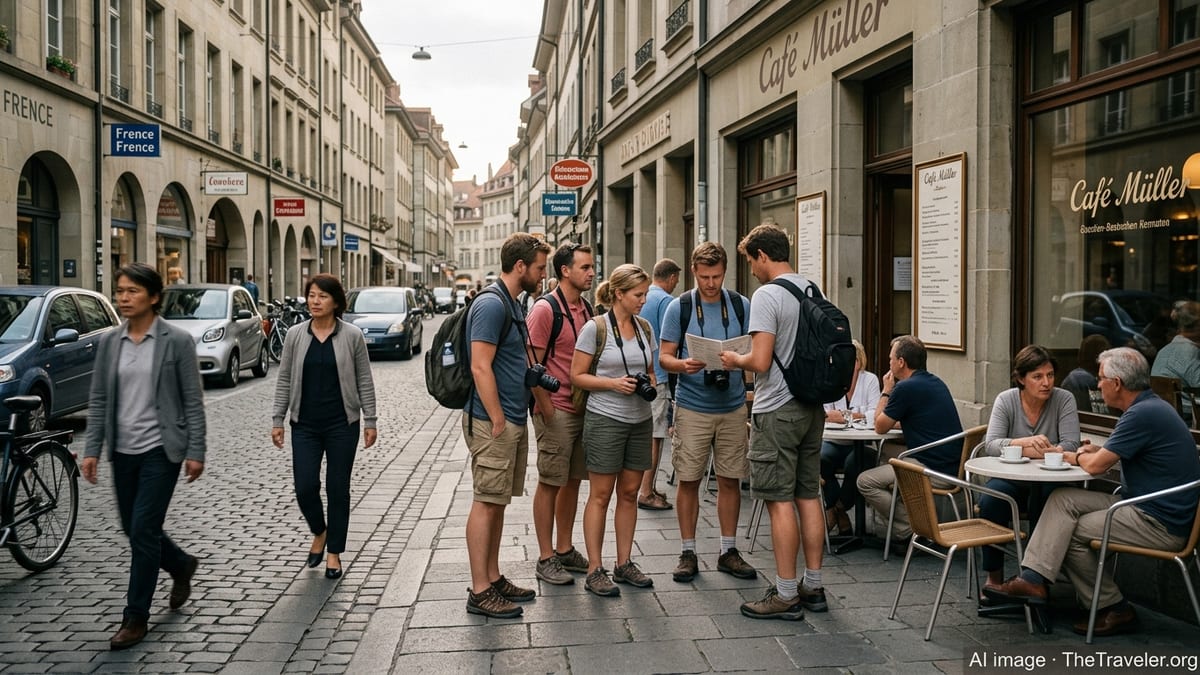
Europe’s Reserved Politeness Versus American Friendliness
Recent travel surveys and commentary highlight Western European destinations such as France, Germany, Denmark and the Netherlands among places where American visitors report feeling least welcome. Reports indicate that locals in some of these countries hold increasingly critical views of American tourists, often citing loud behavior, a reliance on English and perceived disregard for local norms as friction points. At the same time, these societies tend to prize efficiency and privacy over warm small talk, creating a social climate that can feel distant to visitors from the United States.
Publicly available information on European attitudes toward American travelers points to a pattern: many residents describe US tourists as friendly but overly informal and sometimes demanding. In countries where service interactions are brief and task focused, the expectation of smiles, banter and constant refills that is common in the United States does not always apply. The result is that neutral or businesslike service can be interpreted by Americans as cold, even when it reflects standard courtesy in the local context.
Cultural researchers frequently distinguish between low-context cultures, which favor direct verbal communication, and higher-context environments, where meaning is conveyed more subtly through tone, setting and shared norms. Northern European societies are often cited as relatively low-context in language but high in social reserve, with clear boundaries between public and private life. For American visitors accustomed to casual conversation with strangers, that restraint can register as aloofness rather than as a form of respect for personal space.
Dining customs and everyday etiquette add further layers of complexity. In parts of Europe, lingering at a café table without repeated check-ins from waiting staff is a sign that customers are being left in peace. In contrast, many Americans associate attentive service and frequent visits from staff with hospitality and care. When the same behavior plays out in opposite ways on either side of the Atlantic, both visitors and locals can walk away feeling that the other side was impolite.
Japan and East Asia: Formal Service, Quiet Spaces
Japan regularly ranks among the countries where travelers praise the quality of service, yet some American tourists still describe feeling emotionally distant from interactions there. The disconnect often arises from the highly formalized nature of hospitality in Japan, where politeness is communicated through ritual, precision and unobtrusiveness rather than overt warmth. Staff may avoid sustained eye contact, maintain a calm tone and prioritize smooth logistics over friendly conversation.
Cultural studies of East Asian societies describe them as relatively high-context, with a premium placed on harmony, indirect language and avoiding open confrontation or embarrassment. Silence, brief exchanges and minimal physical contact with strangers can be signs of respect. For visitors from the United States, where sociability and verbal engagement are celebrated, such interactions may come across as stiff or impersonal even when they are carefully designed to make guests comfortable.
Common American habits can also clash with local expectations. In Japan, for example, eating while walking, speaking loudly on public transport or photographing sacred sites without permission are cited in travel advice as behavior that can irritate residents. Tipping, which many Americans use as a way to express gratitude, may instead cause confusion or discomfort in countries where service charges are integrated or where hospitality is not monetized in the same way. When locals respond by withdrawing or keeping interactions brief, visitors can misread this as hostility.
Similar patterns appear in other parts of East Asia, including South Korea and China, where direct questions, raised voices and visible frustration from foreign guests run counter to local expectations of composure in public. What feels like justified insistence on good service to an American traveler can appear aggressive in settings where patience and indirect negotiation are the norm. These differences underscore how hospitality is filtered through deep-seated values around face, hierarchy and social order.
Southern Europe and Tourism Fatigue
Italy, Spain and parts of coastal Croatia illustrate another reason some destinations feel less welcoming to American visitors in 2026: simple tourism fatigue. In heavily touristed cities such as Venice, Barcelona and Dubrovnik, years of crowding, rental pressure and rising costs have led to increasingly vocal local frustration with mass tourism. Commentators note that Americans are often grouped together with other high-impact visitors, regardless of their individual behavior, in public debates about overtourism.
American travelers sometimes interpret curt service or brusque exchanges in these destinations as personal disapproval. However, published coverage of resident sentiment shows that complaints are frequently directed at sheer visitor numbers, congestion and housing impacts rather than any single nationality. In this climate, a quick, efficient interaction at a restaurant or shop may signal a desire to keep queues moving rather than a lack of welcome toward specific foreign guests.
At the same time, Southern European social norms can confuse visitors who expect either clear warmth or clear rejection. In Italy, for instance, animated conversation among locals, flexible approaches to punctuality and passionate debates in public spaces are common. For some American tourists, particularly those from regions where politeness is expressed with constant smiles and soft voices, this expressiveness may initially read as impatience or irritation.
Local debates about tourism have also sharpened expectations around respect for neighborhoods and heritage sites. Signage in historic centers increasingly urges visitors to moderate noise, dress appropriately and avoid eating on monuments or church steps. When these rules are enforced, the interaction can feel confrontational to travelers who see public spaces as informal backdrops for leisure. Yet from the perspective of residents, such boundaries are part of defending daily life and cultural identity.
Middle East and North Africa: Warm Hospitality, Strict Norms
Countries across the Middle East and North Africa, from Jordan and Morocco to Saudi Arabia, are promoting tourism while navigating conservative social norms and political sensitivities. Travel features often describe striking contrasts between heartfelt personal hospitality and firm expectations around dress, public behavior and photography. For American visitors unfamiliar with these frameworks, that mix can lead to confusion over whether they are genuinely welcome.
Social codes in many of these societies place strong emphasis on modesty, family honor and religious practice. Publicly available guides often stress that clothing covering shoulders and knees, discreet displays of affection and careful handling of religious symbols are fundamental signs of respect. When tourists overlook these expectations, reactions from locals and security personnel may be swift, and can be perceived as a lack of hospitality rather than enforcement of long-standing cultural and legal norms.
Research on intercultural communication highlights that many Middle Eastern societies also operate with a strong sense of in-group solidarity. Warmth and generosity can be abundant within family and community circles, while encounters with short-term visitors remain more formal. American travelers may therefore experience gracious invitations in one context and brisk, rule-focused interactions in another, interpreting the contrast as inconsistency in welcome rather than a reflection of different social spheres.
Political relations between the United States and some governments in the region further color perceptions. Commentary on current travel trends notes that while individual residents often distinguish between foreign guests and foreign policy, they may also approach conversations about politics or social issues cautiously. For Americans who are used to open debate and casual questions about national identity, that reticence can be mistaken for coolness.
Bridging the Hospitality Gap
Underlying many reports of feeling unwelcome abroad is a core assumption that the American model of friendliness is universal. In the United States, norms such as enthusiastic greetings, frequent compliments from service workers and highly personalized customer care are widely promoted. When these behaviors are not mirrored overseas, travelers may interpret the difference as a rejection, even when locals believe they are behaving courteously.
Scholars of tourism and hospitality increasingly point to the importance of cultural literacy on both sides of the interaction. For visitors, this can mean learning a few local phrases, adjusting expectations around tipping, service speed and personal space, and recognizing that quiet or reserved behavior often signals respect. For destination communities, awareness of how American guests read certain gestures, such as limited eye contact or formal language, can help reduce friction.
At a time when surveys show shifting global perceptions of the United States, American travelers can no longer assume an automatic warm reception based solely on their passport. Instead, reports indicate that humility, curiosity and a willingness to adapt go a long way in reframing experiences in places sometimes labeled unfriendly. When travelers approach different hospitality codes as variations rather than judgments, destinations that once felt cold can reveal a more nuanced, and often generous, welcome beneath the surface.