

More news on this day
Travelers opening fare trackers for last-minute spring break trips to Miami, Cancun and Las Vegas in March and early April 2026 are being greeted with sticker shock, as airfares on many routes appear to double within days compared with prices seen earlier in the season.
Get the latest news straight to your inbox!
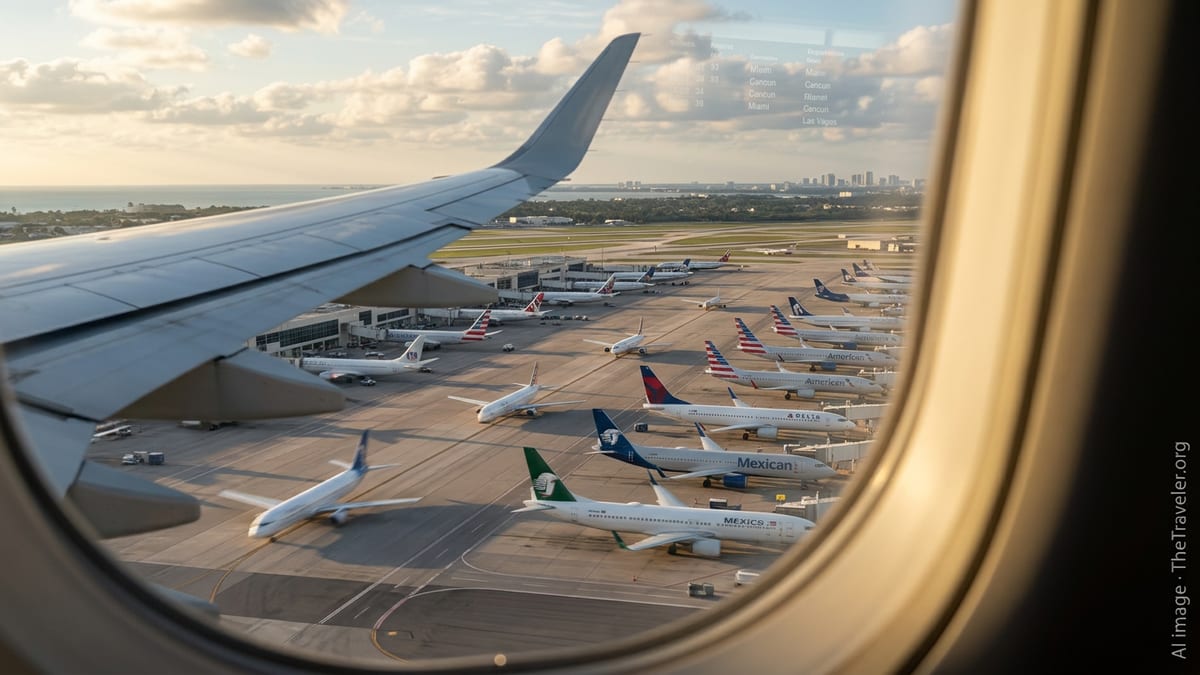
A Perfect Storm of Demand Around Peak Spring Break Weeks
Flight search data for March and early April 2026 show that classic spring break destinations such as Miami, Cancun and Las Vegas are among the most-searched routes from U.S. cities, with interest concentrated in a narrow window when many schools are closed. Travel platforms report that average ticket prices tend to peak in late March and remain elevated into early April, reflecting the period when families and college students are all trying to fly at roughly the same time.
Analyses from major online agencies indicate that fares on high-demand leisure routes can rise by 25 to 30 percent in the final three to four weeks before departure, with some individual routes seeing much sharper jumps when only a handful of seats remain. Reports from fare-tracking services suggest that a domestic roundtrip that might have been under 300 dollars in early February can climb well above 500 dollars as departure dates move into the busiest school holiday weeks.
Separate outlooks from travel organizations for the 2025 and 2026 spring seasons already highlighted a steady rise in average domestic and international airfares compared with pre-pandemic baselines, particularly to sun destinations. Florida cities including Miami, as well as Las Vegas and major Mexican beach hubs, consistently rank among the top-booked spring break destinations in these reports, concentrating demand even further on a relatively small set of routes and dates.
Because most travelers still try to depart on Fridays, Saturdays or the weekend that aligns with school calendars, fares on those days can spike dramatically. Midweek departures into or out of Miami, Cancun or Las Vegas sometimes remain far lower, underscoring how heavily pricing is driven by the specific day and time of travel rather than just the destination itself.
Aircraft and Capacity Constraints Keep Seats Scarce
While demand is surging, airlines are still contending with aircraft shortages and capacity limits that have persisted into 2026. Industry analyses note that both Boeing and Airbus continue to work through large backlogs of orders, with supply chain disruptions and certification delays limiting how quickly new jets can be delivered to carriers. This has left many airlines operating with tighter fleets than planned, especially on the narrowbody aircraft commonly used for U.S., Caribbean and Mexico routes.
Reports on aircraft manufacturing indicate that global order books for popular models such as the Boeing 737 and Airbus A320 families now stretch close to a decade at current production rates. Trade and aviation publications describe how delivery targets for 2025 and 2026 have been repeatedly adjusted as manufacturers grapple with parts shortages, labor disputes and regulatory scrutiny. For airlines, that means less flexibility to add extra flights during peak periods like spring break, even when demand is clearly there.
Industry commentary from airport bond disclosures and airline financial filings points to ongoing “capacity constraints” as a key factor supporting higher leisure fares. In some cases, U.S. carriers have reduced their planned growth in flights, or even trimmed schedules, in response to delivery delays and operational pressures. The end result for travelers heading to destinations such as Miami, Cancun and Las Vegas is a smaller pool of available seats than demand would otherwise justify during the prime spring weeks.
Because these aircraft shortages intersect with strong leisure demand, carriers can maintain summer-style pricing deep into what used to be considered shoulder seasons. Analysts note that instead of a pronounced drop-off in fares after the winter holidays, pricing on popular leisure routes is increasingly staying elevated straight through spring, particularly when school holidays and major events overlap.
Rising Operating Costs and New Fuel Pressures
Beyond demand and capacity, airlines are also facing higher operating costs that feed into ticket prices. The International Air Transport Association’s financial outlook for 2026 highlights that jet fuel remains one of the largest and most volatile expenses for carriers worldwide. Although fuel prices have eased from their most extreme peaks, they remain above pre-pandemic averages in many markets, and airlines typically pass some of those costs on to passengers through higher base fares and surcharges.
Another emerging factor is the growing use of sustainable aviation fuel, which is significantly more expensive than conventional jet fuel. Industry forecasts suggest that the incremental cost of purchasing sustainable aviation fuel could run into several billion dollars globally in 2026, even though it is expected to make up less than one percent of total fuel consumption by volume. These additional costs tend to be spread across the network, but high-demand leisure routes can be particularly attractive places for airlines to preserve pricing power.
At the same time, airlines are working to restore profitability after several years of turbulence. Industry projections for 2026 point to modest net margins, with many carriers still rebuilding balance sheets and investing in fleet renewals and cabin upgrades. In that environment, there is little incentive to aggressively discount during peak travel periods such as spring break, when seats can often be filled at higher fare levels without the need for heavy promotion.
Labor expenses are adding to the pressure. Recent contract agreements with pilots, flight attendants and ground workers at major U.S. airlines have included substantial pay increases, reflecting inflation and staffing shortages. While these improvements support workers, they also contribute to higher unit costs for airlines, which in turn can keep fares elevated on routes that consistently sell out during holidays.
Algorithmic Pricing Punishes Last-Minute Planners
The experience many travelers describe this season, where a Miami or Cancun fare seems to double between one search and the next, is also a function of increasingly sophisticated dynamic pricing systems. Airlines and online travel agencies use algorithms that constantly adjust fares based on seat inventory, booking pace, competitor behavior and even search patterns on their platforms.
Travel companies that analyze historical booking data for spring break report that the cheapest tickets often appear one to three months before departure, depending on whether the route is domestic or international. Research from major agencies suggests that waiting until the final week before flying to a popular March destination can trigger a sharp last-minute surcharge, particularly on weekend departures, as algorithms recognize that many travelers are committed to their dates.
Some airfare studies illustrate this pattern with example routes, noting that a fare of around 280 dollars several weeks out can climb to 370 dollars or more as departure nears, even without major changes in fuel or tax costs. On routes with limited competition or aircraft capacity constraints, the difference can be even more pronounced, leading to the perception that prices have “suddenly doubled” in the days before spring break.
Because pricing tools now update many times a day, travelers may see large swings simply by checking at different times, especially when only a small number of seats remain in lower fare classes. As soon as those lower buckets sell out, the next available fare may be significantly higher, sometimes creating overnight jumps that catch travelers off guard.
How Travelers Can Avoid the Worst Spikes
While many of the forces driving spring break airfare increases are outside travelers’ control, published guidance from fare analysts offers strategies to avoid the steepest price jumps. Several booking studies recommend purchasing domestic spring break tickets roughly six to eight weeks before departure, and international tickets three to six months in advance, to capture lower average fares before holiday surcharges fully set in.
Travel organizations and booking platforms consistently highlight flexibility as a key cost saver. Shifting travel by just a day or two, or opting for midweek flights instead of peak weekend departures, can reduce fares substantially on routes into Miami, Cancun and Las Vegas. Red-eye or early-morning departures also tend to be cheaper and less prone to disruption, according to travel-industry research.
Analysts further suggest expanding the search to include nearby airports or alternative destinations. For travelers facing high fares into Miami, options such as Fort Lauderdale or Tampa sometimes offer lower prices, with ground transport filling the last leg. Similarly, when Cancun flights surge, other Mexican beach cities can provide more affordable alternatives without sacrificing warm-weather appeal.
For now, however, most forecasts indicate that elevated spring break pricing is likely to remain a feature of the market into 2026 and beyond, as strong leisure demand collides with constrained capacity and higher operating costs. For travelers who have grown used to hunting flash sales and last-minute deals, the new reality is that planning ahead may be the only reliable way to avoid spring break sticker shock.