

More news on this day
With Atlantic cliffs, pale-gold beaches and a dense cluster of centuries-old pubs packed into narrow lanes, St Ives in Cornwall has emerged as one of Britain’s most coveted bases for walkers who want big sea views by day and pint-sized charm by night.
Get the latest news straight to your inbox!
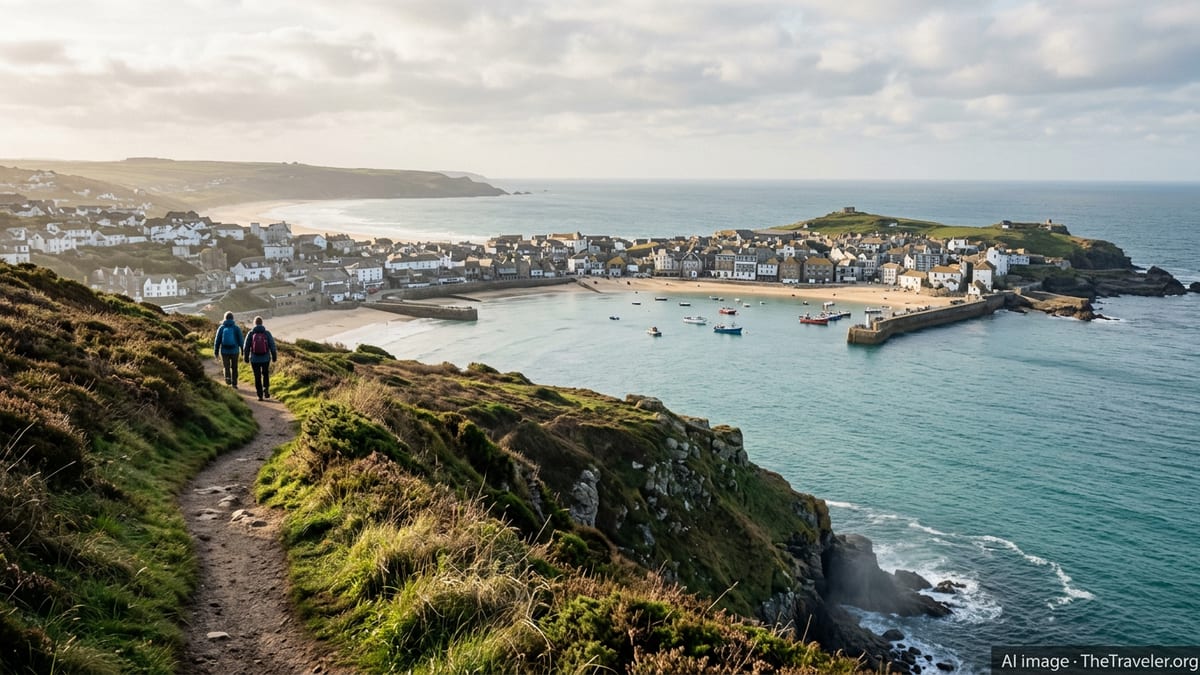
Coastal Paths That Put St Ives on the Walking Map
St Ives sits on one of the most dramatic corners of the South West Coast Path, the 630‑mile National Trail that traces the coasts of Somerset, Devon and Cornwall before ending in Dorset. Publicly available route descriptions highlight the stretch around St Ives as among the trail’s most varied, mixing rugged headlands, sweeping bays and sheltered coves within a relatively compact area, which has helped draw a steady stream of hikers and casual walkers.
Shorter trails fan out directly from the harbour and beaches, making it possible for visitors to step off a train or bus and quickly be on clifftop paths. Tourism guides describe popular outings such as the route towards Carbis Bay and Lelant, where the path runs above a string of sandy beaches before linking with the St Ives Bay railway line, and the more demanding section west towards Zennor, where narrow paths cling to granite slopes and offer long views across St Ives Bay.
Operators promoting self-guided itineraries now market multi-day hikes that begin or end in the town, often framing St Ives as either a celebratory finale or a gentle introduction to the tougher Cornish coast beyond. Recent brochures for long-distance trips from Padstow or Penzance, for example, position St Ives as a highlight stage, citing its combination of wild scenery and extensive services for walkers.
National and regional travel coverage has reinforced that image, frequently using the St Ives to Penzance or St Ives to Zennor sections as shorthand for the appeal of the Cornish coast. Reports describe Atlantic swells breaking below high cliffs, seabirds working the updrafts and a sense of remoteness that can be found only a short distance from a busy resort town.
From Harbour Streets to High Cliffs in Minutes
One reason St Ives is gaining a reputation as a prime walking base is its compact geography. The harbour, main beaches and residential terraces are tightly clustered, meaning walkers can move quickly from cobbled streets to open headland. Destination guides note that the South West Coast Path threads directly past Porthmeor and Porthminster beaches, giving visitors an uncomplicated route out of town and back again without needing a car.
Several circular routes have been promoted by local and commercial walking platforms in recent months, encouraging visitors to link coastal sections with older inland paths, such as the so‑called coffin route between St Ives and Zennor. These loops offer a cross-section of the landscape, from rough pasture and granite stiles to heathland and sea cliffs, and typically build in stops at village pubs at either end, reinforcing the connection between walking and hospitality.
The transport infrastructure adds to the town’s appeal. The scenic St Ives Bay Line, a short rail link that curves around the bay, allows visitors to combine a coastal walk with a train ride, stepping off at stations near Hayle or Lelant and returning on foot along the dunes and cliffs. Current regional tourism guides highlight this as a low-carbon way to experience the coast, especially during peak summer when parking space is tight.
At the same time, local authorities and tourism bodies continue to signal the importance of managing visitor pressure, particularly in busy months when narrow streets and popular viewpoints can feel congested. Walkers are being encouraged through public information to explore in shoulder seasons and to use public transport where possible, a trend that aligns with broader efforts to make Cornish tourism more sustainable.
Quaint Pubs With Sea Views and Low Beams
Alongside the walking routes, St Ives has cultivated a reputation for characterful pubs that appeal to both day-trippers and long-distance hikers. Travel features and guidebooks routinely single out harbourside inns and tucked-away alehouses, describing whitewashed fronts, slate roofs, low ceilings and interiors that blend maritime memorabilia with contemporary dining.
Several pubs sit just steps from the beaches or the harbour walls, allowing walkers to finish a clifftop circuit with a drink overlooking moored fishing boats and tide-washed sand. Others are scattered on back lanes leading up from the waterfront, where granite-fronted buildings open onto compact bars serving regional ales and local seafood. Reports indicate that many of these venues operate year-round, providing firesides and shelter in winter as well as outdoor terraces in high season.
Beyond the town itself, traditional pubs in nearby villages such as Zennor often feature in published walking routes, which flag them as welcome waypoints on longer circuits. Trail descriptions for the St Ives to Zennor loop, for example, highlight the chance to combine a demanding clifftop hike with a stop in a stone-built inn before returning along inland fields or catching a bus back to St Ives.
This density of pubs, combined with their proximity to the coastal path, has led some travel commentators to frame St Ives and its surrounding villages as a kind of informal ale trail for walkers. The focus is less on nightlife than on atmosphere, with many visitors reportedly seeking a quiet pint, a plate of fish and chips and a window seat looking out towards the Atlantic.
Art, Beaches and a Year-Round Walking Scene
St Ives is also widely known for its artistic heritage, anchored by the Tate St Ives gallery and the Barbara Hepworth Museum. Publicly available tourism material describes how this creative identity intersects with the walking offer, with many visitors combining gallery visits with short coastal strolls, or following in the footsteps of painters who once depicted the town’s changing light from hilltop or quayside vantage points.
The town’s quartet of main beaches, including Porthmeor, Porthminster, Harbour and Porthgwidden, adds to its versatility as a base. Travel guides often recommend starting or ending walks with a swim or beachside coffee, and recent regional digital brochures for 2026 again promote the idea of pairing a morning on the sand with an afternoon on the coast path. This mix of cultural and coastal attractions helps St Ives appeal to groups whose members may have differing priorities.
Seasonality is a growing factor in how visitors experience the town. While summer remains the busiest period, recent coverage in national magazines and online travel platforms has spotlighted winter and early-spring walking, emphasising quieter paths, stormy seas and the appeal of pub lunches by the fire. Such features contribute to a gradual extension of the walking season beyond school holidays.
At the same time, there is ongoing public discussion about the pressures of tourism on housing, local services and the environment. Reports and commentary note concerns about affordability for residents and the strain on seasonal workforces, even as walking is held up as a relatively low-impact way to enjoy the area. For now, the combination of art, beaches, walking and pubs continues to underpin St Ives’s position in the Cornish visitor economy.
Planning a Scenic, Pub-Focused Escape
Recent brochures from walking-holiday providers and regional tourism organisations increasingly package St Ives as the cornerstone of multi-day itineraries. These offers commonly suggest arriving by rail, spending a night or two exploring the harbour and galleries, then setting out along the coast path in either direction with scheduled overnight stays in smaller communities, many of which centre on a village pub.
Practical advice in current guides stresses the importance of checking tide times, weather forecasts and daylight hours, particularly on the more exposed sections west of town where paths narrow and gradients become steeper. Walkers are also encouraged to carry appropriate footwear and layers, as sea fog, rain and strong winds can move quickly across the Atlantic-facing cliffs.
For visitors planning short breaks, suggested itineraries typically focus on combining one substantial walk with time in the town’s pubs and cafes. A common pattern described in recent travel articles involves setting out early along the coast, returning in mid-afternoon for a late lunch and then drifting between harbourside and backstreet venues in the evening, sampling Cornish ales and seafood while watching the light fade over the bay.
As interest in low-impact, experience-led travel continues to grow, publicly available information indicates that St Ives is likely to maintain its appeal among walkers seeking both scenery and a sense of place. The proximity of its clifftop paths to its cluster of historic pubs gives the town a rare combination: a landscape that feels wild and remote, and a centre that remains immediately accessible at the end of the day.