

More news on this day
Flight delays have become a defining feature of modern air travel, but as disruptions climb and complaints hit new highs, one factor is proving crucial for travelers: understanding exactly why a flight is late.
Get the latest news straight to your inbox!
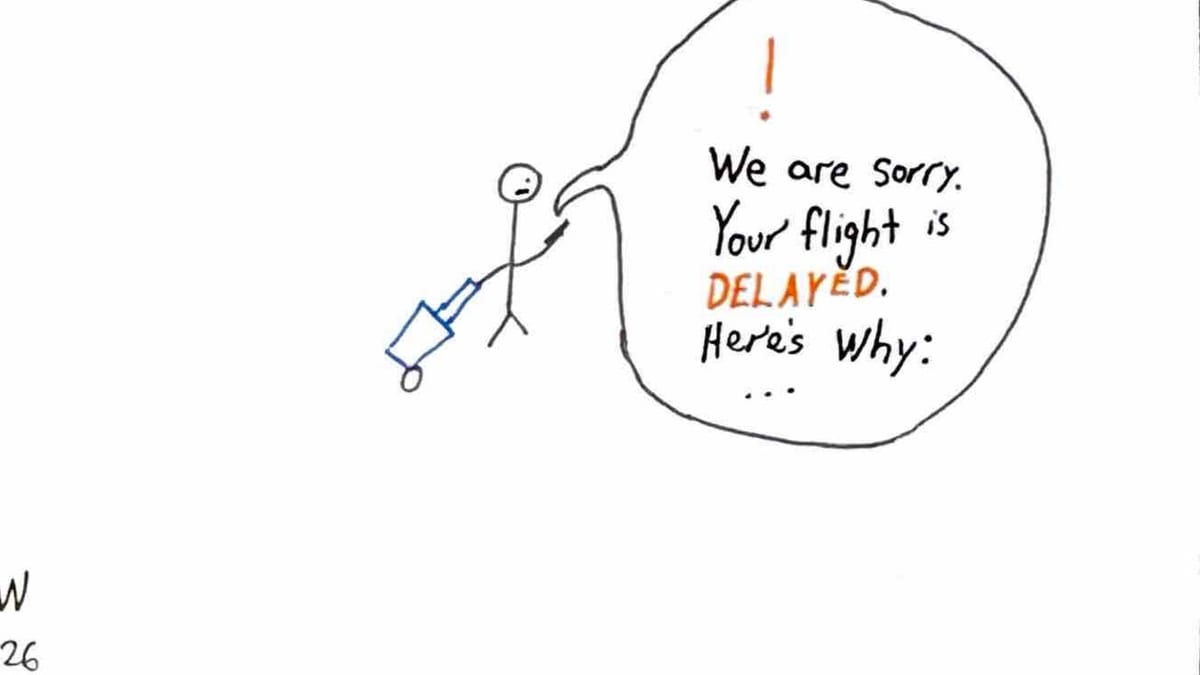
Image by USA Today
Delays Are Widespread, But Not All Are Created Equal
Recent data from passenger advocacy groups and federal statistics indicates that nearly one in four flights involving U.S. passengers is now disrupted by a delay or cancellation. At major hubs, particularly during peak holiday periods or severe weather, the share of affected travelers can be significantly higher. For many passengers, the experience at the gate feels the same: a departure time that keeps slipping and a vague announcement that a flight is “delayed.”
Behind the scenes, however, the aviation system classifies delays in very different ways. Publicly available information from the U.S. Department of Transportation (DOT) shows that airlines are expected to report causes in broad categories such as carrier issues, late-arriving aircraft, national aviation system constraints, extreme weather, and security-related disruptions. These distinctions are technical, but they shape whether an airline is considered at fault, how regulators interpret a disruption and what remedies travelers may be able to seek later.
The growing volume of data has also made it easier to see patterns. Large-scale disruptions triggered by winter storms, air traffic control bottlenecks or major technology outages have underscored that some causes are largely outside a single airline’s control, while others stem from operational or scheduling decisions. For passengers, understanding that difference is increasingly important.
Studies in air transport and service quality research also suggest that delays do not affect travelers in a purely mechanical way. Passenger satisfaction is influenced not only by how long they wait, but by context: whether the disruption is perceived as avoidable, how clearly it is explained and whether the airline appears to be acting fairly. Knowing the reason behind a delay changes that perception.
Why the Cause Shapes Your Rights and Compensation
Knowing why your flight is late is often the first step in understanding what, if anything, you are owed. In the United States, federal rules guarantee refunds when flights are canceled or significantly changed and a passenger chooses not to travel, but do not automatically require airlines to cover hotels or meals during a disruption. Instead, U.S. carriers publish their own customer service commitments, many of which are summarized on a DOT consumer dashboard that compares policies across major airlines.
Those commitments typically hinge on whether a delay is considered “controllable” by the airline. Carrier-related issues such as crew scheduling problems, mechanical failures that are not caused by outside events or errors in airline information technology systems are frequently treated as controllable. When a delay falls into that category, airline policies often provide for meal vouchers after several hours of waiting and lodging when an overnight stay becomes necessary.
By contrast, delays linked to extreme weather, air traffic control restrictions, airport closures or mandatory safety inspections are more likely to be categorized as outside the airline’s control. In those situations, many carriers state that they will rebook passengers but do not promise hotel rooms or meal support. Recent guidance relating to aircraft recalls and safety-driven inspections, for example, has emphasized that these events are generally not treated as controllable, even when they lead to widespread disruption.
For passengers, that makes the official explanation for a delay critical. If the reason is recorded and communicated as within the airline’s control, travelers may be able to point to published commitments when requesting vouchers, hotel coverage or other remedies. If it is categorized as weather or another external factor, the same policies may not apply. Without clarity on the cause, it is much harder for passengers to know which rules are in play.
Transparency Can Reduce Frustration and Shape Future Choices
Beyond the question of compensation, clear information about delay causes appears to have a measurable impact on how passengers feel about their journey and whether they continue to patronize a particular airline. Academic research on air transport and customer satisfaction has repeatedly found that delays erode trust and loyalty, but that communication quality can soften the blow.
Studies examining airport and airline service quality show that expectations, explanations and perceived fairness matter. When travelers are told early and accurately that a departure will be substantially late, they are more likely to adjust their plans, seek alternatives or make use of airport amenities, and less likely to feel that time has been “stolen” from them. When the reason is unclear, or appears to shift from weather to operations and back again, frustration escalates quickly.
Surveys and industry reports on traveler sentiment also highlight how delays influence future booking decisions. Passengers increasingly consult on-time performance data and complaint records when choosing carriers or routes. If an airline gains a reputation for operational delays and poor explanations, it risks long-term damage that may outweigh the immediate cost of offering vouchers or more generous reaccommodation during disruptions.
In that sense, being transparent about the cause of a delay is not only a legal or regulatory issue, but a competitive one. Airlines that offer specific, consistent reasons for disruptions and align their actions with published policies can differentiate themselves in a crowded market where many travelers feel they have little control.
Global Rules Highlight the Power of a Clear Explanation
Outside the United States, passenger rights frameworks further underscore why delay classifications matter. In Europe, Regulation 261/2004 establishes common rules for compensation and assistance when flights are cancelled, significantly delayed or overbooked. Under that regime, whether a traveler is entitled to fixed cash compensation often turns on whether the disruption was caused by what regulators consider “extraordinary circumstances,” such as severe weather, air traffic control strikes or security incidents.
When a delay is attributed to extraordinary circumstances, airlines may still have obligations to provide meals, communication and overnight accommodation, but they are typically shielded from paying additional compensation. When the root cause is within the carrier’s control, such as many technical or staffing issues, compensation rights can apply on top of care and rerouting. Court decisions and enforcement actions across Europe have refined these boundaries, making the official reason recorded by an airline a decisive factor in individual cases.
Similar debates are emerging in other regions. Consumer advocates in North America have pointed to European-style regimes as examples of how transparent classifications of delay causes can support stronger protections. Recent rulemaking in the United States has focused on refunds and clearer definitions of “controllable” events, while some proposals under discussion would require compensation in certain airline-caused delays and cancellations.
For travelers, this evolving regulatory landscape reinforces the importance of understanding not just that a flight is late, but why. The label applied to a disruption today may determine whether future rules or enforcement actions provide additional support or recourse.
What Travelers Can Do With Better Information
Knowing the reason for a delay is only useful if passengers can act on it. Public dashboards, on-time performance statistics and openly available regulatory filings have made it easier to cross-check airline explanations against broader trends. Travelers can compare whether a disruption appears isolated to one carrier or is affecting multiple airlines at the same airport, a clue as to whether the cause is operational, weather-related or linked to air traffic control.
Detailed delay information can guide on-the-spot decisions. If a disruption is clearly attributed to a carrier-controlled issue and is likely to extend for many hours, passengers may have stronger arguments for hotel and meal support, and may decide to ask about rebooking on another airline or rerouting through a different hub. Where delays are driven by widespread storms or regional infrastructure issues, options may be more limited, but understanding that context can at least clarify why alternatives are scarce.
In the longer term, aggregated delay data helps travelers evaluate which airlines and routes align with their tolerance for disruption. Regular flyers may weigh factors such as seasonal weather patterns, the resilience of particular hubs and each airline’s track record for communicating causes and remedies during irregular operations. As consumer tools and reporting become more sophisticated, the simple question at the gate of “why is this flight late?” is turning into a key variable in how people plan and perceive their journeys.
With disruptions likely to remain a feature of global aviation, the industry’s ability to explain them clearly is moving from a courtesy to an expectation. For passengers, insisting on a concrete reason for a delay is no longer just about curiosity; it can shape their rights, their wallet and their willingness to fly again.