

More news on this day
Major airports are racing to become more than transit points, and for couples, that shift is turning hubs in Singapore, Istanbul, London, and Tokyo into unexpected destinations for romance in their own right.
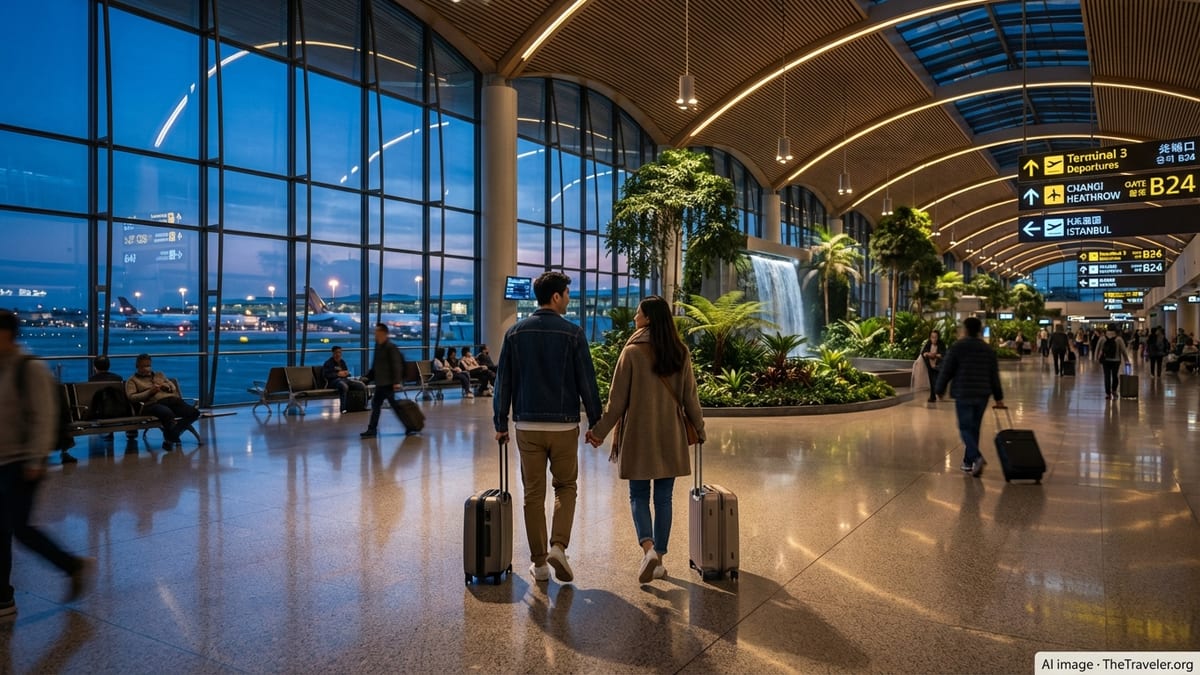
Airports Reinvented as Romantic Destinations
What used to be fluorescent-lit, functional spaces are rapidly evolving into lifestyle complexes where travelers linger by choice rather than necessity. For couples, this transformation is particularly striking at four global hubs: Singapore’s Changi Airport, Istanbul Airport, London Heathrow, and Tokyo’s twin gateways of Haneda and Narita. With curated dining, lush indoor gardens, designer shopping, and entertainment calibrated for long dwell times, these airports now promise date-worthy experiences before take-off or between flights.
Airport operators are consciously chasing this shift. As competition for transfer traffic intensifies, hubs are investing in amenities that appeal to leisure travelers and couples, from atmospheric lighting and live performances to tranquil green spaces and spa-level wellness services. Seasonal campaigns around Valentine’s Day, Christmas, and Lunar New Year increasingly feature couples-centric promotions, positioning the concourse as a setting for shared memories rather than a backdrop to departure boards.
For many travelers, the result is that romantic encounters no longer wait until arrival at a city center. Proposals, anniversary celebrations, and first trips together are now unfolding under glass domes and runway views, blending the thrill of aviation with the intimacy of a getaway that begins the moment passports are stamped.
Singapore’s Changi: From Transit Hub to Date Night Playground
Singapore Changi Airport has long topped global rankings for passenger experience, but recent developments have made it particularly attractive for couples. Jewel Changi Airport, the mixed-use complex linked to the terminals, combines a rainforest-style interior with the world’s tallest indoor waterfall, the Rain Vortex, creating a dramatic backdrop that has quickly become a favorite for date nights and anniversary photos. Evening light and sound shows at the waterfall, framed by the terraced Shiseido Forest Valley garden, encourage visitors to linger arm in arm on walkways that feel more like an urban park than an air hub.
Changi’s calendar increasingly features programming that leans into this romantic appeal. Seasonal events in Jewel’s indoor forest, from festive installations to animated light projections, are designed to be experienced slowly, making them natural options for couples on overnight layovers or weekend outings. In early 2026, the airport and Jewel unveiled elaborate horticultural displays across the terminals, with kinetic floral sculptures and animatronic centerpiece installations timed to Lunar New Year, effectively turning departure halls into photo-ready garden sets for visiting pairs.
Beyond the visual spectacle, Changi has layered its offering with experiences suited to shared downtime. The airport’s lounges have extended operating hours around peak travel seasons, adding buffet spreads of regional dishes that lend themselves to leisurely meals for two. Meanwhile, promotions tied to big-ticket prize campaigns and shopping rewards encourage visitors to browse retail and dine together for a chance at high-profile travel experiences, tapping into aspirational fantasies that resonate strongly with couples planning future trips.
Even outside the main terminals, the Changi district has evolved into a lifestyle precinct that complements the airport’s romantic positioning. New outdoor food and beverage developments nearby add open-air bars, container parks, and live music spaces that attract locals as much as passengers, reinforcing the sense that for travelers in love, the airport area is no longer just a point of arrival or departure but a destination in itself.
Istanbul Airport’s Grand Scale and Global Connections
Istanbul’s new airport, which has rapidly grown into one of the world’s busiest international hubs, is using its sheer scale and design to market itself as a gateway where couples can linger between continents. The vast central terminal, marked by sweeping ceilings and soft, diffused lighting, offers long sightlines and wide boulevards of shops and restaurants that function almost like an indoor high street. For partners in transit between Europe, Asia, and the Middle East, that environment creates space for slow walks, shared meals, and quiet corners away from the gate.
The airport’s duty-free and retail zones, among the largest globally, are curated with lifestyle brands that appeal to traveling pairs, from fragrances and fashion to specialty chocolates often packaged around seasonal romantic themes. Operators have leaned into Istanbul’s historic identity as a meeting point of cultures, with Turkish coffeehouses, dessert counters serving baklava and other sweets, and design-forward restaurants giving couples a flavorful introduction to the city even if they never leave the secure area.
Wellness and privacy also play into the romantic narrative. Pay-per-use lounges, some with nap suites, spa treatments, and private shower facilities, allow long-haul couples to regroup and refresh between overnight flights. Quiet rest zones, relaxation rooms, and prayer spaces offer additional nooks for reflection and conversation. Combined with Istanbul’s extensive network of onward destinations, the airport has become a natural rendezvous point for partners who live on different continents but choose to meet in transit for shared holidays.
As airlines expand long-haul services through Istanbul, the airport’s operator has signaled that more experiential amenities are in the pipeline. These include additional art installations, live music performances, and hospitality upgrades that are likely to enhance its appeal as a backdrop for fleeting but memorable romantic encounters.
London Heathrow: Romance at the Gateway to Europe
London Heathrow, one of the world’s most connected airports, is leaning into its role as a gateway for romantic getaways, particularly around peak travel dates. In recent seasons, the airport has reported double-digit percentage increases in passengers flying to classic city-break destinations such as New York and European capitals in the week leading up to Valentine’s Day, underscoring how central it has become to couples’ travel plans. The same period sees a surge in floral imports through the cargo terminals, as millions of stems pass through Heathrow on their way to florists and homes across the United Kingdom.
Inside the terminals, Heathrow has been steadily enhancing the experience for passengers with hours to spare together. High-end lounges and spa facilities offer massages, facials, and quiet relaxation areas where partners can decompress after overnight flights. Day rooms in attached hotels and access-by-fee lounges with showers and full hot meals allow couples to turn an otherwise tiring layover into a mini-retreat, complete with runway views that add an aviation twist to the usual city-hotel stay.
Heathrow’s retail and dining mix is another draw. Terminal 5 in particular concentrates luxury fashion houses, perfumeries, and British heritage brands, making it easy for travelers to pick up last-minute gifts or browse together before boarding. Wine bars, contemporary restaurants, and cocktail spots across the terminals cater to pre-flight date nights, while quieter café corners offer space for conversation far from the main concourse traffic.
For couples with longer connections, Heathrow’s proximity to Windsor and the surrounding Thames Valley adds a further layer of possibility. A short road or rail journey brings travelers to riverside walks, historic streets, and green spaces that contrast sharply with terminal concourses. For many, the romantic narrative now begins at the check-in desk and unfolds seamlessly through lounge, runway-side hotel, and nearby town, rather than waiting until they reach a separate city break destination.
Tokyo’s Haneda and Narita: Quiet Corners and City Energy
Tokyo’s airports, Haneda and Narita, serve one of the world’s most densely populated metropolitan areas yet have cultivated a reputation for calm, orderly spaces that can feel surprisingly intimate. Haneda’s domestic and international terminals, with floor-to-ceiling windows framing views of Tokyo Bay and the runways, offer plenty of quiet seating zones where couples can sit side by side watching aircraft movements. Design touches such as wooden walkways and lantern-style lighting in some shopping streets evoke traditional aesthetics that appeal to visitors seeking a sense of place.
In the wake of a serious runway collision at Haneda in early 2024 that temporarily disrupted operations, authorities have doubled down on safety and operational resilience. For travelers, the rapid recovery of services and clear communication have helped preserve confidence in the airport as a reliable gateway. This matters for couples planning tight itineraries, who often prioritize punctuality and minimal stress when choosing where to transfer between long-haul and domestic flights within Japan.
Narita, further from the city center but still a major international entry point, has invested in cultural showcases, from small museum-style exhibits to performances and regional-product fairs in its terminals. For pairs arriving from overseas, this can serve as a gentle introduction to Japanese culture before they board trains into Tokyo. Observers also point to the romantic appeal of the onward journey itself, whether by airport express or longer-distance rail: for many visitors, a first shared ride into the city becomes part of the trip’s emotional highlight.
Together, Haneda and Narita frame the start and end of countless honeymoons, anniversary trips, and long-distance reunions each year. With Japan’s tourism sector emphasizing hospitality and service, airport operators are expected to keep refining spaces where couples can relax, sample regional cuisine, and capture photographs that mark the beginning or end of their time in the country.
Design, Mood, and the Psychology of Airport Romance
Beyond specific attractions, the way these airports are designed plays a crucial role in fostering romantic encounters. Changi’s use of natural light, greenery, and water features creates a mood closer to an upscale shopping mall or urban conservatory than a traditional terminal. Istanbul’s sweeping architecture and warm-toned interiors evoke grandeur and a sense of journey, while Heathrow’s mix of polished retail and cocoon-like lounges offers both spectacle and seclusion. In Tokyo, the emphasis on order, softness of soundscape, and veiled references to traditional design offer calm that many couples find grounding between time zones.
Psychologists who study travel behavior note that airports naturally heighten emotions. Travelers are often tired, excited, or apprehensive, and the act of leaving familiar surroundings can intensify feelings in relationships. When airports add elements like gentle lighting, ambient music, artistic installations, and spaces that encourage strolling or sitting close together, they effectively channel that emotional energy into shared experiences. A waterfall show at midnight, a quiet cup of coffee overlooking a runway at dawn, or a spontaneous splurge in a duty-free perfume boutique can all take on outsized meaning in that context.
These hubs also function as meeting points for couples separated by distance. Well-connected airports with frequent international arrivals, such as Istanbul, Heathrow, and the Tokyo gateways, become default rendezvous locations where partners converge from opposite sides of the world. Amenities that ease the wait — from shower-equipped lounges to quiet work pods and late-night dining — help ensure that even delayed flights do not derail carefully coordinated reunions.
Crucially, the trend toward experiential design is not just about aesthetics. Passenger dwell time translates into higher spending, and airports recognize that couples are likely to spend more when they feel relaxed and engaged. Investments that create romantic or emotionally resonant spaces therefore serve a dual purpose: elevating the traveler experience while underpinning commercial performance.
Planning a Romantic Encounter in Transit
For travelers looking to take advantage of these evolving hubs, planning is key. At Changi, couples might time their arrival to coincide with evening Rain Vortex shows, leaving space in their schedule to explore Forest Valley walkways, sample local dishes in Jewel’s dining terraces, and perhaps book access to a 24-hour lounge during busy holiday periods. Those passing through Istanbul can check which terminal concourses their flights use and identify quiet lounges, Turkish coffee stands, or spa facilities along their route to avoid feeling rushed.
At Heathrow, where security and terminal changes can take time, couples often benefit from selecting flights that use the same terminal and allow a few extra hours for shared meals or relaxation in a lounge. In Tokyo, it is worth confirming whether flights arrive at Haneda or Narita and how that ties into onward city plans; some pairs opt to stay overnight in an on-site or nearby hotel, turning a late arrival into a gentle start to their trip, complete with airport views that capture the spectacle of Japan’s aviation network.
Travel advisers suggest that couples also keep an eye on seasonal campaigns at these airports. Valentine’s-themed menus, photo installations, and shopping promotions are increasingly common and can add unexpected touches to a journey, from complimentary desserts to gift-with-purchase offers that serve as mementos. Checking airport news pages or social media channels before departure can reveal pop-up experiences or extended operating hours that make it easier to turn a standard layover into something more special.
Ultimately, the growing reputation of Changi, Istanbul, Heathrow, and Tokyo’s airports as romantic destinations reflects a wider shift in how people travel. As the boundary between journey and destination blurs, more couples are choosing to treat the hours spent in transit not as lost time but as a canvas for shared experiences, from quiet reunions at arrival gates to elaborate date nights beneath terminal skylights.