

More news on this day
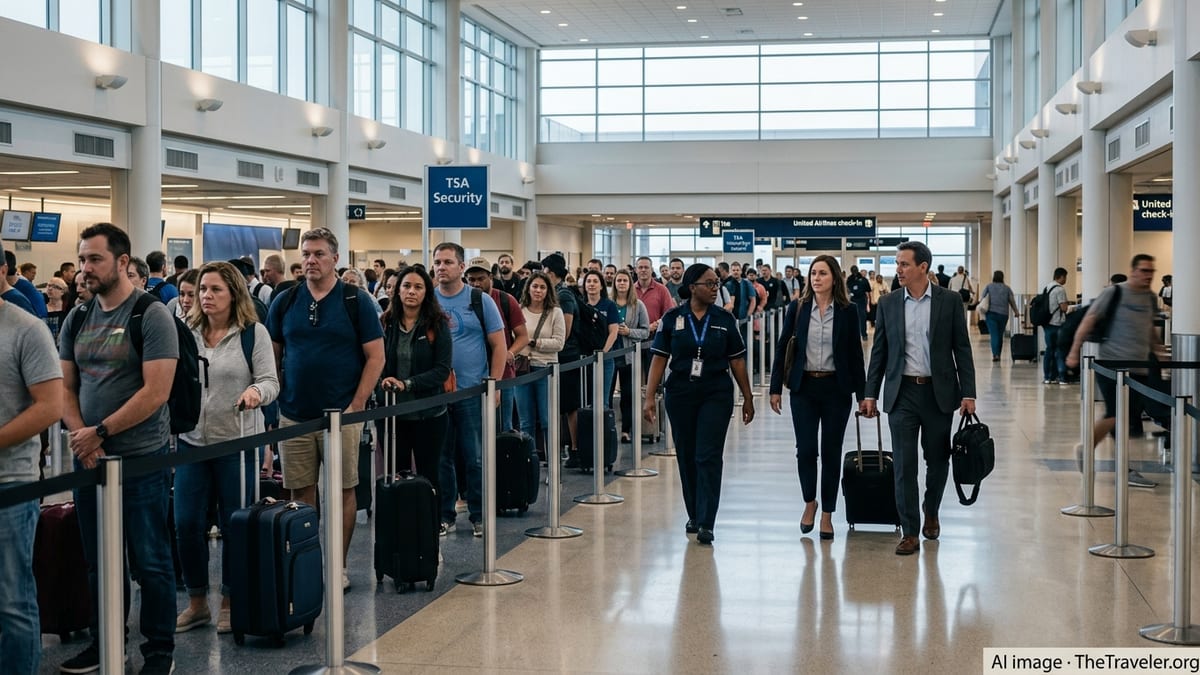
United Airlines is drawing attention in Houston for quietly escorting some of its highest-tier frequent fliers past long TSA lines at George Bush Intercontinental Airport, a practice critics see as queue-jumping but defenders argue is a rational response to an overstretched security system at one of the carrier’s most important hubs.
Get the latest news straight to your inbox!
Airport Under Strain and a Hub Carrier Under Pressure
George Bush Intercontinental Airport has faced months of uneven security operations, with periods of reduced TSA PreCheck availability and reports of hours-long waits snaking through terminals. Publicly available information from the Houston Airport System shows that both the airport and its largest tenant, United Airlines, have been reshaping checkpoints and passenger flows while construction and staffing constraints continue.
At the same time, United relies on Houston as a critical connecting hub, operating hundreds of daily departures across domestic and international networks. When security bottlenecks cascade, they do not just inconvenience local travelers; they threaten missed connections, misrouted baggage and disrupted crew schedules across the airline’s broader system.
In that context, selectively walking elite-status customers to the front of existing lines is less about special favors and more about triage. By prioritizing travelers who are often on tight connections and who represent a disproportionate share of revenue, the airline is trying to contain operational knock-on effects that can ripple well beyond Houston.
Observers who follow airport operations note that such practices are not new in global aviation. Similar fast-track arrangements, whether through dedicated lanes or staff escorts, are standard at major hubs in Europe, Asia and the Middle East, particularly where infrastructure is under strain.
How Escorted Access Fits Into the Security Landscape
Escorting premium passengers through TSA checkpoints does not change the underlying security protocols. All travelers undergo the same federally mandated screening procedures; what differs is the sequence in which they access those procedures. Escorts simply move certain passengers ahead of others within the queue that already exists.
Houston’s recent security experience helps explain why this approach has gained prominence. Reports from travelers describe fluctuating checkpoint configurations, with some terminals lacking PreCheck or Clear access at peak hours and lines spilling deep into public areas. In that environment, keeping high-value passengers locked in the same queue as everyone else increases the risk of missed flights and rebookings that can further clog already full departures.
By carving out a limited number of escorts for top elites, United is attempting to create a relief valve at the margins of the system. The volume of passengers who qualify is small relative to the total throughput of TSA at Houston, so the incremental delay imposed on those already in line is likely minimal compared with other factors such as lane closures, staffing changes or equipment outages.
Security experts generally distinguish between the order in which passengers are screened and the rigor of the screening itself. Provided procedures remain identical, priority access does not inherently compromise safety, even if it sharpens the perception of inequity among travelers left waiting.
Customer Experience, Fairness and the Loyalty Equation
For airlines, loyalty programs are built on the promise that frequent fliers receive tangible benefits in exchange for their business. Priority check-in, boarding and baggage handling are long-established features. Inserting escorted TSA access into that mix in Houston is an extension of the same logic, tailored to a specific pain point in the local travel experience.
From a customer-experience perspective, the value to elites is clear. Travelers paying for premium cabins or flying enough to earn high status are often on tightly timed itineraries. A two-hour security delay can mean missed meetings, lost days and rebooked trips. Ensuring that these passengers clear security more predictably helps United keep its most lucrative customers satisfied at a time when many feel squeezed by higher fares and fuller flights.
For other travelers, the optics are harder to accept. Watching uniformed staff lead a small group to the front of an already stressed line can heighten frustration, particularly when TSA PreCheck or other expedited options are unavailable. Yet airlines segment products and services along revenue lines across nearly every part of the journey, from seat assignments to onboard service. In that broader context, escorted security access is a visible but consistent application of how modern air travel is structured.
The fairness debate ultimately hinges on transparency. As long as the benefit is framed openly as a published elite perk or discretionary service tied to operational needs, passengers may find it easier to understand, even if they do not benefit directly.
Infrastructure Gaps Make Stopgap Measures Attractive
Houston’s airport authorities have been rolling out updated facilities, including a new ticketing lobby and expanded security lanes in Terminal E designed in part to streamline flows for United passengers. Published updates indicate investment in new screening technology and reconfigured recheck areas intended to reduce congestion for international arrivals and connecting travelers.
Those improvements, however, have coincided with periods of construction, shifting terminal assignments and, more recently, staffing challenges that have constrained TSA capacity in key time windows. The result has been a patchwork experience for travelers, with some days of relatively smooth passage and others marked by severe queues.
Until infrastructure and staffing stabilize, airlines and airports are relying on a mixture of technology, signage changes, temporary lane reallocations and targeted workarounds. Elite escorts are one of those workarounds. They are not a structural fix, but they help manage the most pressing operational risks created by long lines while broader upgrades are completed.
In that sense, United’s approach can be seen as aligned with the incremental strategies being deployed across the airport, from biometric gate trials to new dedicated recheck corridors for certain PreCheck passengers. Each measure seeks to shave minutes off complex choke points without waiting for multi-year construction projects to finish.
What It Signals About the Future of Premium Travel
The decision to walk elite travelers through TSA lines in Houston underscores how far airlines are willing to go to differentiate the experience of their top customers. As competition intensifies among global carriers, priority treatment at congested hubs is becoming as important as lie-flat seats or lounge design in shaping perceptions of premium value.
If the practice proves effective in limiting disruptions for high-yield passengers, it may serve as a model for similar interventions at other capacity-constrained hubs. Future iterations could include more formalized fast-track corridors jointly branded by airports and airlines, or expanded use of biometric identity tools that allow certain travelers to bypass manual checkpoints altogether.
For now, the escorts in Houston remain a localized response to mounting pressure on TSA operations. To many travelers stuck in standard queues, the sight of elites being shepherded forward may feel like one more reminder that air travel is stratified. Yet within the commercial and operational realities of a major hub under strain, United’s decision to use staff escorts to protect its most valuable passengers is a logical, and arguably necessary, step.