

More news on this day
From California’s wine country to the hills of Tuscany, more couples are booking vineyard weddings, drawn to sweeping views, open-air ceremonies and the promise of a relaxed, wine-centered celebration in nature.
Get the latest news straight to your inbox!
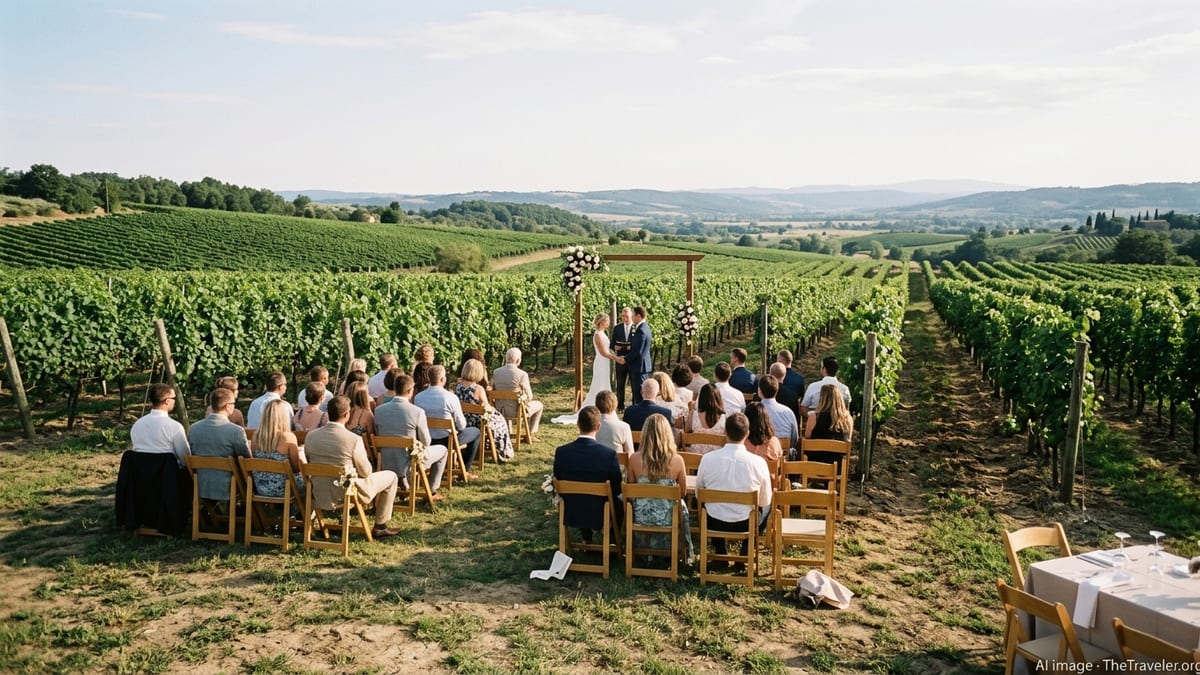
Scenic Backdrops and Immersive Landscapes
Vineyard weddings have become a hallmark of contemporary destination celebrations as couples search for settings that feel both romantic and unmistakably local. Rows of vines, changing light across rolling hillsides and distant mountain ridges provide a ready-made backdrop that often reduces the need for elaborate decor. In Napa and Sonoma, planning guides note that many venues market their views as a primary feature, positioning ceremony sites to frame sunset light over vine-covered slopes.
Similar patterns are emerging across European wine regions. Coverage in lifestyle and travel media highlights vineyard estates in France, Italy, Spain and Croatia that have adapted historic farmhouses, chateaux and cellars for weddings, pairing centuries-old architecture with modern event spaces. These properties often emphasize panoramic terraces or courtyards overlooking the vines, giving couples a sense of place that is difficult to replicate in more conventional urban venues.
The visual appeal is amplified across seasons. Spring and early summer ceremonies capture fresh green canopies, while late-summer and early-autumn dates showcase ripening fruit and golden foliage. Planners report that couples increasingly coordinate color palettes and photography schedules around the vineyard’s natural rhythm, treating the landscape as a central design element rather than a backdrop.
Photography trends on social platforms reinforce this aesthetic. Publicly available images from recent weddings frequently highlight long, perspective-rich shots down vine rows, informal portraits between the trellises and twilight receptions surrounded by strings of lights. This highly shareable visual language in turn drives further interest from couples researching venues online.
Romance, Wine Culture and Guest Experience
Alongside scenery, the romance of wine culture itself is a major draw. Wedding planners and venue operators report that couples are drawn to the symbolism of vines, harvest and shared toasts, seeing them as natural metaphors for partnership and longevity. Many vineyard venues build this narrative into their packages, offering barrel-room ceremonies, candlelit cave dinners or tastings that trace the estate’s winemaking history.
Guest experience is another factor in the appeal. Reports on recent wine-country weddings in Northern California describe multi-day itineraries that include welcome tastings, vineyard tours and relaxed brunches after the main event. In European regions, destination-wedding packages frequently combine the ceremony with local food and wine, positioning the event as an immersive short holiday for attendees rather than a single-day gathering.
Couples also cite the convenience of “all-in-one” properties. Many vineyard estates provide ceremony spaces, reception areas, onsite catering and a focused vendor list, which can simplify planning. Industry overviews of Napa and Sonoma note that some properties include coordination, rentals and lighting in site fees, bundling services that might otherwise require multiple contracts in city venues.
At the same time, the positioning of vineyards as luxury destinations is influencing budgets. Recent cost breakdowns for wine-country weddings in Northern California suggest that celebrations with around 80 to 100 guests commonly reach high five-figure totals once site fees, catering, florals and photography are included. Analysts expect these numbers to keep climbing into 2026 and 2027, driven by strong demand for a limited number of peak dates in desirable regions.
Global Destinations Compete for Vineyard Wedding Market
The appeal of vineyard weddings is no longer confined to a handful of prominent North American regions. Published rankings and venue roundups now highlight estates across Europe, South America and emerging cool-climate producers that are investing in event infrastructure. Tuscany, Provence, northern Spain and parts of Portugal remain among the most visible destinations, promoted for their combination of vineyards, historic architecture and nearby cultural attractions.
Travel and wedding-industry reports indicate that some couples are looking beyond the most saturated areas to seek better value or more intimate experiences. Estates in central and eastern Europe, including regions of Hungary and Croatia, are marketing multi-day wedding stays with onsite accommodation and access to surrounding countryside, often at lower price points than flagship areas in France or Italy.
This global competition is shaping how vineyards present their offerings. Many properties emphasize local identity, highlighting indigenous grape varieties, regional cuisine and traditional music or decor. Others focus on flexibility, offering smaller “micro-wedding” packages for guest counts under 40, which can be attractive to couples seeking a more personal celebration while still enjoying the atmosphere of a working estate.
The rise of remote planning is also influencing destination choices. Planners note that couples are increasingly comfortable selecting venues based on virtual tours, detailed photo libraries and online reviews, then handling logistics through digital consultations. This shift has allowed lesser-known vineyard regions to reach international audiences that previously concentrated on a narrow band of marquee wine destinations.
Seasonality, Climate Considerations and Risk Management
While the image of a vineyard wedding centers on clear skies and golden light, climate and seasonality are playing a larger role in planning decisions. Guides for Napa and Sonoma weddings, for example, now routinely discuss rising summer temperatures, advising couples to consider late spring or early autumn for outdoor ceremonies to avoid extreme heat during peak afternoon hours.
Wildfire risk in western North America has become a particular concern. Publicly available information on recent fire seasons details smoke events and evacuations that have affected both vineyards and nearby hospitality businesses. Local coverage of notable fires in wine regions has highlighted the potential for disruption to events, including late venue changes, air quality concerns and logistical challenges for guests and staff.
In response, many vineyards are adjusting operations and infrastructure. Industry reports describe investments in defensible landscaping, backup power, flexible indoor-outdoor spaces and contingency plans that allow ceremonies to move quickly under cover if conditions change. Some planners now build weather and smoke clauses into contracts, outlining how dates, layouts or locations can be modified in the event of environmental hazards.
Climate research on wine regions more broadly indicates that shifting temperature and precipitation patterns are altering growing seasons, grape varieties and harvest dates. While these changes are principally discussed in terms of wine quality and agricultural resilience, they indirectly affect wedding calendars, as venues recalibrate which months can reliably support outdoor events among the vines.
Balancing Intimacy, Privacy and Local Regulations
Behind the romantic imagery, vineyard weddings are shaped by a web of local regulations and community expectations. In some prominent wine regions, planning documents and local reporting note that only a limited number of wineries are formally permitted to host weddings, often because they held such permissions before modern land-use rules took effect. This has the effect of concentrating demand on a relatively small group of venues.
Noise restrictions, traffic concerns and agricultural zoning rules also influence how vineyard weddings operate. Some counties limit amplified music hours or require shuttle transport to reduce congestion on narrow rural roads. Others direct most large events to properties that are equipped with parking and infrastructure to handle crowds, preserving quieter zones for farming.
These constraints can push couples to neighboring regions with more flexible rules or to private estates that operate as event venues rather than production wineries. Planning advice shared with prospective brides and grooms often points to alternative areas that can deliver similar vineyard views with fewer regulatory hurdles and, in some cases, lower costs.
At the same time, many couples view these quieter, more regulated environments as a benefit. Limited venue numbers and capped guest counts can enhance a sense of privacy and exclusivity, particularly for smaller celebrations. When balanced carefully with local policies and environmental realities, vineyard weddings continue to offer a distinctive blend of nature, views and romance that remains highly sought after in the global wedding market.