

More news on this day
Wichita Dwight D. Eisenhower National Airport is facing mounting disruption as a new wave of weather‑driven delays, airline system issues and network congestion triggers a fresh round of grounded and heavily delayed flights across the United States, complicating plans for travelers moving through south‑central Kansas.
Get the latest news straight to your inbox!
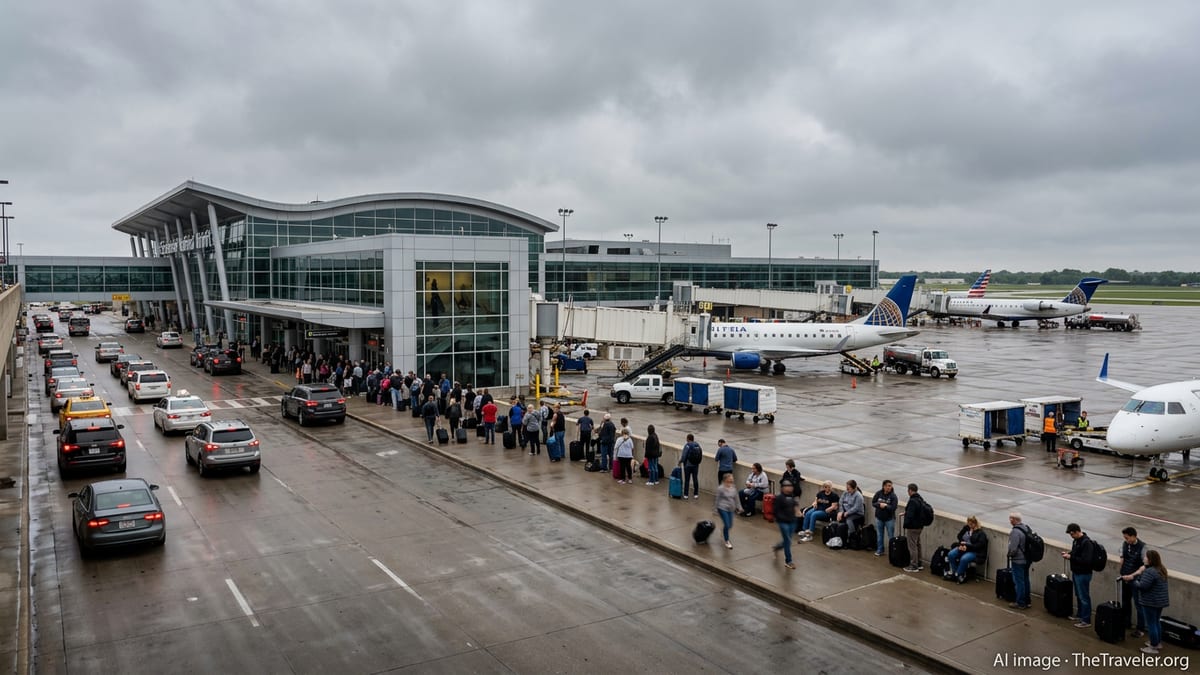
Wichita Disruption Tied to Nationwide Weather and System Strains
Recent days have brought renewed pressure on the U.S. air travel system, with Wichita’s Dwight D. Eisenhower National Airport feeling the knock‑on effects. Flight‑tracking and airline operations data indicate that a series of winter and early spring storms, combined with isolated airline technology outages, have led to hundreds of cancellations and several thousand delays across the country. Those system‑wide stresses are filtering down to Wichita, where flights are being delayed, rerouted or canceled when aircraft and crews fail to arrive as scheduled.
Travel and aviation industry coverage from early March shows how quickly conditions can deteriorate. On March 7, severe thunderstorms, snow and low clouds across major hubs, including Chicago O’Hare and Atlanta, triggered multiple ground stops and delay programs, contributing to more than 5,000 delays and hundreds of cancellations nationwide. While Wichita was not the center of those events, its role as a spoke airport means that disruption at large hubs frequently results in late‑arriving aircraft, missed connections and, in some cases, flights grounded for lack of available crews.
According to published information from the Federal Aviation Administration, national traffic management initiatives such as ground delays, reroutes and temporary ground stops continue to be employed when storms sweep across major corridors. Even when Eisenhower Airport’s skies remain relatively clear, those controls at coastal and Midwestern hubs can still force schedule cuts for Wichita‑bound services, leaving local passengers facing long wait times or last‑minute changes.
Operational reports from the airport and regional news outlets over the past several weeks also highlight isolated safety‑related returns to Wichita, including a February incident in which an outbound flight diverted back after a personal electronic device battery caught fire on board. While that event was contained and passengers were re‑accommodated, it added to the perception of a fraught travel environment for those already contending with weather‑related delays.
Storm Systems and Seasonal Hazards Create a Volatile Travel Environment
Weather remains the dominant driver of the current travel difficulties. A succession of large winter and early spring storm systems across the United States since late January has generated blizzard conditions in some regions, severe thunderstorms in others and widespread low visibility, all of which are particularly challenging for airlines and airport operators. National coverage of the late January winter storm documented more than 11,000 flight cancellations in a single day as snow, ice and high winds battered runways and slowed de‑icing operations at numerous hubs.
Although Wichita has so far avoided the most extreme of these impacts in March, the airport sits within a region prone to snow, freezing rain, fog and rapidly developing thunderstorms. Forecast products and historical summaries from the National Weather Service office responsible for the Wichita area underscore that Eisenhower Airport regularly experiences periods of reduced visibility and crosswinds strong enough to force flight crews to delay takeoffs or divert arrivals. Even modest bouts of freezing rain or dense fog can trigger ground delays, particularly for early‑morning and late‑evening departures.
In addition to winter hazards, aviation weather experts are closely watching the evolution of a strong mid‑March storm complex moving across North America. Forecast discussions suggest this system could produce heavy snow, wind and severe weather from the Pacific Northwest to the Upper Midwest and into parts of the central United States. If that outlook holds, Wichita’s connectivity to northern and eastern hubs may again be stressed as airlines proactively thin schedules, re‑route aircraft and seek to avoid exposing passengers and crews to unsafe conditions.
Air traffic planning advisories published by the FAA in recent days reference the likelihood of additional ground stops and delay programs at some of the country’s busiest airports as these systems move through. Experience from earlier this season suggests that, when these controls are activated, downstream airports such as Wichita can expect a fresh wave of disrupted flight banks, even if local weather appears manageable for takeoff and landing.
Airlines Juggle Ground Stops, Technology Outages and Network Recovery
Beyond weather, airline‑specific challenges are contributing to the sense of a travel “nightmare” for many passengers. In early March, a nationwide ground stop was briefly imposed on one major carrier following what the airline described as a system outage impacting its operations. Publicly available flight statistics show that the carrier recorded more than a hundred delays as it worked to restore normal scheduling, illustrating how technology failures can quickly ripple through an already strained system.
When major carriers experience these kinds of outages, smaller airports like Wichita often feel the downstream effects for days. Aircraft and crews can become displaced around the network, forcing schedule adjustments long after the original problem has been resolved. Travelers departing from Eisenhower Airport may encounter aircraft substitutions, last‑minute gate changes and tighter connection windows at hubs, all of which heighten the risk of missed flights and extended overnight stays.
National air traffic summaries from the FAA underscore the scale of the challenge. On busy days affected by storms or operational issues, controllers may process tens of thousands of flights while managing pockets of low visibility, icing, turbulence and airspace constraints. In that context, Wichita’s position as a mid‑sized, primarily domestic airport means its flights are particularly sensitive to push‑on effects from large nodes such as Denver, Dallas, Chicago and Atlanta. A single ground stop at one of these hubs can cascade into multiple cancellations on Wichita routes.
At the same time, Eisenhower Airport has been riding a longer‑term growth trend. A February update from local airport authorities reported that 2025 marked a record year for passenger volumes, with strong gains in parking, food and retail sales. That growth now collides with the realities of a fragile national network, leaving more travelers exposed when cascading delays and cancellations hit.
What Travelers Through Wichita Need to Know Right Now
For passengers planning to travel through Wichita Dwight D. Eisenhower National Airport in the coming days, the primary challenge is unpredictability. With large storm systems still active and airlines responding to both weather and technology‑related disruptions, same‑day conditions can shift rapidly. Publicly accessible flight‑tracking tools and airline status pages continue to show rolling waves of delays and cancellations, particularly on routes that depend on congested hubs or regions under active weather advisories.
Travel experts and consumer advocates consistently recommend that passengers monitor their flight status closely beginning at least 24 hours before departure, pay attention to any travel waivers or change‑fee relaxations issued by carriers, and be prepared to adjust itineraries if connecting airports fall under ground stops or heavy delay programs. For early morning flights out of Wichita, overnight developments at coastal or Midwestern hubs are especially important, as those first departures often rely on aircraft that have repositioned during the previous evening.
Given the heightened risk of disruption, travelers are also encouraged to build additional time into connections, particularly when routing through weather‑prone hubs. For some itineraries, driving to a larger regional airport or selecting a nonstop route, if available, may reduce exposure to cascading delays, although higher average fares at Wichita can complicate those choices. Public reporting on regional airfare trends indicates that Wichita’s ticket prices remain slightly above some nearby markets, even as demand has climbed.
As the broader U.S. travel system works through this period of storms, operational hiccups and record demand, conditions at Wichita’s Eisenhower Airport are likely to remain dynamic rather than stable. Passengers passing through the airport in mid‑March should anticipate lines at check‑in and security during peak hours, keep a close eye on evolving forecasts for their origin and destination cities, and be ready for last‑minute gate announcements as airlines continue to juggle aircraft and crews across a stressed national network.