

More news on this day
Travelers across Northern and Southern Europe faced mounting disruption today as widespread delays and cancellations at key hubs including Helsinki Vantaa and Milan Malpensa rippled outward, impacting services to Norway, Denmark, Portugal and other destinations and interrupting operations for airlines such as Ryanair, Iberia and several regional carriers.
Get the latest news straight to your inbox!
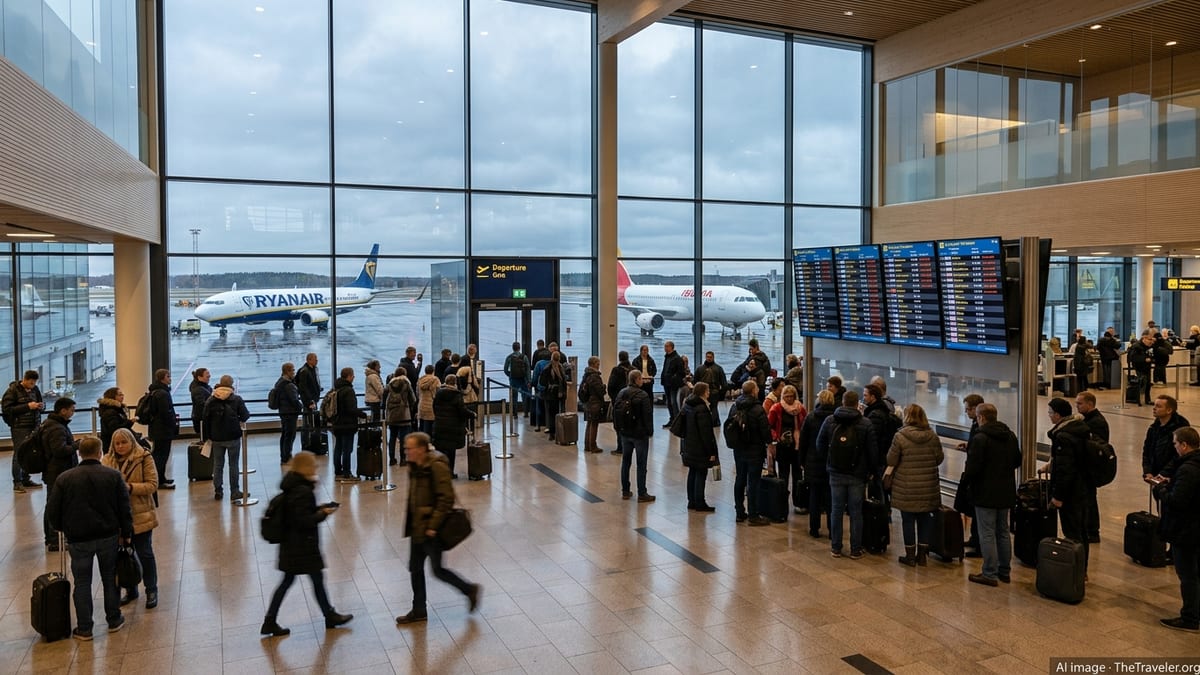
Major Hubs Record Hundreds of Delays and Dozens of Cancellations
Operational data compiled from European flight-tracking dashboards indicates that Helsinki Vantaa and Milan Malpensa are among the hardest-hit airports in the latest wave of disruption, with a combined 604 flights delayed and around 30 services cancelled in a single operating window. The pattern points to a day of mounting congestion across core northern and southern European corridors.
At Helsinki Vantaa, publicly available performance figures already show the airport handling a high volume of movements with relatively low average delay per flight during normal operations. When disruption intensifies, even modest length delays can quickly multiply across tightly scheduled short-haul rotations, especially toward Nordic destinations and major hubs in central Europe.
Milan Malpensa, a key gateway for both full-service and low-cost carriers, has historically experienced a higher share of delayed movements than some other regional hubs, according to recent airport performance analyses. When disruption coincides with busy departure banks to Northern Europe and the Iberian Peninsula, knock-on effects tend to spread quickly to secondary cities and leisure destinations.
Tracking platforms and airport operations summaries for today suggest that the combination of weather constraints, airspace flow restrictions and local operational pressures has produced a concentrated block of late-running flights, as well as a smaller number of outright cancellations, across these two major hubs.
Ripple Effects in Norway, Denmark and Portugal
The immediate effects of the disruption are most visible at origin airports, but the operational impact is increasingly evident across arrival points in Norway, Denmark and Portugal. Oslo Gardermoen and Copenhagen Kastrup, both tightly integrated into the European short-haul network, are reporting higher-than-usual arrival and departure delays on services touching affected hubs.
Oslo, which maintains extensive links to Milan Malpensa and other continental hubs, is experiencing compounding delays as inbound aircraft arrive late and subsequently depart behind schedule on onward legs. This pattern is reflected in schedule updates showing adjusted departure times and gate changes for a range of European services.
In Denmark, Copenhagen Airport data for today points to growing pressure on some intra-European rotations, particularly those with short turnaround times. When an aircraft arrives late from Italy or Finland, there is limited buffer to recover before the next departure, which can lead to rolling delays throughout the day on regional and low-cost services.
Portugal is feeling the effect mainly through late arrivals and rescheduled departures on links with northern European hubs, including Helsinki and Milan. Publicly accessible timetables and airport boards show a cluster of later-than-planned operations on routes connecting Lisbon and key European transfer points, with some flights shifted by an hour or more from their original slots.
Ryanair, Iberia and Other Carriers Adjust Schedules
Among airlines, low-cost and network carriers with large European footprints such as Ryanair and Iberia are prominently affected. These airlines operate dense schedules that rely on rapid turnarounds, meaning delays at one end of the route can quickly cascade into subsequent rotations spanning several countries.
Operational updates available on airline and airport channels today show Ryanair services between Milan Malpensa, Oslo, Copenhagen and Portuguese destinations experiencing schedule changes, including revised departure times and, in some cases, aircraft substitutions. While many flights are still operating, the margin for on-time performance has narrowed significantly across multiple routes.
Iberia and its regional affiliates also appear within the group of carriers managing delays on services linking Iberian gateways with northern Europe. Publicly visible schedule adjustments indicate some short-haul flights being held on the ground longer than planned, along with isolated cancellations where rotations could not be recovered in time.
Other European carriers, including regional operators and additional low-cost airlines, are reporting similar patterns. The disruption is particularly acute on sectors where aircraft complete multiple legs per day across hubs like Helsinki Vantaa, Milan Malpensa, Oslo and Copenhagen, leaving little flexibility once early delays are embedded.
Passengers Confront Missed Connections and Longer Travel Days
For passengers, the most immediate consequences have been longer travel days, missed connections and last-minute rebookings. Reports shared on public travel forums and social channels describe travelers in transit through Milan and Helsinki facing extended waits, re-routed itineraries and, in some cases, overnight stays when onward connections could not be met.
Travelers heading to Norway and Denmark report particular concern about tightly timed onward journeys involving domestic or regional links from Oslo and Copenhagen, where even a moderate delay on the initial leg can jeopardize subsequent departures. Experiences shared online highlight cases in which travelers arriving late into these hubs needed to purchase new tickets for alternative flights when original connections were no longer feasible.
In Portugal, publicly available comments from passengers arriving late into Lisbon and other airports point to challenges with ground transport connections and accommodation plans. Delayed evening arrivals can limit onward rail and coach options, forcing some travelers to seek last-minute hotel bookings or alternative local transport arrangements.
Consumer advice circulating across travel communities today encourages passengers to monitor airline apps, airport information screens and official operator announcements regularly, as departure times for affected routes are being updated on short notice in line with evolving operational conditions.
What Travelers Should Watch in the Coming Days
While today’s figures of 604 delayed and 30 cancelled flights provide a snapshot of the disruption, network effects can continue to influence operations for several days. Aircraft and crew are often displaced from their planned rotations, meaning tomorrow’s schedule can still be affected even if conditions at individual airports improve.
Publicly available forecasts from aviation analytics providers suggest that northern and central European airspace may continue to experience intermittent flow restrictions tied to weather and congestion. Travelers planning routes through Helsinki Vantaa, Milan Malpensa, Oslo, Copenhagen and key Portuguese gateways are being urged by travel advisories and airline communications to allow extra connection time and to remain flexible with itineraries where possible.
Industry observers note that airlines typically prioritize restoring core trunk routes first, gradually bringing secondary and leisure routes back into regular rhythm as aircraft and crew return to position. Passengers booked on less frequent services linking Nordic hubs with Portugal or smaller regional airports may therefore experience longer recovery times before schedules normalize.
Based on patterns seen in previous disruption events, the trend over the coming days is likely to involve a gradual reduction in the number of heavily delayed flights, but with lingering punctuality issues on individual rotations. Travelers crossing between Norway, Denmark, Portugal and the broader European network are therefore advised, according to current public guidance, to keep contingency plans in mind and build additional time into their journeys.