

More news on this day
Air travelers across several major U.S. hubs faced significant disruption today as widespread cancellations and rolling delays at Louis Armstrong New Orleans International Airport created a knock-on effect for flights linked to Tampa, Philadelphia, and Baltimore/Washington. Publicly available flight-tracking data indicated around 80 cancellations and more than 30 delays tied to New Orleans operations, leaving passengers confused, rebooked, or stranded amid shifting schedules.
Get the latest news straight to your inbox!
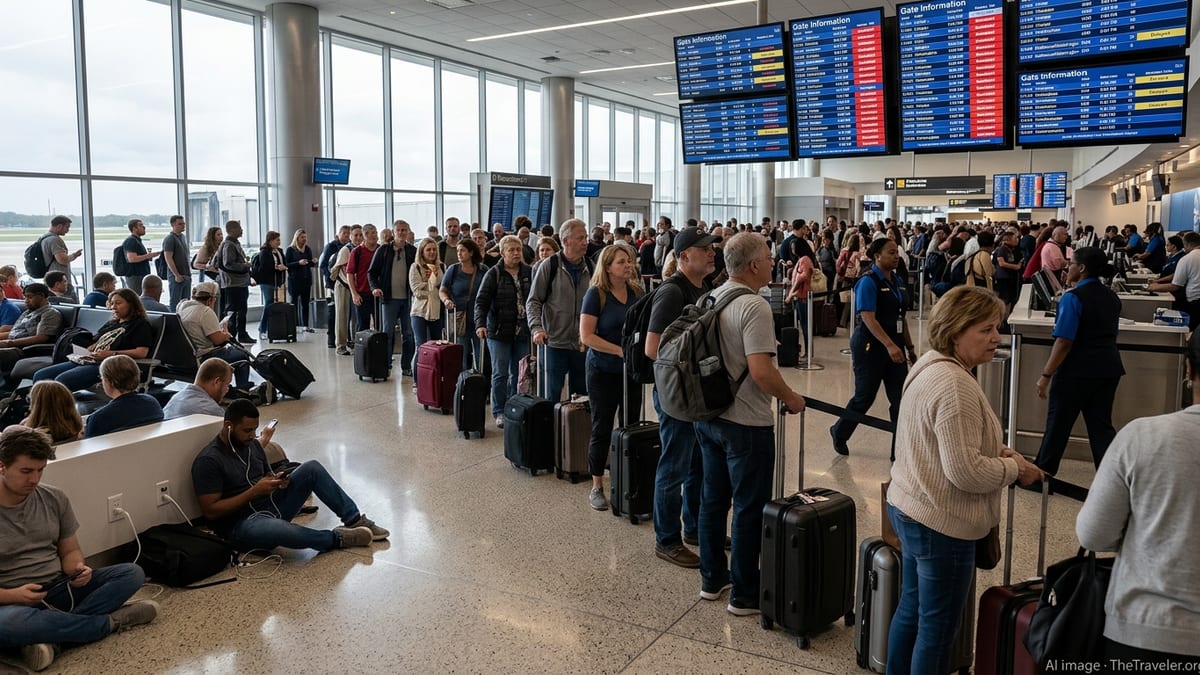
Ripple Effects From New Orleans Across Key East Coast Hubs
According to live flight-tracking boards and airline status pages on Tuesday, a concentrated wave of cancellations and extended delays at Louis Armstrong New Orleans International Airport was sending disruption along some of the most heavily used domestic routes. Services to and from Tampa International, Philadelphia International, and Baltimore/Washington International were among those showing repeated schedule changes, with several departures removed from schedules entirely.
Published coverage and historical federal aviation data indicate that connections between New Orleans and these East Coast and Gulf Coast hubs form part of dense domestic networks, where aircraft and crew are routinely cycled through multiple cities each day. When rotations are interrupted at a key node such as New Orleans, knock-on effects can quickly spread to airports several states away as aircraft fail to arrive on time for subsequent segments.
Data compilations from recent months already show that Tampa, Philadelphia, and Baltimore/Washington manage millions of annual passengers and carry a notable share of delayed or disrupted flights. In that context, the additional strain of dozens of cancellations linked to New Orleans has raised the risk of rolling delays that extend well beyond a single afternoon or evening.
Passengers Confront Confusing, Shifting Flight Information
Travelers following their itineraries online reported a familiar pattern of creeping delays, gate changes, and sudden cancellations, particularly on routes touching New Orleans and the affected East Coast airports. In several instances described in open passenger forums, departure times were pushed back in 30 to 45 minute increments before flights eventually disappeared from departure screens.
Publicly available airline guidance notes that such incremental changes can reflect evolving assessments of weather, crew availability, or air traffic control constraints. However, the on-the-ground experience for passengers is often one of uncertainty, as they watch boarding times slip without clear expectations for when a definitive decision will be made.
Reports from recent disruption periods at major U.S. airports show that once a cancellation wave begins, travelers may face limited options for same-day rebooking, particularly on routes where aircraft are already heavily utilized. The situation at New Orleans, with dozens of flights removed from the schedule in a compressed time frame, suggested that some passengers would likely be moved onto services the following day or rerouted through secondary hubs.
Systemic Vulnerabilities in U.S. Air Travel Exposed Again
Analyses published by federal agencies and aviation researchers over the past year have highlighted how tightly coupled the U.S. air travel system has become, with aircraft and crews operating on schedules that leave little margin for error. When a single airport experiences sustained disruption, any imbalance in aircraft positioning can reverberate across the network, especially during already busy travel periods.
Benchmarking studies of U.S. and European air traffic performance have found that even modest declines in on-time arrival rates at a handful of major airports can translate into thousands of delayed passengers systemwide. Tampa, Philadelphia, and Baltimore/Washington feature in those rankings as significant nodes, with performance closely watched due to their role in connecting regional and long-haul routes.
The situation linked to New Orleans underscores those findings. When about 80 cancellations and more than 30 delays cluster around a single origin or connecting point, aircraft that should be flowing through multiple cities over the course of a day remain on the ground. As schedules compress, airlines must decide whether to consolidate flights, reassign aircraft, or cancel segments altogether, as appears to have occurred on several routes touching the affected airports.
Guidance for Travelers Facing the Current Disruptions
Public advisories from airlines and airport operators in recent disruption events consistently stress the importance of monitoring flight status through official airline channels rather than relying solely on third-party tools. Same-day updates delivered through mobile apps and text alerts have become the primary method for notifying passengers of gate changes, rolling delays, and cancellations.
Consumer travel advocates also note that in large disruption events, travelers often benefit from checking alternative routings, including connections through less congested hubs or nearby airports within driving distance. Historical data and anecdotal accounts from previous mass delay days suggest that seats can reappear unpredictably as airlines adjust their operations and shift aircraft between routes.
For those caught in the current wave of disruptions, standard passenger rights for U.S. domestic travel remain in focus, particularly when cancellations are attributed to factors within an airline’s control. Publicly available guidance from regulators outlines circumstances in which travelers may request refunds instead of credits, as well as what forms of assistance carriers typically provide during extensive delays.
Outlook for Operations at New Orleans and Connected Airports
Operational forecasts published by aviation data providers suggest that the immediate priority at Louis Armstrong New Orleans International Airport will be restoring regular aircraft and crew rotations. Once a significant backlog of cancellations has accumulated, the recovery process can take multiple scheduling cycles, especially if aircraft are out of position or if crews have reached duty-time limits.
For Tampa, Philadelphia, and Baltimore/Washington, the short-term outlook depends on how quickly flights into and out of New Orleans can be stabilized. If cancellations continue into additional waves of departures, these airports could see extended periods of elevated delays as they absorb rebooked passengers and repositioned aircraft.
Travel planners monitoring the situation suggest that passengers with nonessential or flexible itineraries involving New Orleans or the affected East Coast hubs may wish to consider adjusting travel dates where possible. For those who must travel, experts advise allowing significantly more time for connections and preparing for potential schedule changes, as the latest disruptions again reveal how swiftly localized problems can evolve into a multi-airport event across the U.S. network.