

More news on this day
Air Congo is preparing to launch a web of new routes from the Democratic Republic of Congo to Tanzania, Benin, South Africa, Uganda and Cameroon from late March 2026, a move that could redraw tourism and hotel demand patterns across several African regions just as governments push cheaper, visa-friendlier intra-African travel.
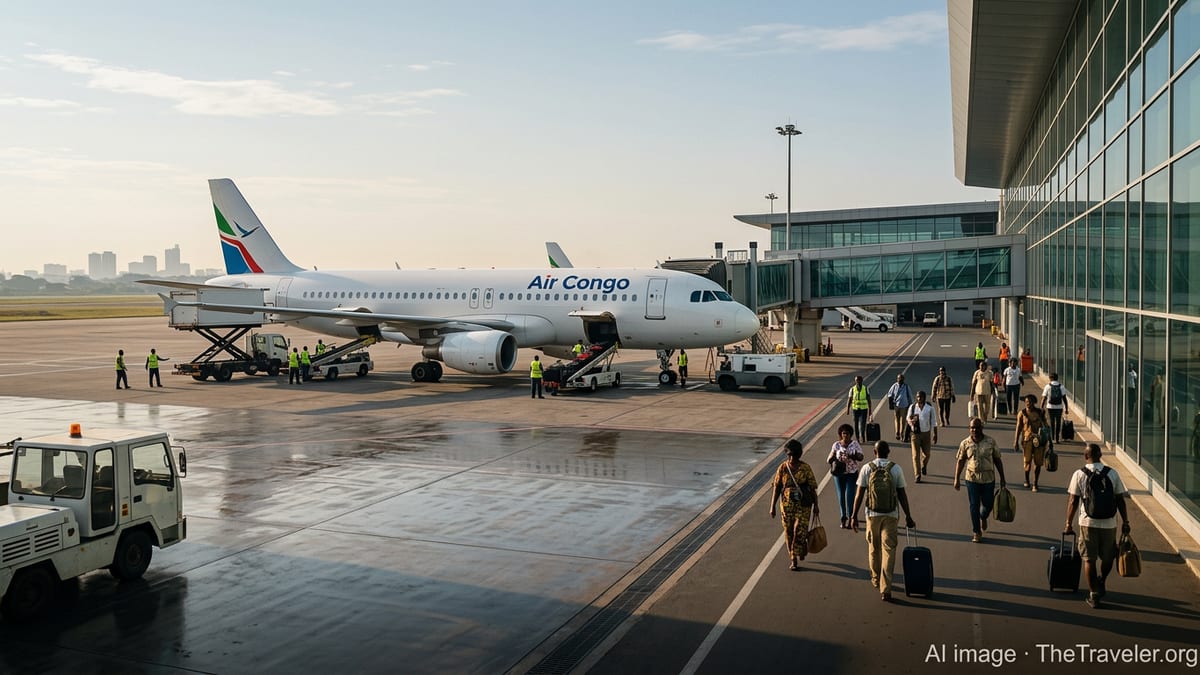
New Routes, New Gateways Into Africa’s Tourism Hubs
According to recent announcements from the Kinshasa-based carrier and official schedules, Air Congo will begin regional flights from March 22, 2026, progressively adding Johannesburg and Entebbe first, followed by Douala and Cotonou, and finally Dar es Salaam in early April. The new links will initially be operated with Boeing narrowbody aircraft, with Dar es Salaam scheduled to join the network around 4 April 2026 and other key cities phased in during the preceding weeks.
For leisure travelers, these routes effectively plug DR Congo directly into some of Africa’s busiest tourism and business hubs. Johannesburg is a key entry point for Southern African safaris and city breaks, Entebbe opens up Uganda’s gorilla trekking and Nile-related experiences, while Dar es Salaam acts as a jumping-off point for Zanzibar and mainland wildlife parks. Douala and Cotonou, meanwhile, serve as practical entry corridors to West and Central Africa’s coastal destinations, business centers and heritage sites.
The timing also aligns with broader efforts to cut intra-African air costs and improve connectivity. In West Africa, new policies targeting air travel taxes from 2026 are expected to reduce fares and stimulate cross-border trips, while regional aviation bodies are rolling out more efficient airspace management to lower operating costs. Together with Air Congo’s expansion, these measures could make multi-country African itineraries more accessible than at any time in the past decade.
For tourists planning 2026 and 2027 trips, the key change is practical: fewer connections through distant hubs and more options to string together multi-stop journeys within Africa, such as combining DR Congo’s cultural capital Kinshasa with beaches in Tanzania or business meetings in Johannesburg and Douala on a single ticket.
What This Means for Hotels in Tanzania, Benin, South Africa, Uganda and Cameroon
Hotel operators in cities like Johannesburg, Entebbe, Dar es Salaam, Douala and Cotonou are likely to see a gradual but noticeable uptick in arrivals from DR Congo once the routes mature. In Johannesburg and Dar es Salaam, the strongest early demand is expected from corporate travelers and VFR (visiting friends and relatives) traffic, segments that typically prioritize midscale and upper midscale brands near airports and business districts.
In Uganda and Tanzania, safari operators and lodge owners will be watching booking patterns closely. Easier access via Entebbe and Dar es Salaam can help shift some high-value visitors who previously flew in through more distant hubs, particularly for combined itineraries that pair DR Congo’s Virunga region or urban stays in Kinshasa with gorilla trekking in Uganda or beach holidays on Zanzibar.
In Benin and Cameroon, the effect may be more gradual but still meaningful. Cotonou’s coastal hotel strip and Douala’s business-focused properties stand to benefit from new corporate ties and regional trade missions, especially as airfares soften under broader West African reforms. Boutique and business hotels can expect short-notice weekday bookings tied to trade, logistics and extractive industries, rather than purely leisure-driven peaks.
Across all five countries, hoteliers may need to adapt to more short-stay, multi-leg trips rather than classic weeklong resort bookings. That implies a premium on flexible cancellation policies, efficient airport transfers, late check-in capability and multilingual front-desk staff who can handle travelers crossing multiple borders in a single week.
How Tourists Can Take Advantage of the New Connectivity
For international tourists using Kinshasa or Lubumbashi as a starting point, Air Congo’s new routes open the door to creative, multi-country itineraries without backtracking through Europe or the Middle East. A traveler could, for example, arrive in DR Congo, spend several days in Kinshasa, then connect directly to Entebbe for gorilla trekking or to Dar es Salaam for a beach and safari combination before flying home from Johannesburg.
Travel planners suggest watching closely for through-fare combinations and interline agreements once schedules are finalized. Even where fully integrated tickets are not immediately available, separate tickets on Air Congo and other African carriers can still be combined, but travelers should build in generous connection times and ensure they understand baggage rules and visa requirements for each transit point.
Tourists should also monitor evolving visa regimes and regional agreements designed to make cross-border travel smoother. Some East and West African states have been expanding e-visa systems and experimenting with regional visas that cover multiple countries. Aligning a trip with these policies can significantly reduce both paperwork and costs, especially for itineraries linking DR Congo with Tanzania, Uganda or Benin.
Booking windows will matter. As with many new African routes, promotional fares are likely in the early months after launch, followed by adjustments based on demand and fuel prices. Flexible travelers who can consider shoulder-season departures in late 2026 or early 2027 may find the best mix of lower airfares and hotel availability before capacity fully fills.
Opportunities and Pressures for Africa’s Hospitality Sector
On the supply side, Air Congo’s expansion arrives as African aviation undergoes a broader transformation. Regional initiatives to liberalize airspace, allow more direct routing and reduce duplication of fees are designed to make intra-African flying faster and cheaper, which in turn supports longer and more complex leisure itineraries. For hotels, this could mean more nights booked across multiple cities instead of single-destination vacations.
However, the hospitality sector will need to navigate several pressures. In secondary cities like Entebbe, Douala and Cotonou, room supply has not grown as quickly as in major capitals, and sudden spikes in demand from new air links can strain available midrange inventory. This may push average daily rates higher in the short term, especially during peak conference and holiday periods.
Infrastructure is another constraint. While Johannesburg and Dar es Salaam boast relatively mature hotel and airport ecosystems, some regional airports and road links in West and Central Africa still face bottlenecks. Hotels may need to coordinate more closely with local transport providers to ensure reliable transfers, particularly for late-night or early-morning arrivals tied to new flight timings.
For investors eyeing new properties, the Air Congo routes could serve as a signal to accelerate pipeline projects in airport-adjacent corridors and business districts. But analysts caution that demand patterns may take at least 18 to 24 months to stabilize as travelers test new routings and as competing carriers adjust their networks.
What Hotels Should Do Now to Capture New Demand
Industry consultants say the most immediate step for hotels in the affected cities is to strengthen their visibility in DR Congo’s corporate and leisure markets. That can include targeted partnerships with Kinshasa-based travel agencies, corporate travel managers and online platforms that Congolese travelers already use, along with French-language marketing materials that speak directly to this audience.
Operationally, hotels should review check-in and check-out procedures, airport transfer offerings and early-breakfast or late-dinner options to ensure they line up with Air Congo’s published arrival and departure times. For example, properties serving Johannesburg, Entebbe or Dar es Salaam may wish to guarantee fast-track late check-in for evening arrivals and reliable wake-up calls for early morning departures.
Training front-line staff will be equally important. With more guests stitching together multi-country trips, concierge teams should be prepared to advise on onward connections, local safety information, regional payment options and basic documentation requirements. That level of support can be a deciding factor for repeat business among both business and leisure guests.
Finally, dynamic pricing strategies and flexible group policies will help hotels adapt as demand settles. Shorter booking windows from regional travelers, combined with new events and trade shows arising from improved connectivity, will reward properties that can react quickly to spikes in interest from DR Congo and neighboring markets.