

More news on this day
After decades of studies, election promises and shelved schemes, Australia’s long-discussed high-speed rail between Sydney and Newcastle has taken its most concrete steps yet, fuelling equal parts excitement and scepticism among travellers along the busy coastal corridor.
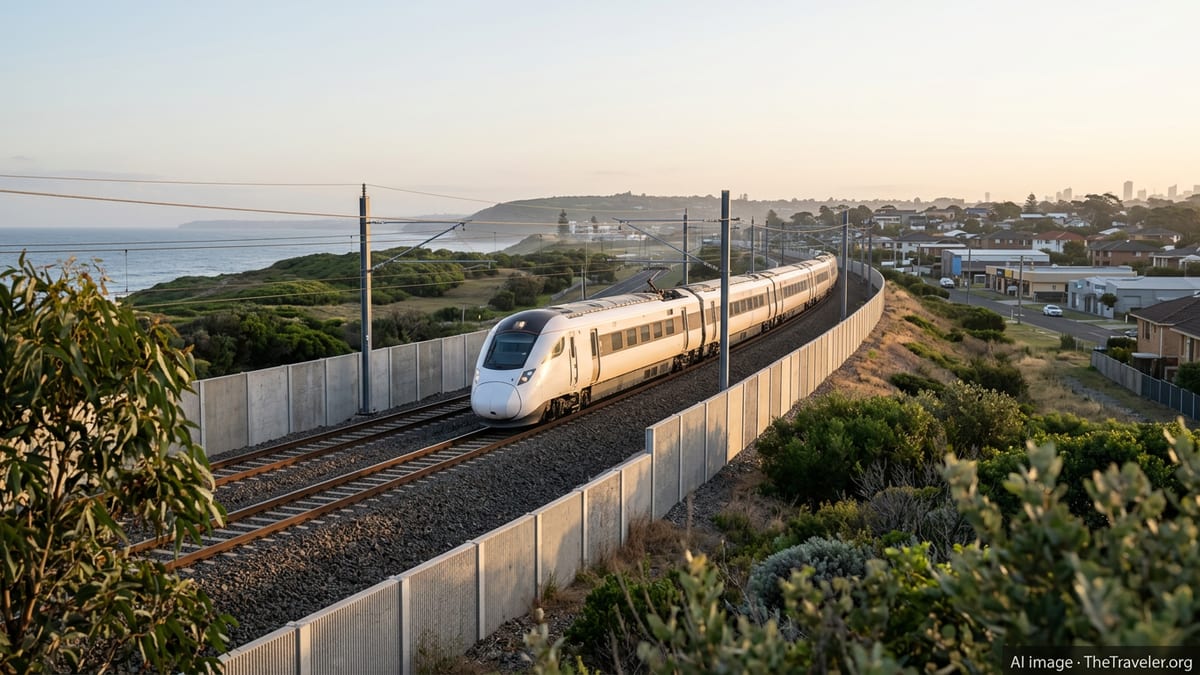
A Project That Finally Has Money, Maps and a Mandate
The federal government has committed nearly $660 million to detailed planning for a high-speed rail link between Sydney and Newcastle, positioning it as the first leg of a broader east coast fast rail network. The project, overseen by the national High Speed Rail Authority, is in a two-year development phase aimed at nailing down design, tunnelling and station locations, along with cost and risk.
Officials say the plan is to have the line “shovel-ready” by 2028, with a final investment decision slated for that year. The latest funding round, announced in late February 2026, will pay for engineers and planners to work metre by metre along the proposed 194-kilometre corridor, most of it in tunnels beneath the densely settled coastal strip and waterways.
The business case, now released by the government and endorsed by Infrastructure Australia, outlines a first stage with four stations: Broadmeadow in Newcastle, a Lake Macquarie stop, a Central Coast station and Central Sydney. Those stops are intended to maximise both commuter and long-distance travel demand, while laying the foundations for eventual extensions to Western Sydney Airport, Brisbane and Melbourne.
For a country that remains the only inhabited continent without high-speed rail, the combination of a legislated authority, a completed business case and hundreds of millions of dollars in federal funding marks a significant shift from past, more speculative proposals.
Travel Time Promises: From Two Hours Plus to Just One
For travellers who regularly grind along the existing coastal rail line or crawl up the Pacific Motorway, the headline promise is simple: speed. The government’s business case projects journey times between Newcastle and Central Sydney of about 60 minutes, compared with current rail journeys that often stretch beyond two and a half hours.
Links from the Central Coast to either Sydney or Newcastle are expected to take roughly 30 minutes, effectively pulling major regional centres into a daily commuting orbit of both cities. Trains would run at up to 320 kilometres an hour between the Central Coast and Newcastle, with slightly lower speeds closer to Sydney where tunnel diameters limit maximum velocity.
Such timings would put Newcastle and key Central Coast hubs into the kind of fast, frequent rail relationship with Sydney that many Australians associate with routes in Japan or Europe. For business travellers, it raises the prospect of same-day meetings in both cities without relying on congested highways or relatively short but time-consuming flights.
But these benefits will not arrive quickly. Even on the most optimistic scenarios, the first stage is not expected to open before the late 2030s, with Broadmeadow, Lake Macquarie and Central Coast stations targeted by around 2037 and Central Sydney by 2039.
Economy, Housing and Tourism Along the Corridor
The business case argues the project is about more than shaving time from the Newcastle commute. Over a 50-year horizon, the line is projected to add roughly a quarter of a trillion dollars to the national economy and support close to 100,000 jobs, driven by construction, operations and the broader development it is expected to unlock.
Property and planning experts say the greatest changes are likely to unfold along the Central Coast and in Newcastle’s inner suburbs. Faster, more reliable access to Sydney could push businesses and government agencies to relocate offices north, attracted by lower commercial rents and lifestyle advantages, while still maintaining easy links to clients and decision-makers in the capital.
For housing, planners see high-speed rail as a chance to relieve pressure on Sydney’s overheated property market by making outer-urban and regional communities more viable for people who still work part or full time in the city. New residential precincts clustered around proposed stations, particularly on the Central Coast, are already being discussed by local councils and developers.
Tourism operators are likewise eyeing the potential for same-day return trips between Sydney and the Hunter or Lake Macquarie, as well as easier weekend escapes for city residents. The promise of an hour-long trip could recast Newcastle from a distant regional city into a near-urban beach and cultural destination for Sydneysiders.
A Long History of Broken Promises Breeds Scepticism
Yet after at least a dozen previous attempts to kickstart high-speed or faster rail along the same corridor, many locals say they will believe it when they see bulldozers on site. Community leaders on the Central Coast and in the Hunter describe residents as “rightly cynical,” noting that reports, glossy visualisations and political announcements have repeatedly come and gone.
For decades, studies have recommended prioritising faster links to Newcastle and Wollongong, but successive governments have baulked at the price tag, route complexity and political risk that come with a mega-project cutting through established suburbs and valued landscapes. Each new promise has layered fresh scepticism on top of old frustration.
This time, advocates point to some tangible differences: a dedicated High Speed Rail Authority with statutory backing, a completed and publicly released business case, and independent endorsement from Infrastructure Australia. They argue that the government is now spending hundreds of millions not on more conceptual studies, but on the detailed design, consultation and approvals needed before excavation can start.
Even so, the scale of the estimated cost for the first Sydney–Newcastle phase, around 55 billion dollars and potentially much more once connections to Western Sydney Airport are included, leaves ample room for political nervousness. Any change of government, economic downturn or cost overrun could test long-term commitment to the project.
Will Travellers Ultimately Get On Board?
For frequent travellers between Sydney and Newcastle, the question is less about whether high-speed rail is desirable and more about whether it will actually be built in their travelling lifetime. Many have seen visions of sleek trains on artist impressions before, only to return to crowded, slow intercity services and weekend highway bottlenecks.
Survey work cited in the business case suggests that, if completed as promised, demand would be strong, with the line attracting commuters, leisure travellers and visitors who currently choose to drive or fly. The challenge for planners and politicians is to convince a sceptical public that the latest timetable of decisions, design milestones and funding commitments is not just another prelude to quiet abandonment.
In the meantime, the government is urging patience, stressing the need for painstaking technical work on tunnelling, station placement and environmental impacts before construction companies can be brought in. Officials say getting those details right at this stage is essential if the eventual service is to be reliable, safe and expandable to a broader national network.
Whether travellers will believe that is another matter. For now, the high-speed rail link between Sydney and Newcastle sits in a familiar space for Australian infrastructure: tantalisingly close on paper, still distant on the ground, and the subject of intense debate in every community it aims to connect.