

The Willamette Valley has quietly evolved from an experimental wine frontier into one of North America’s most compelling cool-climate regions. Stretching more than 100 miles between Portland and Eugene, framed by Oregon’s Coast Range and the Cascades, it is a landscape of vineyards, hazelnut orchards, hop fields, and river towns that still feel distinctly small scale.
Travelers find a wine country that is approachable and pastoral rather than flashy, with winding back roads that invite slow exploration and tasting rooms that still feel personal. Understanding how the valley fits together is the key to planning a rewarding trip, from choosing which appellations to focus on to linking its most scenic drives with characterful towns and overnight stays.
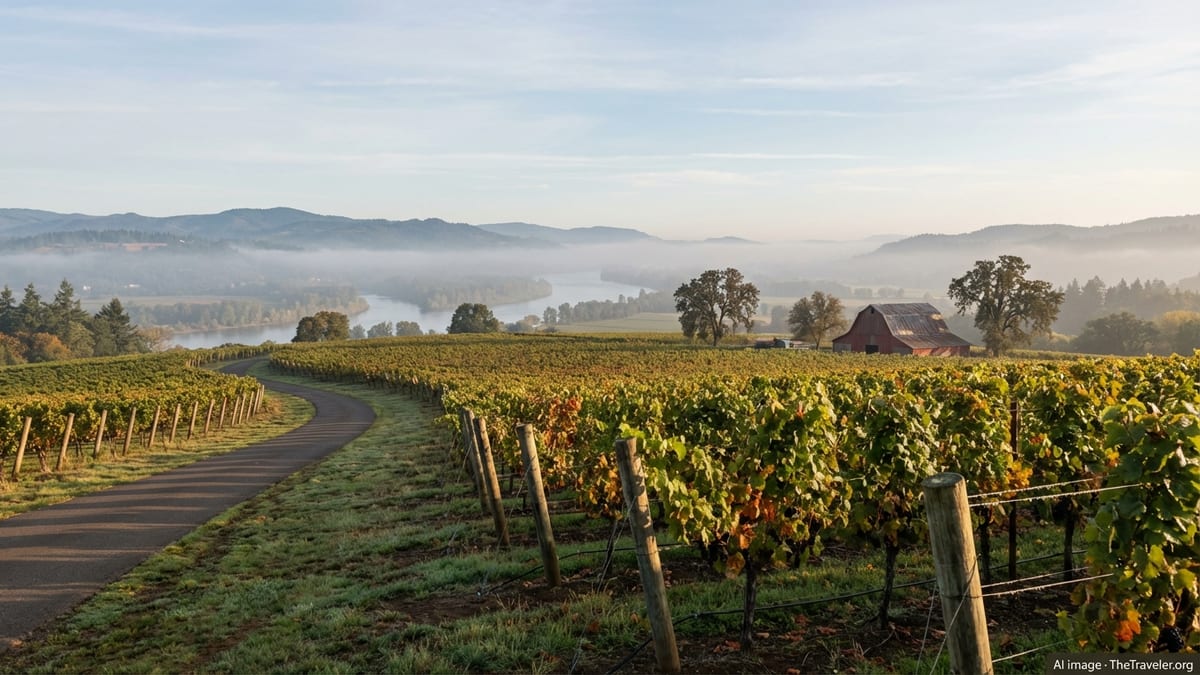
Understanding Oregon’s Willamette Valley
The Willamette Valley follows the Willamette River south from the Columbia River near Portland to just beyond Eugene, a broad alluvial plain sheltered by mountains on both sides. It is Oregon’s agricultural heartland, celebrated for wine grapes but also for berries, vegetables, grass seed, and hazelnuts. The valley’s deep, fertile soils trace back to Ice Age floods that filled this basin repeatedly with water and sediment, leaving layers of rich material that today support a striking diversity of crops.
In wine terms, the Willamette Valley is both a geographic region and a formal American Viticultural Area. The AVA covers more than three million acres and includes a series of smaller nested AVAs that trace the low hills on either side of the river. Most vineyards are planted between roughly 200 and 1,000 feet in elevation, where volcanic, marine sedimentary, and windblown loess soils, combined with cooler air and good drainage, create conditions that favor Pinot noir and other cool-climate varieties.
The climate here is maritime influenced, with cool wet winters, a long, relatively dry growing season, and warm days tempered by cool nights. The Coast Range shelters the valley from the wettest Pacific systems, while the Cascades block the continent’s more extreme continental weather. Rain tends to fall outside the prime growing months, so most summers bring reliably dry stretches just when grapes need concentration and flavor development.
Recent years have underscored how sensitive this balance can be. Warmer summers, smoke from regional wildfires, and periods of drought have all posed challenges, pushing growers toward thoughtful water management and canopy practices. Even so, the Willamette Valley remains one of the world’s leading regions for refined, site-expressive Pinot noir and increasingly for Chardonnay, Gamay, and sparkling wines, drawing visitors who want to taste nuanced wines close to where they grow.
Wine Country at a Glance: AVAs and Signature Styles
Although bottles may simply say “Willamette Valley,” wine travelers quickly encounter a patchwork of more specific appellations. Today there are eleven nested AVAs within the broader valley, most of them clustered in the north between Portland and Salem. Each reflects subtle differences in elevation, wind exposure, and soil, which in turn shape wine style. For visitors, these AVAs function less like strict boundaries and more like neighborhoods, offering helpful clues when deciding where to drive and which tasting rooms to seek out.
Northwest of Newberg and Dundee, the Dundee Hills and neighboring Yamhill-Carlton and Ribbon Ridge AVAs are among the most visited. Elevations here tend to be moderate, slopes are gentle, and vineyards sit on a mix of red volcanic and marine sedimentary soils. Pinot noirs from these hills are often described as red-fruited and supple, with floral aromatics and fine tannins, while Chardonnays lean toward bright stone fruit and citrus with refreshing acidity. The density of wineries in this compact area makes it easy to park the car for long stretches and move between tastings with minimal driving.
To the southwest near Salem, the Eola Amity Hills and the Van Duzer Corridor AVAs feel slightly more rugged and wind exposed. Afternoon breezes funnel through a gap in the Coast Range, dropping temperatures and extending the ripening window. Many producers credit these winds with delivering firmer structure and vibrant acidity in Pinot noir, often with darker cherry and savory herbal notes. The same conditions suit Chardonnay and sparkling wine, and visitors here often encounter a slightly more experimental spirit, with some wineries focusing on alternative varieties such as Gamay or Riesling.
Continuing south toward Corvallis and Eugene, vineyards become more scattered and the countryside feels quieter, with the Lower Long Tom and Mount Pisgah areas offering a sense of discovery. Here, slopes break out of the valley floor into a patchwork of oak savanna, forest, and vines, with views that stretch toward the Coast Range. Wines tend to be bright and energetic, and many tasting rooms emphasize sustainable or regenerative farming, reflecting a valley wide shift toward environmental stewardship and careful water use as summers trend warmer and drier.
Key Towns and Cities: Gateways to Wine Country
For many travelers, the Willamette Valley begins in Portland, Oregon’s largest city, at the confluence of the Willamette and Columbia rivers. While technically just beyond the core winegrowing hills, Portland serves as the primary air gateway and an urban counterpoint to the valley’s rural rhythm. Its food scene leans heavily on valley produce and wines, with restaurants and wine bars pouring bottles from nearby AVAs, making it easy to get a preview of the region before heading into the countryside.
Southwest of Portland, Newberg and Dundee form the heart of the northern valley wine trail. Once modest farming towns, they now host a growing collection of boutique inns, tasting rooms, and destination restaurants, while still feeling rooted in surrounding farmland. Travelers can spend entire days within a short radius of these towns, visiting estate vineyards in the Dundee Hills in the morning, pausing for lunch in town, then continuing to Yamhill-Carlton or Ribbon Ridge in the afternoon without long highway drives.
Farther south, McMinnville offers a slightly larger small city experience, with a walkable historic main street filled with tasting rooms, cafes, and shops. It serves as a practical base for exploring multiple AVAs in different directions, while also hosting events that anchor the region’s cultural calendar. Nearby, smaller towns such as Carlton, Amity, and Dayton have grown into low key hubs for tasting rooms and country restaurants, making them rewarding stops on slower scenic drives.
In the central and southern valley, Salem and Eugene bookend a quieter stretch of wine country. Salem, the state capital, lies within easy reach of Eola Amity Hills and the Van Duzer Corridor, while Eugene anchors the southern valley and offers ready access to the Lower Long Tom area and the forested foothills beyond. Both cities combine university or government energy with laid back neighborhoods and provide more traditional hotels, dining, and services for travelers linking a longer Oregon road trip with time in the vineyards.
Scenic Drives Through the Northern Willamette Valley
The northern Willamette Valley is compact enough that travelers can mix serious wine tasting with unhurried drives on two lane roads. One classic loop begins just outside Portland along Oregon Route 99W, which quickly leaves the city and passes through farmland toward Newberg and Dundee. By detouring onto side roads that climb into the Dundee Hills, drivers trade the main highway for narrow lanes that twist between vineyards, hazelnut groves, and Christmas tree farms, with frequent turnouts for tasting rooms and viewpoints.
From Dundee, a particularly scenic circuit heads west toward Carlton and Yamhill, tracing the foothills of the Coast Range. The road alternates between open valley vistas and short forested stretches, with low hills rising abruptly to frame vineyard slopes. In clear weather, views open toward the Cascades, adding snowcapped peaks to the horizon. This is a route suited to slow travel, with frequent opportunities to stop at roadside farm stands, picnic pullouts, or small town main streets that still feel oriented around local residents rather than tourism alone.
An alternative northern drive climbs into the Chehalem Mountains and Ribbon Ridge area, accessed by winding back roads that leave Newberg and coil up through mixed woodland and vines. Elevation here brings fresher air and changing perspectives on the valley floor below. Barns, century old orchards, and vineyard blocks share the hillsides, and in late summer road edges are lined with blackberries and wildflowers. With careful planning, travelers can string together visits to several hilltop wineries, ending the day with a sunset view over the valley before descending to their base in town.
Because many of these roads are rural, it is wise to build in extra time for slow farm vehicles, harvest traffic in late summer and early fall, and winter conditions that can bring fog and slick surfaces. Cell coverage can be patchy on some back roads, so downloading maps in advance and carrying a paper overview of the valley can make these drives more relaxed, especially for visitors unfamiliar with the area.
Exploring the Central and Southern Valley by Car
South of Salem, the Willamette Valley opens into longer agricultural vistas, hop fields, and fewer but more widely spaced vineyards. Driving here offers a sense of the valley’s scale, with the river often close at hand even when out of sight and the Coast Range forming a low blue wall to the west. U.S. Route 99E and Interstate 5 provide the most direct north south links, but the most satisfying routes for travelers often follow smaller roads that hug the river or trace the base of the surrounding hills.
One appealing day trip starts in Salem and heads west toward the Eola Amity Hills before looping south and east back toward the Willamette River. The hills rise quickly from the valley floor, and side roads crest ridgelines that provide sweeping views of patchwork fields, oak woodlands, and distant volcanoes in the Cascades on clear days. Tasting rooms here are often slightly farther apart than in the Dundee Hills, which results in stretches of quiet driving punctuated by intimate stops at estate vineyards and small, family run wineries.
Farther south, near Corvallis and Eugene, the Lower Long Tom area and the slopes around Mount Pisgah invite slower, exploratory drives that emphasize scenery and outdoor recreation as much as wine. Narrow lanes wind through mossy forests, cross small creeks, and break out into clearings where vineyards and orchards share space with pastures. It is easy to combine a morning hike or wildlife refuge visit with an afternoon tasting, especially in seasons when temperatures are mild and daylight is generous.
Because services become more dispersed in the southern valley, advance planning is important. Fuel stations, restaurants, and lodging exist but are often clustered in the larger towns, so it is best to time scenic loops to allow for leisurely breaks in Salem, Corvallis, or Eugene. In hot, dry summers, checking local conditions is wise, since smoke, fire restrictions, or temporary closures in nearby forest areas can influence route choices even when vineyards themselves remain open.
Seasonal Travel, Climate, and Responsible Visits
The Willamette Valley rewards visits in every season, but the experience changes significantly through the year. Spring brings bright green hillsides, wildflowers, and the first warm afternoons, though rain showers remain common. Vineyards are just beginning to leaf out, tasting rooms are less crowded than in autumn, and lodging rates can be more favorable. By early summer, long daylight hours and mostly dry weather make this an easy season for long scenic drives and outdoor tastings.
Late summer and early fall are the valley’s signature months for wine travelers. Grapes approach ripeness, many wineries host harvest related events, and the patchwork of vineyards and orchards turns golden. This is also the busiest time of year, particularly on weekends, so advance reservations for tastings, restaurants, and accommodation are increasingly necessary. Autumn weather can be variable, with a mix of clear, crisp days and periods of rain, but even stormy days have their own appeal, with low clouds draping the hills and tasting rooms feeling especially cozy.
Winter is quieter, with bare vines and shorter days, but it remains a rewarding time for travelers who prioritize conversation and unhurried tastings over landscape photography. Snow is uncommon on the valley floor, though nearby ranges may turn white, and some wineries use this season to highlight library releases or special pairings. Reduced traffic on back roads also makes winter a good time for locals and frequent visitors to explore new corners of the AVAs.
Across all seasons, climate change is reshaping the context in subtle but important ways. Warmer growing seasons and episodes of drought and smoke have encouraged many growers to invest in water efficiency, soil health, and fire readiness. Visitors can support these efforts by choosing wineries that communicate clearly about sustainable practices, respecting posted fire restrictions on scenic drives, and staying informed about air quality and local advisories, especially during late summer. Being flexible about outdoor plans and routes is increasingly part of responsible travel in the West, and the Willamette Valley is no exception.
Beyond the Glass: Outdoor Experiences and Local Culture
While wine may be the primary draw, the Willamette Valley offers a broad mix of experiences that encourage travelers to slow down. The Willamette River itself is a defining feature, with sections suitable for gentle paddling in kayaks or canoes and riverside parks that serve as natural breaks between tasting appointments. Cycling is another popular way to experience the valley. Quiet back roads, rolling hills, and views across vineyards and farms make for rewarding day rides, though cyclists should be prepared for narrow shoulders in some rural stretches.
Hiking options range from low elevation forest trails in the Coast Range foothills to oak savanna paths and small nature reserves scattered through the valley. Near Salem and Eugene, short drives lead to trailheads that offer glimpses of waterfalls, old growth forest, and viewpoints looking back toward the patchwork of fields. In spring and early summer, wildflower displays can be impressive, while autumn brings colorful foliage, particularly in mixed hardwood stands and riparian zones.
The valley’s agricultural base shapes its food culture as directly as it shapes its wines. Farm to table restaurants source vegetables, fruit, and meat from within the region, and seasonal farmers markets appear in most towns from late spring through fall. Travelers can expect menus that shift with the calendar, from asparagus and strawberries in early season to tomatoes, corn, and stone fruit in high summer and squash and mushrooms in autumn. Even casual cafes often feature local producers on their boards and wine lists.
Cultural life in the Willamette Valley is anchored by a mix of small festivals, university events, and winery hosted concerts or dinners. While marquee wine events occasionally draw national attention, the more characteristic experiences are modest ones: a live music set on a lawn overlooking vineyards, a harvest open house at a family winery, or a seasonal celebration in a small town square. Checking regional calendars and winery announcements ahead of time can help visitors align scenic drives and tastings with local happenings without overpacking their days.
The Takeaway
Exploring the Willamette Valley is less about ticking off a checklist of famous estates and more about getting comfortable with a landscape of gentle hills, working farms, and small towns. The region’s nested AVAs provide an organizing framework but do not demand a rigid itinerary. Instead, they invite travelers to choose one or two hill ranges or river corridors per day, building routes that balance tasting, scenery, and pauses in local communities.
Thoughtful planning makes a significant difference. Starting and ending days in towns like Newberg, McMinnville, or Eugene keeps drives manageable while still allowing for detours along quieter roads. Reserving tastings, especially during peak autumn weekends, ensures a relaxed pace and more personal experiences, while leaving unstructured time in the schedule creates room for spontaneous stops at a roadside farm stand, an unexpected viewpoint, or a tasting room that catches the eye along a back road.
Most of all, the Willamette Valley rewards curiosity and respect. Approaching it as a living agricultural region rather than a purely touristic one means paying attention to harvest traffic, honoring tasting room reservations and closing times, and supporting businesses that care for their land and communities. In return, travelers are welcomed into a wine country that still feels grounded, where conversations with growers and winemakers are common and where scenic drives are as integral to the experience as what ends up in the glass.
FAQ
Q1. Where exactly is the Willamette Valley located?
The Willamette Valley stretches south from the Portland area to just beyond Eugene in western Oregon, between the Coast Range and the Cascade Mountains.
Q2. What is the Willamette Valley best known for in terms of wine?
The valley is especially known for cool climate Pinot noir, with growing recognition for Chardonnay, Pinot gris, and sparkling wines from the same varieties.
Q3. How many wineries are in the Willamette Valley?
The exact number changes year to year, but there are now several hundred wineries across the broader Willamette Valley AVA and its nested appellations.
Q4. Which towns make the best base for exploring wine country?
Newberg, Dundee, McMinnville, and Carlton are ideal in the north, while Salem, Corvallis, and Eugene are practical bases for the central and southern valley.
Q5. Do I need reservations for wine tasting?
Reservations are strongly recommended, especially on weekends and during late summer and fall, though some tasting rooms still accept limited walk ins when space allows.
Q6. When is the best time of year to visit the Willamette Valley?
Late spring through early fall offers the most predictable weather, with harvest season in September and October providing the most activity but also the largest crowds.
Q7. Is it possible to visit without renting a car?
Limited tours and car services exist, but having a car or hiring a driver gives far more flexibility, since many vineyards and scenic routes lie on rural back roads.
Q8. How many wineries should I plan to visit in one day?
Three to four tastings per day is usually comfortable, leaving time for meals, scenic drives, and conversation without feeling rushed or overextended.
Q9. Are there things to do in the Willamette Valley besides wine tasting?
Yes, the valley offers river paddling, cycling, hiking, farm visits, small town shopping, and a growing calendar of cultural events and seasonal festivals.
Q10. How is climate change affecting travel to the Willamette Valley?
Warmer summers, occasional smoke, and periods of drought have made seasonal planning and checking local conditions more important, but most visits still proceed smoothly.