

Few skylines are as instantly recognizable as Chicago’s, and no building defines it more than Willis Tower. Its 103rd-floor Skydeck and famous glass-floor Ledge have become a modern rite of passage for visitors who want a true bird’s-eye view of the city. This guide walks you through everything you need to know before you ride the high-speed elevator up: ticket types, typical prices, best times to visit, how timed entry works, and practical tips that will make your experience smoother, faster, and more memorable.
Willis Tower & Skydeck: The Basics
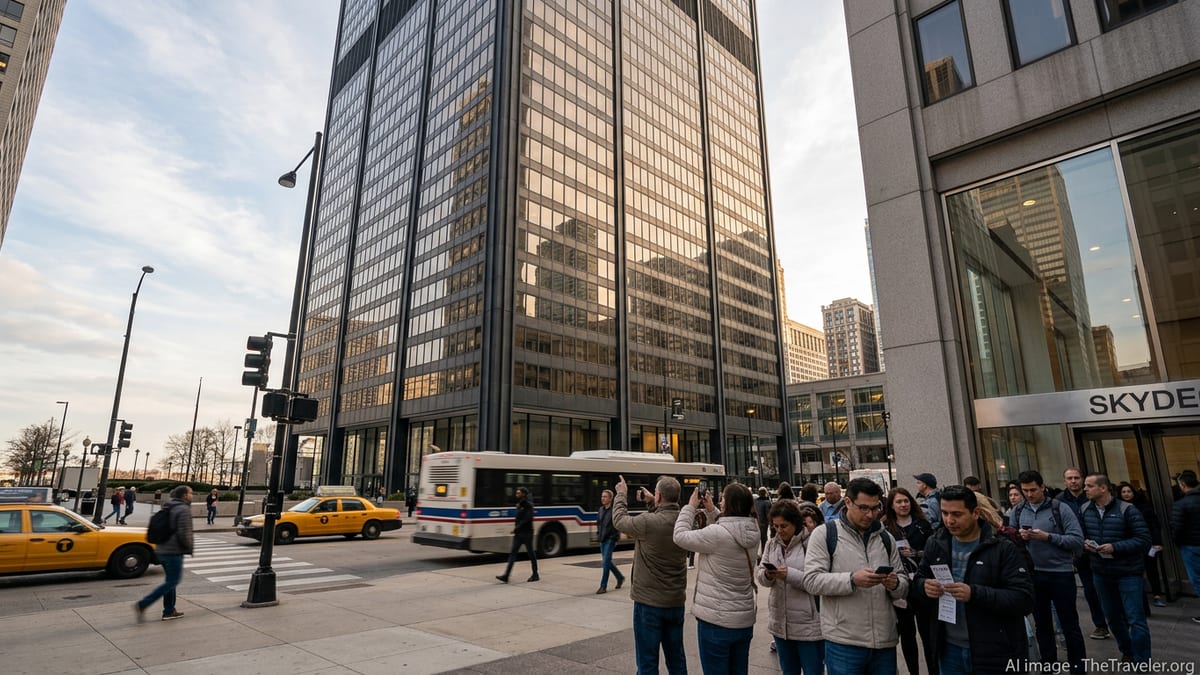
Willis Tower, still called “Sears Tower” by many locals, is the black, bundled-tube skyscraper anchoring the southwest edge of Chicago’s Loop business district. It rises to 110 stories and roughly 1,450 feet to its roof, making it one of the tallest buildings in the Western Hemisphere. The Skydeck sits on the 103rd floor, high above the Chicago River and just a few blocks from the Art Institute, Millennium Park, and the main cluster of Loop hotels and offices.
The Skydeck experience today is much more than just a quick elevator ride to an observation floor. Before reaching the top, visitors walk through a multimillion-dollar, museum-style exhibit level that highlights Chicago’s neighborhoods, food, music, architecture, and the tower’s engineering. For many travelers, this lower-level museum ends up taking 20–30 minutes because there are interactive displays, Chicago-themed photo ops, and fun scale models that children can touch and explore.
The star attraction is The Ledge, a set of clear glass balconies that extend a few feet out from the building’s facade. Standing on the transparent floor, you can look straight down to Wacker Drive and the commuter rail tracks nearly a quarter mile below. The sensation is intense even for people who are normally comfortable with heights, so it helps to know what to expect and how much time you will have once you step onto the glass.
On a clear day, marketing materials and visitor reports note that you can see as far as 40 to 50 miles from the Skydeck. Travelers regularly report spotting the shoreline of Indiana across Lake Michigan and, with especially crisp winter air, hints of Wisconsin to the north. Even if the weather turns hazy, the grid of downtown streets, the Chicago River’s sharp bends, and the miles of rail lines heading into Union Station and Ogilvie Transportation Center make the view unmistakably Chicago.
Location, Hours, and When to Go
Willis Tower’s official address is 233 South Wacker Drive, but Skydeck visitors enter on the Jackson Boulevard side of the building, on the south side of the tower. This entrance faces a stretch of Jackson that is busy on weekdays with office workers and commuter buses, and quieter on weekend mornings. Underground, the building connects by short walks to several CTA train stations, including Quincy and LaSalle stations for the Brown, Orange, Pink, and Blue Lines, making it easy to reach from neighborhoods like Wicker Park, Logan Square, or Bridgeport without needing a car.
Skydeck hours vary a bit by season. As of early 2026, the visitor guide indicates extended hours from March through September, typically opening around 9 am and closing around 10 pm, with earlier opening times on Saturdays. From October through February, weekday closing times are often earlier, around 8 pm, while weekend evenings still run later. Last entry is usually 30 minutes before closing, which means you cannot simply appear at 9:50 pm and expect to get up top. Always double-check the current day’s schedule on the Skydeck’s official information channels before you plan a late-night visit, since holiday hours and special events can shorten or extend the day.
If you care about photography, timing matters. Many travelers aim for “golden hour” and sunset, arriving 60 to 90 minutes before the published sunset time. That buffer lets you clear security, enjoy the exhibit level, and be in front of the windows when the light softens over the Chicago River and the city lights start to switch on. On a July weekend, for example, sunset can be close to 8:30 pm; a 7 pm or 7:30 pm entry slot usually works well. In winter, when sunset can fall before 5 pm, an early afternoon ticket lets you see the city in daylight, watch sunset, and stay for night views, all in one visit.
Weekdays, especially Tuesday through Thursday mornings, tend to be quieter, while Saturday afternoons and holiday periods such as Memorial Day weekend, Labor Day weekend, and school breaks are often the busiest. A family arriving on a Saturday in July at 2 pm should expect long lines at security and for elevators, while couples visiting on a Monday evening in April often report moving through the building relatively quickly. If your Chicago schedule is flexible, plan Skydeck for a less popular day and time.
Ticket Options, Typical Prices, and Passes
Skydeck uses timed-entry tickets, which means you choose a specific date and a 30-minute entry window when you purchase. Standard general admission tickets typically cost in the mid-30s in US dollars for adults and somewhat less for children. Various travel blogs and attraction roundups as of 2025 list base adult prices in the 30 to 40 dollar range and premium tickets around the mid-50s, though these figures can change with demand, inflation, or seasonal promotions. When budgeting, it is safer to assume you will pay slightly more than older guidebooks suggest and treat anything lower you find as a pleasant surprise.
In addition to standard timed entry, Skydeck sells expedited or “VIP” style tickets at a higher price point. These options generally reduce your waiting time for elevators and sometimes include extras such as a professional Ledge photo or a guided tour. For example, the “Street to Sky” guided tour, highlighted in the official visitor materials, is a 90-minute small-group experience that includes a host leading you through the museum, priority elevator access, and a keepsake Ledge photo. As of 2026, this tour is advertised at around 65 dollars per person and runs at specific times, typically late morning and mid-afternoon on select days.
Third-party passes can also include Skydeck. The Chicago CityPASS, for instance, treats Skydeck as a premium attraction with expedited entry when you reserve a time slot through its system. Travelers who bought the five-attraction CityPASS in 2025 reported paying around 130 to 140 dollars for adults and saving meaningfully compared with buying individual tickets to places like Shedd Aquarium, the Field Museum, and an architecture river cruise. There is also a Chicago C3 version that lets you pick three attractions, often including Skydeck as a general admission option. Separate all-inclusive passes from companies like Go City sometimes feature Skydeck as one of the available attractions if you choose their higher-tier product.
Whether these passes are worth it depends on your itinerary. A family of four planning to visit only Skydeck and perhaps one museum might be better off buying direct Skydeck tickets and individual museum admission. On the other hand, a couple visiting in June who knows they want to see Skydeck, Shedd Aquarium, the Art Institute, and take a river architecture cruise over three days will usually save money with a multi-attraction pass that includes timed, expedited Skydeck entry. Keep in mind that even with a pass, you still usually need to book a specific Skydeck time in advance, and some slots, like sunset on Saturdays, can fill several days ahead.
How Timed Entry and The Ledge Work
When you buy a Skydeck ticket, you are buying the right to enter the experience during a particular 30-minute window. This does not mean you will step onto The Ledge exactly at that time, but it secures your place in the entry queue. On arrival at the Jackson Boulevard entrance, you pass through airport-style security screening and then proceed to the museum level and elevator lines. Visitor reports from 2024 and 2025 suggest that, on average, guests spend about 60 to 90 minutes from arrival to exit, including time exploring exhibits and waiting for elevators, though peak summer Saturdays can stretch that longer.
The Ledge is organized to move people through without rushing them excessively. Official guidelines shared in the printable visitor reference indicate that small parties of up to three people usually get about 60 seconds on the glass, while groups of four or more get around 90 seconds. Staff members are stationed at each glass box to help visitors step on and off safely, manage the line, and assist with photos if you hand them your phone. Families often use that minute to capture a few variations: one smiling shot for grandparents, one fun “jumping” shot if the group is brave, and one close-up of shoes against the glass floor looking down.
On busier days, lines can form specifically for The Ledge, separate from the general circulation around the observation floor. If you are traveling with young children, it helps to explain ahead of time that the glass is strong and heavily engineered to handle the weight, and that many thousands of people walk onto it every week. The Ledge boxes are designed with thick, laminated glass panels and are regularly inspected. While staff members will not give you the engineering specs as you step out, it can reassure anxious visitors to know that the attraction has been operating for years with intense attention to safety.
If visibility is poor due to fog or low cloud cover, Skydeck sometimes warns visitors at the entrance or on its information channels. In practice, travelers describe two main approaches. Some choose to go anyway, treating the ghostly outlines of nearby buildings disappearing into the fog as a unique experience. Others request to reschedule for another time, something the attraction has occasionally accommodated when conditions are truly “no view.” If you have very limited time in Chicago, it can help to plan your Skydeck visit early in your stay, leaving room to adjust if weather turns against you.
Getting There, Security, and Practical Logistics
Because Willis Tower stands in the heart of the Loop, public transportation is usually the easiest way to arrive. The Quincy CTA station on the Brown, Orange, Pink, and Purple Lines is only a few minutes’ walk away, and LaSalle station for the Blue Line is close as well. From many downtown hotels, such as those along Michigan Avenue or in the West Loop, Skydeck is a 10 to 20 minute walk. Locals often recommend avoiding driving into this part of the Loop during weekday rush hours, when traffic on Wacker Drive, Jackson, and nearby streets becomes congested and curbside drop-off space is limited.
If you do drive, several private garages and lots surround Willis Tower. An InterPark garage on Adams Street, one block north of the building, is listed in Skydeck’s visitor information as a convenient option. Daytime rates here and at nearby garages can be substantial, often reaching 30 to 50 dollars for several hours depending on the time and day. Travelers who are staying in outer neighborhoods or suburbs sometimes choose to park near a CTA or Metra station and ride the train downtown instead, avoiding Loop parking costs completely.
Security screening at the Skydeck entrance is similar to what you might see at a sports stadium. Bags pass through X-ray machines and guests walk through metal detectors. Pocketknives, large tripods, and some other items can be refused. This process usually moves quickly but can create a noticeable line behind tour buses and school groups. To speed your way through, pack light and keep small items like keys, wallets, and phones in an easily accessible pocket. Strollers are normally allowed, though staff may ask you to fold them before boarding elevators if the cabin is crowded.
Once you are on the observation level, there are restrooms, a souvenir shop, and sometimes a small snack or coffee stand. Many travelers combine their Skydeck visit with a stop at nearby spots like Revival Food Hall or food courts inside Loop office towers for a meal before or after their time at Willis Tower. If you go early on a weekday, you will see office workers grabbing coffee and commuters rushing through the streets below, which reinforces that this is still a working skyscraper, not just a tourist attraction.
Best Times to Visit and How to Avoid Crowds
Choosing when to visit Skydeck can make a noticeable difference in how long you wait and how relaxed you feel on The Ledge. Visitor reports and ticketing patterns show that the busiest times are usually midafternoon on weekends, especially Saturdays between about 1 pm and 5 pm from late spring through early fall. Holiday periods such as spring break, Thanksgiving weekend, and the days around Christmas and New Year’s can resemble peak summer in terms of crowds.
For a calmer experience, consider a weekday morning. Arriving shortly after opening, for instance at 9 am on a Tuesday in May or November, often means shorter lines at security and for elevators. Families with young children who tend to wake up early may find this an easier time to visit than late evening. Another good option is weeknight evenings outside of peak tourist season. A couple visiting on a Thursday in March around 7 pm can sometimes enjoy sunset and early night views without the shoulder-to-shoulder feeling common on Saturday nights in July.
Weather should also factor into your planning. While Chicago winters are cold, the air is often dry and clear, producing excellent visibility. Travelers who visited in January and February frequently mention especially crisp views of the lake and suburbs. In contrast, mid-summer days can be hazy, especially in the afternoon, though evenings still offer dramatic city lights. If heavy thunderstorms are in the forecast, keep in mind that the attraction may temporarily restrict access or close if conditions make it unsafe, so it is wise to check for any alerts on the day of your visit.
Finally, treat your timed entry as a goal rather than a last-minute deadline. Arriving 15 to 30 minutes before your chosen window gives you a cushion for unexpected delays, such as a slower-than-expected security line or confusion about the correct entrance door on Jackson Boulevard. If you are coming directly from another timed activity, such as a river cruise or museum reservation, build in extra transit time so that a late-running tour does not force you to miss your Skydeck slot.
Accessibility, Families, and Visitor Comfort
Skydeck is designed to be accessible for a wide range of visitors. Elevators, ramps, and doorways can accommodate most wheelchairs and mobility scooters. Staff can assist with directions to accessible restrooms and with positioning wheelchairs near windows or on The Ledge. Some promotional materials and partner descriptions also highlight that Skydeck works with sensory-friendly initiatives, offering ways to bypass or minimize particularly stimulating exhibits. If someone in your group is sensitive to loud sounds or crowded spaces, you can ask staff about quieter routes or calmer times of day.
Families with children often find the museum exhibits on the way to the elevators especially engaging. Interactive displays make it easier for kids to understand Chicago’s history and how Willis Tower was built. However, the combination of height and glass can be intense for younger visitors. It helps to show them photos or short videos beforehand and to explain that The Ledge is strong and safe. Some parents choose to step onto the glass with the child in their arms for the first few seconds, and then let them stand independently when they feel more comfortable.
For comfort at the top, remember that you will be inside a climate-controlled space, but large windows can create warm or cool spots depending on the sun and season. Dressing in layers works well. There is limited seating on the observation floor, so older visitors or those who tire easily may appreciate taking short breaks near the inner walls away from the windows. Food and drinks are generally restricted, though small bottles of water are usually fine, so plan meals before or after your visit.
Photography is a major part of the Skydeck experience. Staff photographers are usually stationed near The Ledge to take professional shots that you can review and purchase later, while visitors are free to use their own phones and compact cameras at no extra charge. Large tripods or light stands are often prohibited for safety reasons. If you are serious about photos, wipe your phone lens before stepping onto The Ledge, and be ready with a few poses in mind so you can use your sixty to ninety seconds efficiently without feeling rushed.
Comparing Skydeck to Other Chicago Views
Travelers often compare Willis Tower’s Skydeck with 360 Chicago, the observation deck in the former John Hancock Center on North Michigan Avenue. Both offer sweeping views and both sometimes partner with city pass products. The main differences come down to location, perspective, and signature experiences. Skydeck sits at the southwestern edge of the Loop, giving you a commanding view of the Chicago River’s main branch, the West Loop, and the vast rail yards feeding into Union Station. From here you look down on many of the other skyscrapers, which emphasizes Willis Tower’s height.
360 Chicago, by contrast, is closer to the lake and the Magnificent Mile shopping district. Its vantage point showcases the shoreline, Oak Street Beach, and Lake Shore Drive’s curve more dramatically. Instead of glass balconies, it offers a thrill ride called TILT, where glass panels lean outward as you hold onto bars, sliding you gradually over the street below. TILT usually carries an additional fee beyond general admission. Some visitors prefer Skydeck’s more straightforward glass boxes, while others like the ride-style thrill of TILT. Those with limited time in Chicago might choose Skydeck for its status as the city’s tallest and most iconic tower, while repeat visitors sometimes enjoy doing both decks on different days for contrasting perspectives.
There are also rooftop bars and lounges scattered across downtown that offer views, though generally from much lower heights. For example, bars atop hotels and residential towers in the West Loop or River North give more intimate, angled looks at the skyline but not the expansive, four-state panorama Skydeck advertises. If you are traveling on a tight budget, one alternative some locals suggest is to enjoy the free views from places like the elevated tracks around the Loop or bridges over the Chicago River, and then choose just one paid observation deck for your big splurge.
For many first-time visitors, Skydeck wins out simply because standing on The Ledge has become a classic Chicago photo moment. Families often plan their entire downtown day around it: exploring Millennium Park in the morning, having deep-dish pizza for lunch, and then heading to Willis Tower in the late afternoon for sunset views and glass-floor photos before dinner in the West Loop.
The Takeaway
A visit to Willis Tower’s Skydeck is one of Chicago’s most iconic experiences, but it is much smoother when you understand how the attraction operates. Timed entry tickets, basic security screening, and a structured system for The Ledge mean you cannot simply wander in on a whim during peak summer weekends and expect a quick ride to the top. Planning your time, choosing the right ticket type, and keeping an eye on the weather significantly improve your odds of a relaxed visit.
If your budget allows, consider whether an expedited or guided option makes sense, especially during busy seasons or with impatient children. If you are stacking multiple attractions into a long weekend, compare Skydeck-inclusive passes against individual ticket purchases rather than assuming one option is always cheaper. Above all, give yourself enough time to enjoy the museum exhibits, soak in the 360-degree views, and ease any fear of heights before stepping onto The Ledge.
With realistic expectations and a bit of advance planning, Skydeck can be the highlight of a Chicago trip. You will leave not only with dramatic photos looking straight down to the streets but also with a clearer sense of how the city fits together, from the shoreline of Lake Michigan to the grid of neighborhoods stretching toward the horizon. For many travelers, that combination of thrill and orientation is what makes Willis Tower more than just another tall building.
FAQ
Q1. Do I need to buy Willis Tower Skydeck tickets in advance?
It is strongly recommended to buy tickets in advance, especially for weekends, holidays, and sunset times. Same-day tickets are sometimes available, but popular time slots can sell out, and advance purchase lets you choose a timed entry window that fits the rest of your Chicago plans.
Q2. How long should I plan for a Skydeck visit?
Most visitors spend about 60 to 90 minutes from arrival to exit, including security, the museum-style exhibits, the elevator ride, and time on the observation floor and The Ledge. During peak summer afternoons or holiday weekends, it is wise to budget up to two hours in case lines are longer than usual.
Q3. What is the best time of day to visit Skydeck?
The most sought-after times are around sunset and early evening, when you can see both daylight views and the city lights coming on. For smaller crowds, early weekday mornings shortly after opening or weeknight evenings outside of peak tourist season are often the most comfortable.
Q4. Is The Ledge safe to stand on?
Yes. The Ledge consists of thick, laminated glass boxes engineered to hold far more weight than typical visitor loads and inspected regularly. Thousands of people use The Ledge each week. If you are nervous, stepping on gradually, holding a friend’s hand, or focusing on the horizon instead of looking straight down can make the experience easier.
Q5. Are Skydeck tickets included in Chicago CityPASS or other passes?
Skydeck is commonly included as a featured attraction in products like Chicago CityPASS and sometimes in all-inclusive passes from providers such as Go City. These options can offer expedited entry and savings if you plan to visit several major attractions in a short period, but you should compare current prices and your own itinerary to decide if a pass is worthwhile.
Q6. Can I visit Skydeck with a stroller or wheelchair?
Yes. Skydeck is designed to be accessible, with elevators, ramps, and wide pathways suitable for most wheelchairs and strollers. Staff can assist with elevator access and positioning near windows or The Ledge. You may be asked to fold strollers at times if an elevator is crowded, but families and visitors with mobility needs routinely visit without difficulty.
Q7. What happens if the weather is bad or visibility is poor?
If low clouds or fog significantly limit the view, Skydeck may post warnings at the entrance or through its information channels so guests can make an informed choice. In some cases, especially when there is essentially no visibility, visitors have been allowed to reschedule for another time, though policies can vary. It is smart to plan your visit early in your Chicago stay so you have flexibility if weather does not cooperate.
Q8. Can I change my timed entry slot after booking?
Policies can differ depending on whether you bought tickets directly from Skydeck or through a pass provider or reseller. In many cases, changes are possible if there is availability, but they may require contacting customer service or using an online reservation system. If you know your plans might shift, check the change or cancellation rules before purchasing.
Q9. What should I wear and bring to Skydeck?
Dress in comfortable layers, since you will be indoors but may feel temperature differences near large windows. Wear shoes you feel steady in, especially if you are a bit nervous about heights. Bring a fully charged phone or small camera for photos, and carry only essential items to speed up security screening. Large backpacks, tripods, and similar items may be subject to additional checks or restrictions.
Q10. Is Skydeck suitable for people afraid of heights?
Many visitors with mild to moderate fear of heights do manage to enjoy Skydeck. The observation floor itself feels more like a spacious indoor gallery with big windows than an exposed platform, which helps. The Ledge is optional; you can appreciate the views without stepping onto the glass. If you decide to try The Ledge, taking it slowly, staying near the back of the glass box, and focusing on the skyline rather than the street below can make the experience more manageable.