

More news on this day
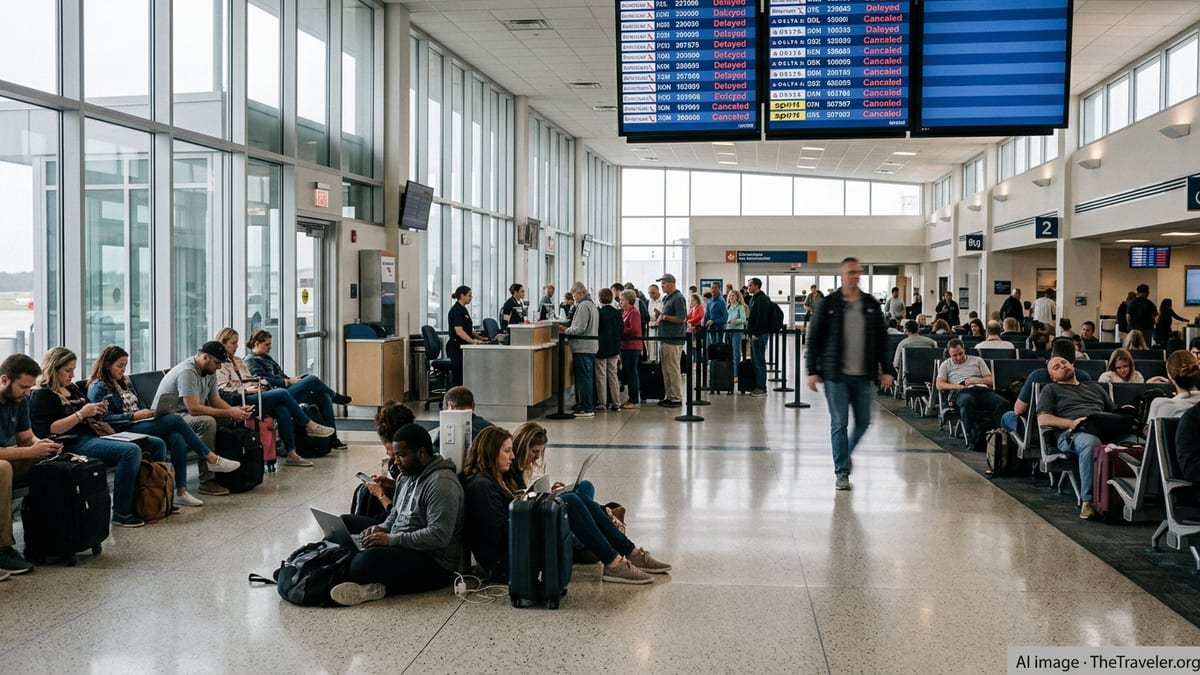
Passengers at Wilmington International Airport in New Hanover County, North Carolina, faced significant disruption today as a wave of delays and cancellations left travelers stranded, with at least seven flights delayed and three canceled across major carriers including American Airlines, Delta Air Lines, Spirit Airlines and other operators.
Get the latest news straight to your inbox!
Operational Snags Ripple Through Regional Hub
Wilmington International Airport, a growing regional gateway serving coastal North Carolina, experienced an unusual level of disruption today as multiple departures and arrivals were held at the gate or scrubbed from schedules. Publicly available tracking data showed a cluster of delays building through the morning and early afternoon, with knock-on effects for connecting flights across the East Coast.
The delays affected a mix of domestic routes, including services to larger hubs where many Wilmington passengers connect onward to national and international destinations. With three flights canceled outright, travelers bound for major hubs faced the prospect of rebooking on later services or rerouting through alternative airports in the region.
While Wilmington is accustomed to occasional schedule changes tied to weather or aircraft availability elsewhere in the network, today’s pattern of seven delayed flights and three cancellations represented a notable interruption for an airport of its size. The disruption underscored the vulnerability of smaller non-hub airports, where a limited number of daily frequencies can leave passengers with few immediate alternatives when operations tighten.
Airport information indicates that Wilmington International handles a combination of legacy carriers and low-cost airlines, meaning that a single operational hiccup on an inbound aircraft can cascade quickly, stranding passengers without the buffer of spare planes or abundant backup departures.
American, Delta, Spirit and Others Scramble Schedules
According to airline status pages and widely used flight-tracking platforms, today’s issues spanned several carriers serving Wilmington, including American Airlines, Delta Air Lines and Spirit Airlines. Some flights encountered extended gate holds, while others were pushed back in rolling increments as crews, aircraft and air-traffic flow were reassessed.
On American and Delta, which rely heavily on hub-and-spoke connections, delays on Wilmington departures risked misaligning travelers’ onward links at major connecting airports. Passengers on early-morning and midday services to hub cities faced uncertainty over whether they would make their planned connections, particularly on routes with limited daily frequencies.
Low-cost operators such as Spirit, which typically run tight aircraft rotations, were also exposed to schedule compression. When one leg is delayed or canceled, subsequent sectors using the same aircraft can be pushed behind schedule, leaving travelers at both ends of the route facing extended waits or abrupt cancellations.
Other regional and seasonal services from Wilmington reported knock-on timing changes as airlines adjusted their operations in response to conditions across the broader network. For many travelers, that translated into creeping departure times, longer hours in the terminal and overnight rebookings onto already busy flights in the days ahead.
Possible Weather and Network Pressures Behind the Disruptions
While there was no single locally reported incident at Wilmington International that fully explained the day’s disruption, the irregular operations appeared to coincide with broader weather and air-traffic challenges elsewhere on the East Coast. Recent weeks have seen repeated rounds of winter storms and strong frontal systems across large parts of the United States, and published aviation data shows that such systems can trigger thousands of delays and cancellations nationwide over short periods.
When storms or low clouds slow arrivals and departures at major hubs, ripple effects often reach smaller airports like Wilmington, where flights may be delayed at the origin airport or held until connecting banks recover. Even when conditions in coastal North Carolina are relatively manageable, aircraft and crews can be trapped in earlier weather trouble spots, leaving gaps in the Wilmington schedule.
Industry analysts note that smaller airports typically have limited redundancy in aircraft and staffing. If a single inbound aircraft is heavily delayed or diverted, there may be no spare jet or crew positioned locally to operate the next departure. Today’s pattern of seven delayed flights and three cancellations at Wilmington reflected that structural exposure, amplifying relatively modest upstream disruptions into a full day of irregular operations for local passengers.
Publicly available discussions among frequent Wilmington flyers in recent months have highlighted this susceptibility, noting that late-day departures are particularly prone to cascading delays as earlier disruptions compound throughout the network.
Stranded Travelers Face Rebookings, Extra Costs and Tough Choices
For passengers on the ground in Wilmington, the operational picture translated into a day of long waits, changing gate screens and difficult decisions about whether to hold out hope for a late departure or seek alternative plans. Those booked on canceled flights were pushed into the rebooking queue, where options out of Wilmington can narrow quickly once later departures fill up.
Travelers with urgent commitments, such as international connections, business meetings or family events, turned to nearby airports including Raleigh–Durham International and other regional gateways as possible escape valves. However, same-day ground transfers add time, expense and logistical complexity, particularly for those already contending with hotel and meal costs caused by missed connections.
Families traveling with children and older passengers faced the added strain of spending much of the day in an airport that, although recently expanded and modernized, remains significantly smaller than major hubs. Seating, food options and charging points can quickly come under pressure when several flights’ worth of passengers are held in the terminal for extended periods.
Travel forums and social media posts from the broader region in recent seasons suggest that many regular users of Wilmington International now build extra buffer time into their itineraries or opt for earlier departures to hedge against such disruptions. Today’s events are likely to reinforce that cautious approach among local travelers.
What Today’s Disruptions Mean for Future Travelers
Today’s wave of delays and cancellations at Wilmington International highlights ongoing challenges for secondary airports in a national air system operating near capacity. As airlines fine-tune their schedules and add new routes into growing coastal markets, small changes in aircraft allocation or weather patterns can have outsized effects on communities that depend on a handful of daily flights.
Published industry commentary indicates that airlines operating from Wilmington have been gradually expanding their footprints in North Carolina, reflecting population growth and rising demand for both leisure and business travel. At the same time, greater reliance on tight aircraft rotations and lean staffing can make the system more brittle when unexpected events occur.
For future travelers using Wilmington International, today’s disruptions serve as a reminder to monitor flight status closely in the 24 hours before departure, allow additional time for potential schedule changes and consider backup options such as flexible tickets or alternative airports when trips are particularly time-sensitive. Many experienced flyers in the region also advise building generous layover times into itineraries that rely on connections through major hubs, especially during active weather seasons.
As operations gradually normalize after today’s problems, attention is likely to focus on how quickly airlines are able to move stranded passengers to their destinations and whether any schedule adjustments or additional frequencies emerge to bolster reliability from Wilmington ahead of the busy spring and summer travel periods.