

More news on this day
High winds and fast-changing winter weather at Denver International Airport have triggered at least 86 cancellations and more than 1,000 delays, leaving thousands of travelers stranded and rippling disruptions across key regional routes from Santa Fe and Tucson to Salt Lake City, Appleton and Cheyenne.
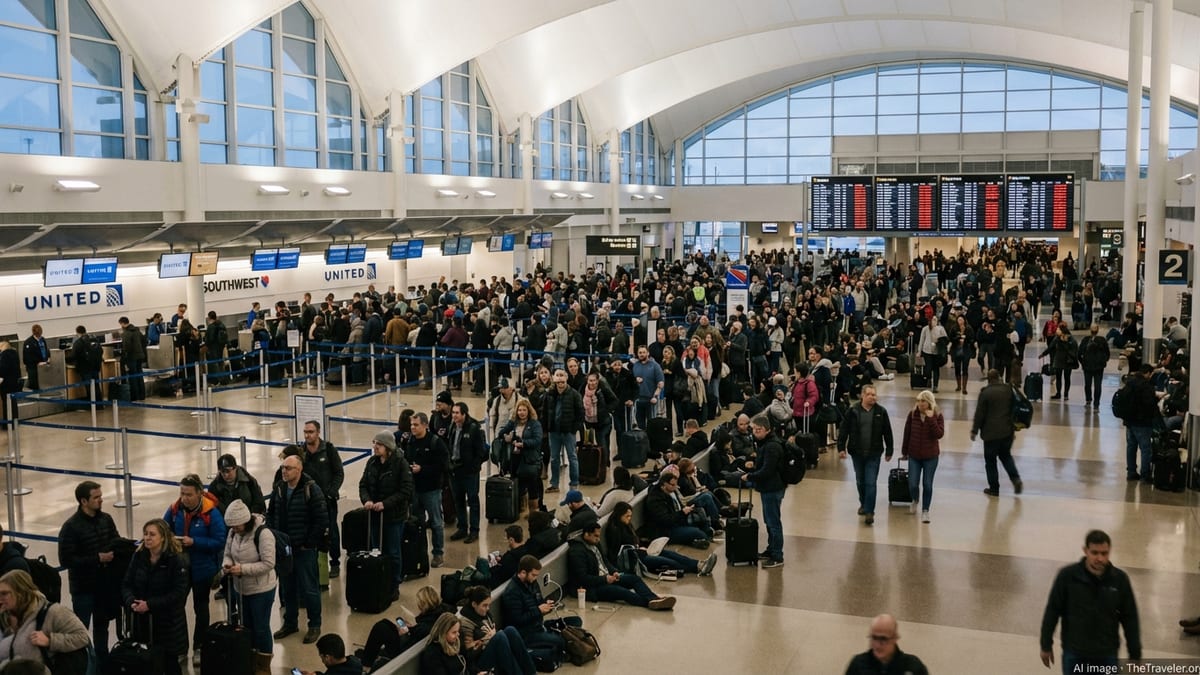
Denver Becomes National Bottleneck as Delays Mount
Denver International Airport, one of the nation’s busiest hubs, has once again become a focal point of U.S. air-travel disruption as severe winds and lingering winter weather slow operations. Flight-tracking data on Tuesday showed more than 1,000 flights delayed in and out of Denver and at least 86 cancellations, making it one of the most heavily impacted airports in the country for the day.
With Denver serving as a key connecting point for both domestic and international itineraries, the operational slowdown is having an outsized effect on travelers across the Mountain West and beyond. Passengers booked on SkyWest, Southwest and United are bearing the brunt, as those carriers operate a large share of Denver’s schedule and many of its feeder routes into smaller regional airports.
Airport officials said crews were working to keep runways open and aircraft moving safely despite the gusty conditions. However, strong crosswinds and intermittent flow-control measures ordered by federal air-traffic managers have forced airlines to thin out schedules, hold departures at gates and meter arrivals into the region.
The result has been cascading delays across much of the day’s operation, with inbound flights arriving hours late and outbound departures stacking up, producing long lines at ticket counters, gate podiums and customer-service centers throughout Denver’s concourses.
SkyWest, Southwest and United Struggle to Keep Schedules Intact
Three carriers in particular are shouldering the bulk of the operational pain. United Airlines, Denver’s largest airline by market share, has seen extensive delays across its mainline and regional networks, with late arriving aircraft leading to rolling disruptions on subsequent flights. SkyWest, which flies smaller regional jets under brand agreements for larger airlines, and Southwest, which operates a large point to point network through Denver, are also reporting heavy schedule impacts.
SkyWest’s role as a feeder carrier into Denver from smaller airports has magnified the effect on regional communities. When one bank of flights into Denver is delayed or canceled, passengers in cities such as Santa Fe, Cheyenne and smaller Upper Midwest markets can lose same day connections to the rest of the country. Even when flights operate, tight turnaround times have evaporated, and crews are hitting duty limits, forcing additional cancellations.
Southwest, which relies on quick, high frequency turns of its Boeing 737 fleet, has faced particular challenges managing aircraft and crews when Denver ground holds or arrival metering programs are in effect. Aircraft arriving late into Denver can knock out several planned downline departures, creating a complex puzzle for dispatchers trying to reassemble a workable timetable.
United, operating a dense connecting hub at Denver, has deployed additional staff to customer-service desks to handle rebookings and accommodation requests as the impact spreads through its network. The carrier has also been proactively issuing travel waivers for some customers, allowing them to move flights without additional fees in an effort to reduce airport crowds and smooth the operation.
Regional Routes from Santa Fe to Cheyenne Hit Hard
The disruption has been especially acute on regional routes that rely on Denver as their primary or only connecting gateway. Flights linking Denver with Santa Fe, Tucson, Salt Lake City, Appleton and Cheyenne have seen multiple rotations delayed or scrubbed as airlines prioritize limited takeoff and landing slots for higher volume mainline services.
In Santa Fe, travelers reported crowded gate areas and long lines at ticket counters as early morning cancellations forced passengers to scramble for later departures. Many of those flights were already nearly full before the operations hiccup, limiting the ability of carriers to simply roll passengers onto the next available option. Some travelers have been told to expect overnight stays before a seat can be found.
Cheyenne and Appleton, both served by regional jets that feed larger hubs like Denver, have faced similar frustrations. When a single inbound flight from Denver is canceled, it can effectively cut off same day connections to dozens of destinations. Local airport officials in those communities have advised passengers to check flight status frequently and build extra time into itineraries that rely on Denver as a connecting point.
In the Southwest, Tucson has seen knock on effects from the slowdown in Denver as connecting passengers miss onward flights or arrive several hours behind schedule. Salt Lake City, another key western hub, is experiencing its own weather related challenges, meaning some itineraries that combine Denver and Salt Lake on the same day have become particularly vulnerable to disruption.
Wind and Winter Weather Complicate Air-Traffic Flow
While Denver is no stranger to winter weather, the combination of powerful crosswinds and lingering cold has proved especially disruptive to aviation operations. The Federal Aviation Administration has issued periodic ground delay programs and flow restrictions into Denver, citing high winds and the need to space out arriving aircraft for safety.
High sustained winds can limit the number of runways that can be used safely, forcing Denver’s air-traffic controllers to concentrate takeoffs and landings onto configurations that align better with the prevailing direction. That effectively reduces the airport’s capacity, creating a backlog of flights waiting to land or depart. As those backups build, delays ripple outward to origin airports across the country as carriers hold flights on the ground rather than sending them into gridlock.
Cold temperatures and recent snow events have layered on an additional constraint as aircraft require deicing before departure. Even short deicing delays can compound quickly at a busy hub when a large share of the day’s flights are taking off within narrow time windows. Airlines and airport operations teams have been rotating equipment and staff to keep deicing pads active and to minimize hold times, but passengers are still being advised to expect extended waits at the gate or on the tarmac.
Meteorologists expect winds to remain a factor into the evening, though forecasts suggest some moderation later in the week. Airlines are watching those outlooks closely as they plan whether to restore more normal schedules or keep buffers in place to avoid another wave of last minute cancellations.
Thousands of Travelers Scramble to Rebook and Find Lodging
Inside Denver’s terminals, the human impact of the disruptions is playing out in long lines, crowded seating areas and anxious conversations with airline staff. Families returning from holiday weekends, business travelers on tight schedules and international passengers connecting through Denver have all been caught up in the turmoil.
With many later flights already heavily booked, some passengers are being rebooked on itineraries that leave the following day or even later. Hotels near the airport are reporting a spike in same day bookings as travelers scramble for rooms, while others are choosing to sleep in the terminal rather than venture out and risk further complications.
Airlines have set up additional customer-service stations in gate areas to triage the most urgent cases, including travelers with missed international connections, unaccompanied minors and passengers with medical needs. Some carriers are distributing meal vouchers where delays exceed several hours, although policies vary by airline and by whether the disruption is classified as weather related or operational.
Rental car counters and rideshare pick up zones have also grown busier as some travelers abandon air travel altogether for regional trips, opting to drive between cities such as Denver, Colorado Springs, Cheyenne and other nearby destinations when possible.
Airlines Urge Passengers to Check Status and Consider Flexibility
Carriers serving Denver are urging customers to monitor flight status closely on mobile apps and airport display boards and to sign up for push alerts or text notifications. Because the operational picture can change quickly with shifting winds and updated air traffic instructions, flight times may fluctuate throughout the day, and previously scheduled flights can be retimed, combined or canceled with little warning.
United, Southwest and SkyWest have encouraged travelers who are not on time sensitive trips to consider moving their journeys to later in the week when conditions are expected to stabilize. In some cases, travel waivers allow passengers to change dates without incurring standard change fees or fare differences, particularly if they rebook into the same origin and destination within a specified time window.
For those who must travel, airlines advise arriving at the airport earlier than usual to account for longer security and check in lines, especially during peak morning and late afternoon banks. They also recommend packing medications, essential documents and a change of clothes in carry on bags in case checked luggage is delayed or misrouted during the period of irregular operations.
Passengers who booked through online travel agencies or corporate travel programs are being reminded that rebooking often must be handled through those channels rather than directly with the airline, which can add another layer of complexity when hold times and digital queues surge.
Broader Network Impacts Across the U.S. System
Denver’s troubles are not confined to the Rockies. As a major connecting hub, disruption there affects airline operations across the United States as aircraft, crews and passengers fail to reach their next scheduled legs. An aircraft arriving late into Denver from the East Coast, for example, may have been slated to continue on to cities as far flung as Boise, Omaha or Ontario, California, creating a daisy chain of delays.
SkyWest’s regional network illustrates this effect acutely. Flights that originate in smaller communities such as Appleton or Cheyenne often serve as the first leg of longer journeys that may include several connections. When those initial flights are canceled or seriously delayed, entire itineraries can unravel, leaving passengers rebooked through alternative hubs like Chicago, Houston or Phoenix if seats are available.
Southwest’s network, which operates without traditional hubs but relies heavily on traffic flowing through Denver, is similarly vulnerable. A prolonged operational challenge at a key station like Denver can reverberate through the carrier’s point to point schedule, altering aircraft routings and forcing same day schedule changes in cities hundreds of miles away.
Industry analysts note that the disruption comes as airlines are operating with relatively tight spare capacity during a busy travel period. With load factors high and many flights already near full, there is less slack in the system to absorb passengers displaced by cancellations and long delays.
What Travelers Can Do Now
For travelers still planning to pass through Denver in the coming days, preparation and flexibility remain crucial. Aviation and consumer advocates recommend rechecking flight status repeatedly in the 24 hours before departure and again before leaving for the airport, as schedules are being updated frequently in response to changing weather and operational constraints.
Experts also suggest that travelers consider routing options that avoid tight connections through Denver while winds remain strong. Building in longer connection times, choosing earlier flights in the day and avoiding the last departure of the evening can provide more options if things go wrong. Those with nonrefundable hotel and car reservations at their destination are urged to review cancellation policies and notify providers promptly if arrival will be significantly delayed.
Passengers who experience long delays or cancellations are advised to keep documentation of disruption times and any out of pocket expenses for meals or lodging, in case of potential reimbursement or future travel credits from airlines. While federal rules in the United States do not guarantee compensation for weather related delays, carriers sometimes offer goodwill gestures, and credit card travel protections may apply in some cases.
For now, the overriding advice from airlines and airport officials is simple: build in extra time, stay informed and be prepared for plans to change. Until the winds ease and Denver’s operation returns to a more normal rhythm, travelers across the region from Santa Fe and Tucson to Salt Lake City, Appleton and Cheyenne will continue to feel the downstream effects of one city’s weather driven gridlock.