

More news on this day
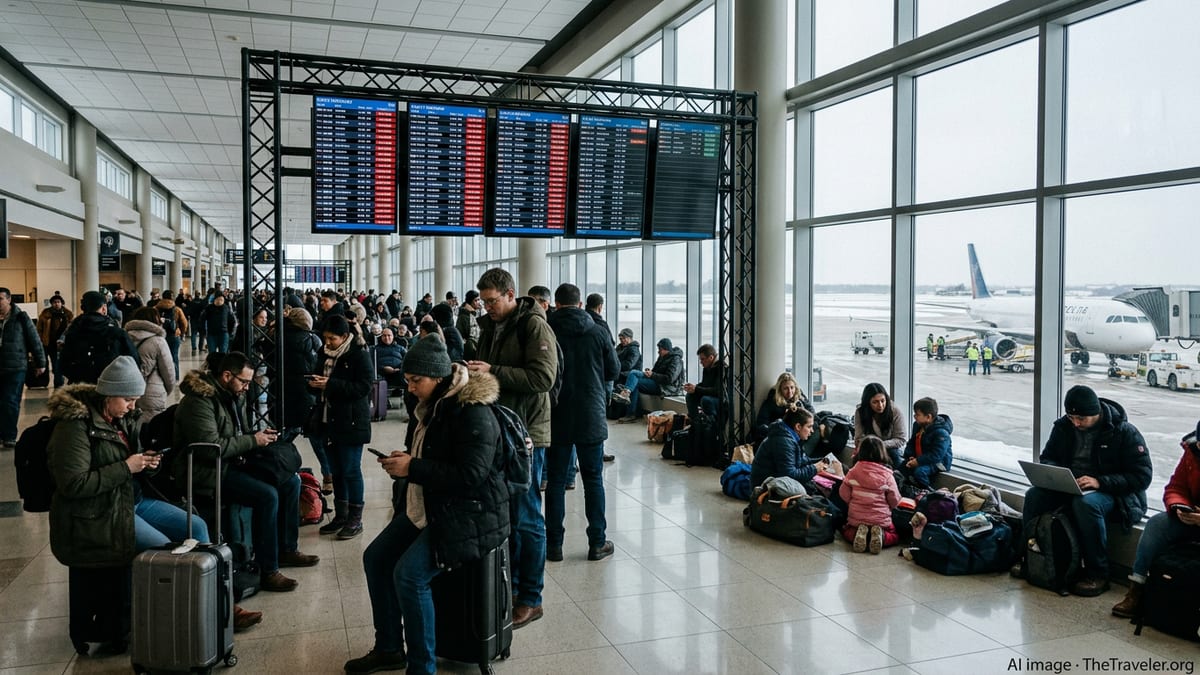
Passengers traveling through Winnipeg James Armstrong Richardson International Airport on March 15 faced a fresh wave of disruption, as publicly available flight-tracking data showed 12 departures delayed and 12 cancelled, snarling itineraries across Toronto, Montreal, Vancouver, Minneapolis, Oklahoma City and other destinations in Canada and the United States.
Get the latest news straight to your inbox!
Ripple Effects from a Prairie Hub
The disruption at Winnipeg, while modest in raw numbers compared with larger hubs, created outsized complications for travelers relying on the airport as a connecting point between western and eastern Canada and the U.S. Midwest. Delayed and cancelled services touching Toronto Pearson, Montréal–Trudeau, Vancouver, Minneapolis–Saint Paul and Oklahoma City translated into missed connections and extended layovers for passengers who had planned same-day arrivals.
Winnipeg serves as a key node in domestic and transborder networks for several Canadian and U.S. carriers. Even a limited cluster of cancellations can quickly affect passenger flows when they occur in peak travel windows or on routes with relatively few daily frequencies. Travel industry coverage in recent weeks has already highlighted how fragile schedules have become in the face of shifting weather systems and tight airline operations across Canada.
Reports on wider Canadian aviation performance this month show that Toronto, Montreal and Vancouver have repeatedly topped national rankings for delays and cancellations. When schedules at those hubs are already under strain, additional disruptions at a connector like Winnipeg further compress rebooking options, leaving some travelers facing overnight delays or complete itinerary overhauls.
Published data from earlier in March indicates that winter weather and operational pressures have driven hundreds of delays and dozens of cancellations nationwide on multiple days. In that context, the situation at Winnipeg on March 15 fits into a broader pattern of unstable reliability across the Canadian network as carriers work to keep aircraft and crews in the right place.
Canada’s Major Hubs Under Continued Pressure
Recent aviation coverage has documented repeated days of heavy disruption at Toronto Pearson, Montréal–Trudeau and Vancouver International, with each hub at times registering more than one hundred delayed departures in a single day. Those choke points matter for Winnipeg passengers because many itineraries route through at least one of the three major hubs to reach final destinations in the United States or other parts of Canada.
In several instances this month, travel reports have pointed to difficult operating conditions, including lingering winter weather, de-icing backlogs and tight aircraft turnaround times. These factors have combined to stretch airline schedules and airport resources, particularly during morning and late-afternoon peaks when banks of departures and arrivals are most densely packed.
The ripple effect can be significant. When an early-morning Winnipeg departure to Toronto or Montreal is cancelled or heavily delayed, travelers aiming to connect onward to U.S. gateways such as Minneapolis or to western cities via Vancouver may find that later flights are already full or similarly affected. That dynamic amplifies the impact far beyond the 24 flights directly delayed or cancelled from Winnipeg on March 15.
Across Canada, recent statistics disseminated by aviation and travel outlets suggest that carriers are still working through a period of elevated irregular operations compared with pre-pandemic norms. While not on the scale of major national disruptions, the patterns observed in March have been disruptive enough to spark renewed discussion about passenger rights and contingency planning.
Transborder Links to Minneapolis and Oklahoma Affected
The knock-on consequences of Winnipeg’s latest disruptions have been felt on cross-border routes serving the U.S. Midwest and Southern Plains. Flight-status data and schedule information show that services touching Minneapolis–Saint Paul, a key Delta and regional hub, have been affected by upstream issues in Canada, including late inbound aircraft and missed crew connections.
For travelers routed via Winnipeg to or from Minneapolis, even modest delays can matter. Many itineraries are timed to meet specific connection banks in Minneapolis, where onward flights to U.S. domestic destinations operate on tight intervals. A late departure from Winnipeg can therefore cascade into missed links to cities across the central United States.
Oklahoma City has also appeared in recent travel disruption roundups as part of a wider web of affected U.S. destinations. While it is not a primary hub in the way Minneapolis is, its connections to Canadian cities rely on relatively few daily frequencies. A cancellation or extended delay on a Winnipeg-linked itinerary can translate into a full-day setback for passengers with limited alternative options.
These transborder complications come amid ongoing adjustments to Canada–U.S. route networks by major carriers. Publicly available airline planning information over the past year has noted frequency reductions and seasonal cuts on some cross-border routes, leaving less slack in the system when irregular operations strike.
Weather and Operational Challenges Behind the Numbers
The situation at Winnipeg on March 15 follows a winter and early spring marked by severe weather across North America, including major snowstorms and ice events that have repeatedly disrupted aviation. Recent analyses of national delay and cancellation figures have linked many of this season’s worst days to specific storm systems sweeping through central Canada and the northern United States.
Winnipeg, located in the heart of the Prairies, is no stranger to extreme winter conditions that require extensive de-icing and careful runway management. Even on days without a headline-grabbing blizzard, cold temperatures and intermittent snow showers can slow ground operations enough to create knock-on delays. When aircraft and crews arrive late from previously affected airports, same-day schedules can quickly become compressed.
Operational complexities extend beyond weather. Airlines are still fine-tuning aircraft rotations and staffing levels after several years of volatile demand patterns. Travel industry reports in 2026 have pointed to instances where tight crew availability and maintenance windows have left carriers with fewer spare aircraft and personnel to recover quickly from disruptions.
In this environment, a cluster of 12 delays and 12 cancellations at an airport like Winnipeg may represent the visible edge of much broader network stress. Each disrupted flight is linked to two or more additional legs, and any irregularity can leave aircraft and crews out of position for the rest of the day.
What Travelers Can Expect in the Coming Days
With March still a transitional month for weather across both Canada and the United States, travel analysts suggest that passengers should remain prepared for further localized disruptions, especially on routes passing through weather-prone regions and busy hubs. Winnipeg’s experience on March 15 underscores how even a relatively small number of affected flights can create widespread inconvenience for travelers across multiple provinces and states.
Publicly available guidance from airlines and airports continues to emphasize the importance of monitoring flight status closely before heading to the airport. Same-day schedule changes have become more common as carriers adjust departure times, swap aircraft or consolidate lightly booked services to stabilize operations.
Passenger-rights information published by consumer groups and regulators in both Canada and the United States also highlights the need for travelers to understand what compensation, meal vouchers or hotel accommodations may be available in cases of extended delays or cancellations. The rules vary depending on the carrier, route and cause of disruption, but awareness can help travelers navigate rebooking discussions more confidently.
For now, the latest wave of disruption at Winnipeg James Armstrong Richardson International Airport appears to be part of an ongoing pattern of intermittent but impactful irregular operations across North American skies. As airlines move toward the busy spring and summer travel seasons, performance at key connectors like Winnipeg will remain an important indicator of how resilient the broader network has become.