

More news on this day
A powerful late-February blizzard has forced Amtrak to cancel or suspend scores of trains from Washington D.C. to Boston and westward through Chicago, Pittsburgh and Cleveland, as New York became the latest major hub to effectively shut down intercity rail service under whiteout conditions.
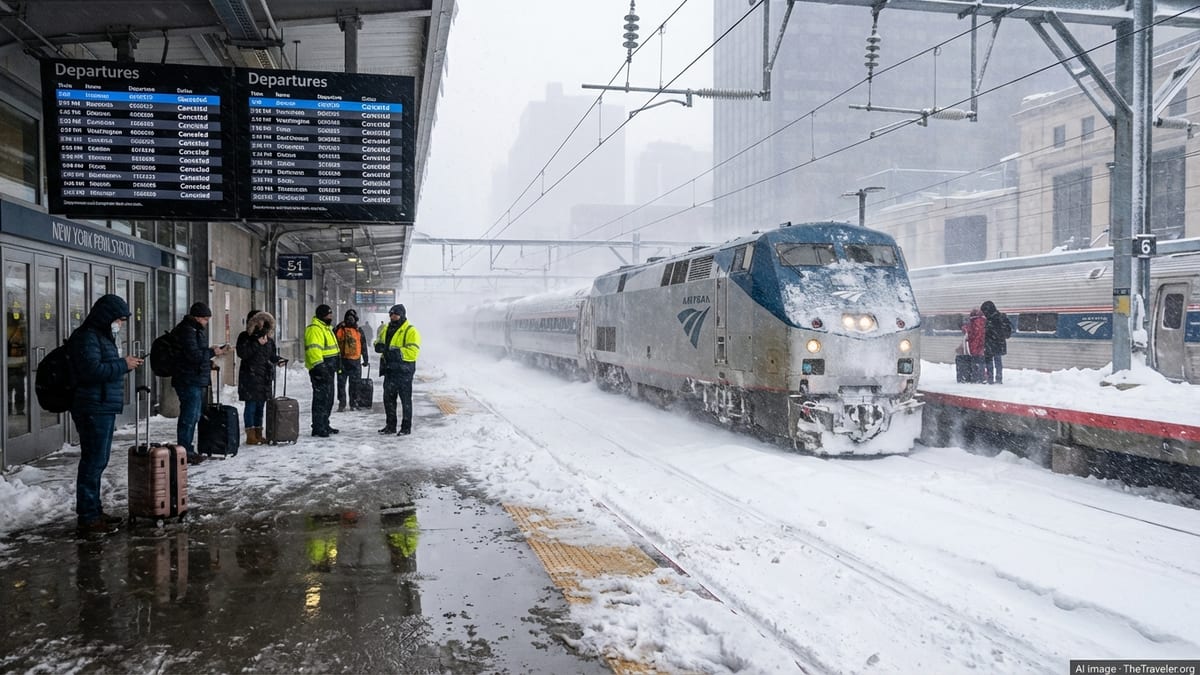
Blizzard of 2026 Shuts Down Key Rail Corridors
The fast-developing nor’easter, part of the broader Blizzard of 2026 that formed on February 20 and peaked over the Northeast on February 23, has delivered more than two feet of snow to several metropolitan areas and brought rail travel to a standstill along some of the country’s busiest passenger corridors. From the Mid-Atlantic through New England, blizzard warnings, high winds and deep snow drifts have made it impossible to safely operate normal Amtrak schedules.
On Monday, Amtrak suspended all service between New York’s Moynihan Train Hall and Boston South Station for much of the day, following earlier rounds of cancellations on Sunday as conditions deteriorated. The move effectively severed the northern half of the Northeast Corridor, a vital link for commuters, students and business travelers who rely on frequent service between Washington, Philadelphia, New York and Boston.
New York City, which issued a ban on non-emergency road travel through midday Monday, reported heavy accumulations that quickly overwhelmed plowing efforts and buried tracks and platforms. Rail yards in New Jersey and Long Island also struggled with drifting snow and gale-force gusts that pushed wind chills into dangerous territory for outdoor workers tasked with clearing switches and signals.
Officials warned that while some limited services could resume as crews dig out, the full restoration of the network will lag behind the storm’s exit, with equipment and staff displaced and infrastructure requiring extensive safety checks.
Major Cities From D.C. to Boston Feel the Impact
Washington D.C., typically the southern anchor of the Northeast Corridor, saw significant disruptions beginning over the weekend as forecasts sharpened and winter storm warnings expanded north and east. Amtrak preemptively canceled multiple Northeast Regional and Acela departures to keep trains and crews out of the worst of the blizzard and reduce the risk of passengers being stranded aboard immobilized trains.
Philadelphia and Baltimore experienced a cascade of knock-on effects as the storm intensified overnight into Monday. With through-trains scrubbed and equipment held back, remaining services operated on skeleton timetables, if at all. Station concourses that normally bustle with morning commuters instead filled with lines of travelers queuing at ticket counters, seeking refunds, rebookings or simply guidance on when they might move again.
Boston, on the northern end of the corridor, was among the hardest hit by heavy snowfall and strong winds. Regional and Acela trains in and out of South Station were largely canceled as the city’s transit agency reduced subway and commuter rail frequencies and focused resources on snow clearance and power reliability. Rail bridges and exposed shoreline sections of track were subjected to blowing snow and occasional coastal flooding, further complicating operations.
Throughout the region, local transit systems coordinated closely with Amtrak to share information on closures and service windows, but officials acknowledged that many travelers would be forced to delay or abandon trips until after the storm and its immediate cleanup phase.
Chicago, Pittsburgh and Cleveland Disrupted as Storm Pushes Inland
While the most dramatic scenes played out along the Northeast Corridor, the sprawling winter storm also battered interior routes linking the Midwest and the East Coast. In Chicago, a key national hub for Amtrak’s long-distance network, accumulating snow and high winds triggered delays and cancellations on trains bound for the Great Lakes and Mid-Atlantic states.
Service on routes connecting Chicago with Pittsburgh and Cleveland was curtailed as heavy snow swept across the Ohio Valley. Dispatchers and operations managers prioritized safety over schedule adherence, holding or annulling trains where visibility dropped and track conditions became unpredictable. Some services that did depart ran significantly behind schedule as crews slowed to navigate drifts and rely on manual inspections of critical infrastructure.
Pittsburgh and Cleveland stations reported waves of stranded passengers, including travelers who had hoped to connect to or from Northeast Corridor trains that never left New York, Philadelphia or Boston. With airlines simultaneously canceling thousands of flights across the same swath of the country, options for detouring by air were limited and often expensive, leaving rail passengers with few alternatives.
Rail observers noted that the storm underscored the interconnectedness of the national network. Disruptions in Chicago or the Mid-Atlantic quickly resonated across distant routes, as trainsets and crews that normally circulate on complex multi-day rotations were immobilized hundreds of miles from their next scheduled departure.
Passengers Face Cancellations, Overcrowding and Uncertainty
For travelers already en route, the rolling wave of cancellations led to sudden terminations of journeys short of their destinations. Some New York-bound passengers were asked to disembark at intermediate stations such as Philadelphia or Albany as Amtrak truncated routes to keep trains and staff clear of the hardest-hit areas. Station hotels and nearby accommodations filled quickly as stranded travelers sought shelter for the night.
Those attempting to start trips on Monday morning encountered departure boards lit up with red notices indicating cancellations or service suspensions. Lines at customer service desks in New York, Washington, Boston, Chicago and other major hubs stretched across concourses, with passengers clutching printed itineraries and phone screens showing updated alerts.
Amtrak reiterated that affected customers could rebook on later departures at no additional charge or request full refunds, but representatives cautioned that seat availability would remain tight until more of the fleet returned to normal operation. On several busy routes, the first trains likely to operate after the storm were already nearly sold out by early Monday afternoon, leaving some travelers looking at multi-day delays.
Families, business travelers and tourists alike described a mix of frustration and resignation, acknowledging that safety considerations had to take precedence as news images showed buried tracks, stalled commuter trains and crews battling thigh-high drifts along platforms.
Recovery Efforts and What Travelers Should Expect Next
With the blizzard beginning to move offshore late Monday and forecasts pointing to improving conditions by Tuesday, Amtrak and regional rail agencies turned their focus to recovery. Priority tasks included clearing snow and ice from mainline tracks, freeing clogged switches, inspecting overhead power lines on electrified segments and repositioning locomotives and passenger cars that had been held out of service during the height of the storm.
Officials warned that even as some trains begin rolling again, schedules will likely remain modified for several days. Passengers are being urged to check real-time alerts before heading to stations, build in additional buffer time for connections and remain flexible regarding departure times and routings. Travelers heading through the Northeast and Midwest this week should be prepared for lingering delays as dispatchers work through backlogs and give maintenance crews access to busy stretches of track.
In cities such as New York, Boston, Washington, Chicago, Pittsburgh and Cleveland, local transit agencies are similarly staging a phased restart. Subways and commuter rail lines are gradually restoring full frequencies, but isolated outages and slow zones are expected where snow and ice have proven especially stubborn. The combined effect means that door-to-door travel times will remain longer than usual, even once Amtrak trains are back on the timetable.
For the broader U.S. rail network, the Blizzard of 2026 will likely prompt renewed discussions about winter resilience, including investments in snow-fighting equipment, upgraded switch heaters, improved weather forecasting tools and clearer communication protocols for passengers. For now, however, the priority remains simple: dig out the tracks, get stranded travelers moving again and restore a measure of normalcy to one of the nation’s most important transportation lifelines.