

More news on this day
Travelers across the Mid-Atlantic and Northeast faced another bruising day of air disruption as Washington Dulles International Airport recorded dozens of cancellations and delays, snarling regional connections on United and its key regional partners and rippling out to cities including Boston, Toronto, Minneapolis, Albany and Norfolk.
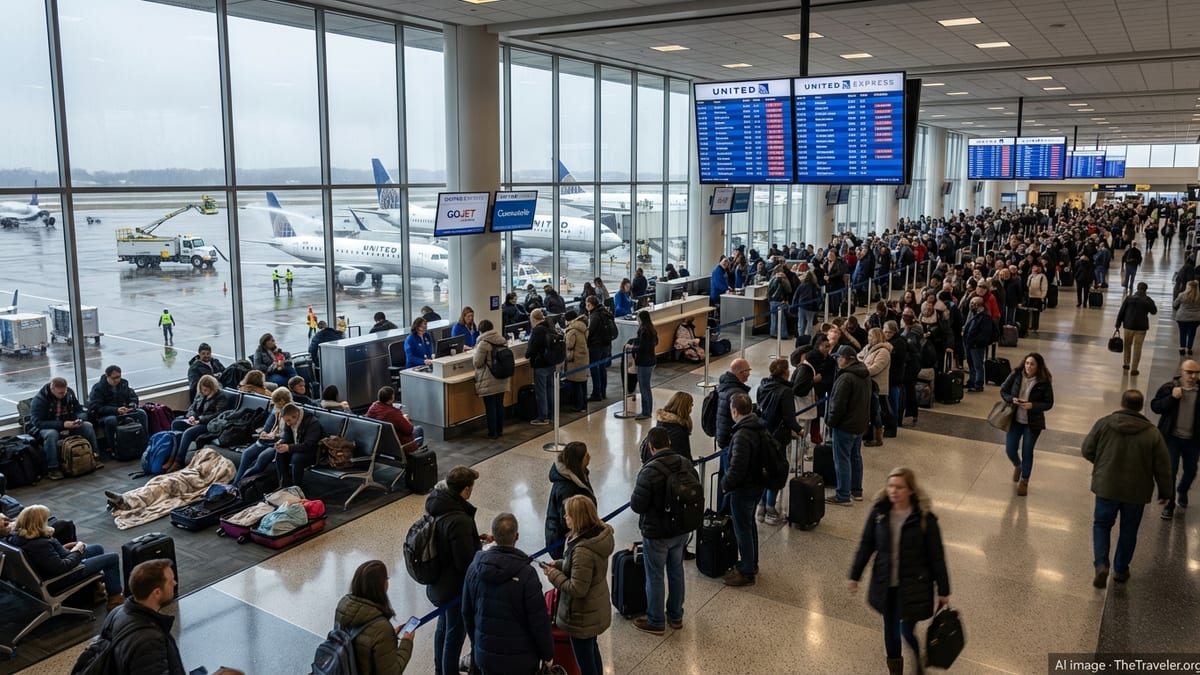
Sharp Spike in Cancellations at Washington Dulles
Washington Dulles International Airport saw a sharp escalation in operational problems, with flight-tracking services showing scores of cancellations and delays concentrated on United Airlines and its regional affiliates. By mid- to late-morning, data for Dulles indicated more than 70 flights canceled and close to 50 delayed, putting the airport among the hardest-hit hubs in the United States for the day.
While systemwide disruption numbers remain volatile as airlines adjust schedules, the impact at Dulles has stood out because of its role as a major connecting hub. A significant share of the scrapped departures were regional jets operated under the United Express banner by carriers such as GoJet, CommuteAir and Republic, cutting off smaller and mid-size markets from the national network.
Airport operations staff have been working to reposition aircraft and reassign gates as airlines consolidate flights where possible. However, the high volume of connecting traffic through Dulles has meant that a single cancellation can cascade into missed onward flights, compounding the disruption for passengers headed far beyond the Washington region.
Even as some mainline services on larger aircraft remained intact, the imbalance between regional and long-haul operations created patchy connectivity. Travelers who managed to reach Dulles on time often found that their next leg had been delayed, retimed or removed from the board entirely.
United and Regional Partners Bear the Brunt
United Airlines, the dominant carrier at Washington Dulles, has been at the center of the disruption. While United-branded mainline flights account for a portion of the cancellations, much of the visible chaos has stemmed from its regional partners operating as United Express. Airlines including GoJet, CommuteAir and Republic Airways run high-frequency services from Dulles to cities across the East Coast and Midwest, and these short-haul links have been especially vulnerable.
On days of widespread disruption, these feeder routes are often the first to be trimmed as airlines try to preserve longer-haul and international services. That pattern was evident again, with multiple rotations on smaller jets scrubbed entirely or consolidated into fewer departures. Passengers bound for cities a short hop away were sometimes rebooked onto later flights, bus transfers or connections through alternate hubs, dramatically lengthening journeys that would take only a few hours by car.
Delta Air Lines, which has a smaller presence at Dulles compared with United, also reported reduced schedules and scattered delays, particularly on its regional flights operated by partner carriers serving hubs like New York and Detroit. Although Delta’s absolute numbers at Dulles were lower, disruptions on a day when United and its affiliates are already straining capacity intensified competition for remaining seats across all airlines.
Industry analysts note that the fragmentation of regional flying across multiple contract carriers can make it harder for passengers to understand who is actually operating their flight and where to seek assistance when problems arise. At the airport, long lines formed not only at United’s main customer service desks but also at smaller counters shared by regional partners trying to process rebookings and distribute meal and hotel vouchers.
Key Routes to Boston, Toronto and Minneapolis Disrupted
The cancellations and delays at Washington Dulles have had an outsized effect on several high-demand routes, particularly those linking the capital region with Boston, Toronto and Minneapolis. These city pairs rely heavily on a mix of mainline and regional aircraft to offer frequent daily service, a schedule design that leaves them sensitive to fleet and crew imbalances when disruptions strike.
Flights to Boston Logan, an already delay-prone airport, were notably affected. With both Dulles and Boston featuring in recent rankings of US airports with elevated disruption rates, the combination of issues at either end of the route translated into rolling delays and, in some cases, back-to-back cancellations. Business travelers who typically depend on dawn and late-evening shuttles saw their options shrink, forcing last-minute itinerary changes or overnight stays.
Services to Toronto Pearson, a key international gateway and a crucial link for transborder business and leisure travel, also felt the pinch. Regional services branded as United Express and operated by carriers such as Jazz were particularly exposed. Several rotations were either canceled outright or retimed, complicating onward international connections for travelers who had planned to continue to Europe or Western Canada.
Minneapolis, served by both United through connections and by Delta via its hub network, experienced knock-on effects as well. Passengers connecting in Dulles for Midwest-bound flights reported crowded gate areas and oversold rebooked services, as airlines tried to funnel multiple canceled departures into a smaller number of operating flights.
Smaller Markets Like Albany and Norfolk Left Vulnerable
Beyond the major hubs, the disruption hit smaller cities such as Albany, New York, and Norfolk, Virginia, particularly hard. These markets often depend on just a handful of daily flights to Washington Dulles for connections to the broader United and Star Alliance networks. When even a couple of those departures are canceled, local travelers can find themselves with no same-day alternatives.
Albany, served primarily by regional jets, saw several Dulles-bound flights removed from schedules or delayed to the point of wiping out planned connections. For travelers heading to international destinations, this meant either an unexpected overnight stop in Washington or a scramble to rebook via other airports such as Newark or Chicago, where remaining seats were already limited.
Norfolk, a key coastal city with strong military and shipbuilding ties, faced its own set of challenges. Dulles normally functions as an important gateway for Norfolk residents connecting to European and Middle Eastern destinations. As regional partners like GoJet and CommuteAir revised their schedules, some Norfolk passengers reported being routed through alternative hubs or even transferred by ground transportation to other Washington-area airports to pick up replacement flights.
These smaller-city routes illustrate a structural vulnerability in the US air network. While mega-hubs like Dulles can absorb some disruption by retiming departures and deploying larger aircraft, spoke cities with limited service often have no such resilience. When a single regional flight is canceled, it can cut off an entire day’s worth of connections for a community.
Passengers Grapple With Missed Connections and Long Lines
Inside the terminal at Washington Dulles, the human cost of the disruption was written in long security and customer-service queues, crowded gate areas and a steady stream of travelers hunched over their phones trying to salvage itineraries. With dozens of flights affected, customer-service desks for United and its partners quickly drew lines that snaked through concourses, pushing many passengers toward airline apps and call centers instead.
Families heading out on school-break vacations reported missed cruises, prepaid tours and nonrefundable hotel bookings slipping away as their outbound flights vanished from departure boards. Business travelers, especially those booked on tight same-day trips, scrambled to arrange virtual meetings from airport lounges or nearby hotels as it became clear they would not reach their destinations on time.
For international passengers, the knock-on effects were even more severe. Travelers connecting through Dulles to long-haul flights to Europe and South America faced strict minimum connection times and border-control formalities, leaving little room to absorb delays. A missed regional feeder could mean a full 24-hour delay if the next long-haul departure was not until the following day, and seat availability in premium cabins was particularly constrained.
Passengers with reduced mobility and those traveling with small children were especially strained by the uncertainty. Frequent gate changes and rolling departure updates required repeated trips across the vast Dulles concourses, often with limited seating near rebooked gates as more and more displaced travelers clustered in the same areas.
Weather, Congestion and Operational Strain Behind the Mess
While every day of severe disruption has its own triggers, the problems unfolding at Washington Dulles are closely linked to a familiar mix of winter weather, congested East Coast airspace and fragile airline operating margins. Periodic storms sweeping across the Mid-Atlantic have forced air-traffic controllers to impose flow restrictions, limiting the rate at which aircraft can land and depart from key airports including Dulles, Reagan National and Baltimore/Washington.
In this environment, even modest weather systems can tip airlines into difficulty if they are already operating tight schedules with limited spare aircraft and crew. Once a bank of flights is delayed, pilots and flight attendants quickly begin to run up against federally mandated duty-time limits, meaning that airlines may have aircraft ready to fly but no legal crew to operate them. That scenario has been playing out again at Dulles, particularly on regional routes that rely on smaller pilot pools.
Recent analyses of US air travel reliability have consistently placed Washington-area airports among the country’s more disruption-prone hubs, with Dulles ranking high for both delays and cancellations. The combination of heavy transatlantic traffic, complex connecting banks and volatile East Coast weather makes maintaining an on-time operation challenging even under normal circumstances.
Airlines have pointed to investments in new technology, including more advanced crew-scheduling systems and improved de-icing infrastructure, as tools to better withstand these shocks. However, passengers caught in the current wave of disruption at Dulles have seen little immediate benefit, facing many of the same bottlenecks and communication challenges that characterized previous years’ storm-related meltdowns.
How Airlines Are Responding and What Travelers Can Do
In response to the unfolding disruption, United and other carriers serving Washington Dulles activated flexible travel waivers, allowing customers scheduled to fly on affected days to change dates without standard fees or fare differences in many cases. Some travelers were permitted to reroute through alternate hubs or nearby airports in an effort to bypass the most heavily affected flights.
At the airport, airlines have deployed extra staff at help counters and boarding areas to manage rebookings and answer questions. In certain cases, ground transportation options have been arranged, including taxi or shuttle vouchers between Dulles and other Washington-region airports where alternate departures were available. Food vouchers and, for those facing overnight delays, hotel accommodations were offered on a case-by-case basis, often depending on the cause of the disruption and the specific airline’s policies.
Travel advisers stress that passengers facing days like this at Dulles should take a multi-pronged approach. Using airline apps to self-rebook can be faster than waiting in line, but calling customer-service centers or reaching out through social media channels can sometimes surface additional options, such as rerouting via different hubs or shifting to partner airlines. Those who must travel on a specific day may find that driving to a nearby airport with more resilient operations, such as Philadelphia or New York, provides better odds of departure.
Experts also recommend building extra slack into itineraries during the winter months, especially for those connecting through known congestion points like Washington. Longer layovers, early-morning departures and avoiding the latest evening flights on key routes can all help reduce the risk that a single delay will turn into a missed connection and an unplanned overnight stay.
Broader Questions About US Air Travel Resilience
The scenes at Washington Dulles have once again ignited questions about the resilience of the US air travel system and its capacity to handle predictable seasonal stress. Despite years of public scrutiny after high-profile meltdowns at major carriers, the pattern of widespread cancellations and rolling delays in response to winter storms continues to recur, with hubs like Dulles, Boston and New York frequently at the center.
Regulators and passenger advocates have pressed airlines to bolster staffing, streamline schedules and invest in infrastructure that can keep operations running more smoothly in bad weather. They have also called for clearer, more enforceable standards for passenger care when disruptions occur, including automatic meal and hotel provisions and transparent refund processes for canceled flights.
For now, travelers passing through Washington Dulles must navigate a system still prone to sudden breakdowns. As airlines, airports and regulators debate long-term fixes, the reality on the concourse floor remains unchanged: when weather, congestion and operational strain converge on a major hub, passengers like those bound for Boston, Toronto, Minneapolis, Albany, Norfolk and countless other destinations can find their plans upended in a matter of hours.
With more winter weather in the forecast and demand for air travel remaining strong, the test for airlines at Dulles and across the country will be whether they can learn from each disruption quickly enough to avoid repeating the same scenes of stranded passengers, crowded gates and mounting frustration in the weeks and months ahead.