

More news on this day
A brutal convergence of extreme cold, heavy snow, and freezing rain has unleashed historic disruption across Canada’s aviation network, snarling operations at Toronto, Montreal, and Vancouver and forcing thousands of cancellations and delays for Air Canada, WestJet, Jazz, and Porter Airlines.
Get the latest news straight to your inbox!
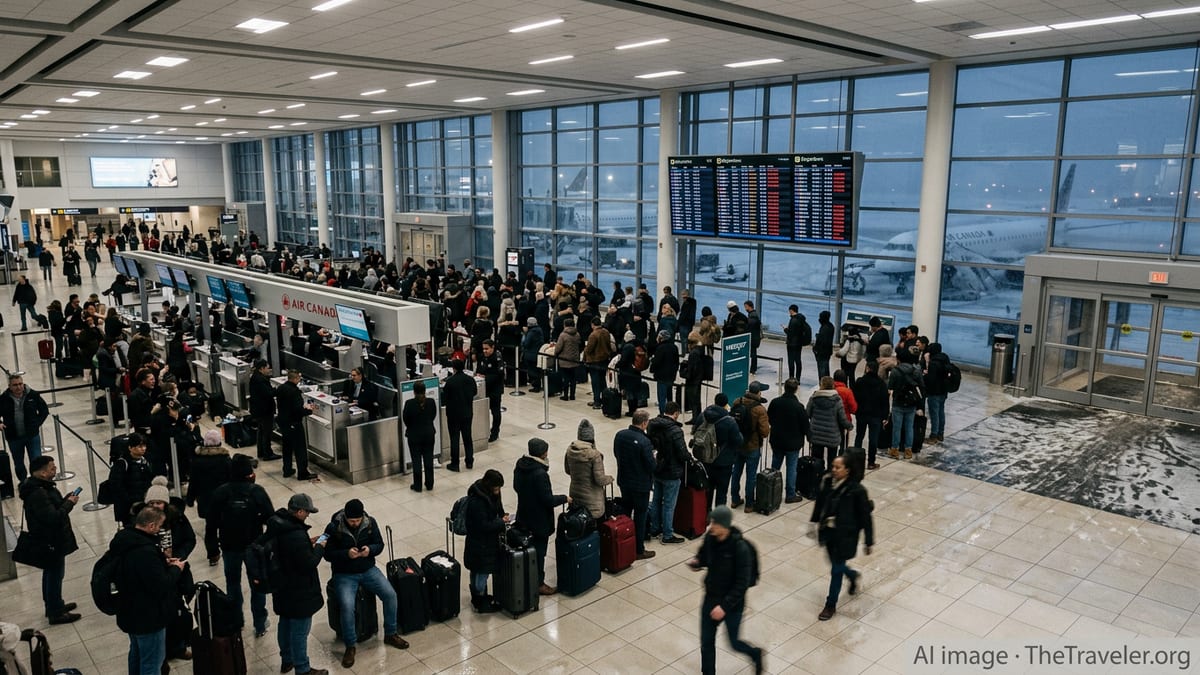
Storm Systems and Deep Freeze Batter Canada’s Busiest Hubs
The latest wave of cancellations and cascading delays is being driven by a potent combination of the January–February 2026 cold wave and a series of intense winter storms sweeping southern Ontario, Quebec, and coastal British Columbia. At Toronto Pearson, prolonged whiteout conditions and record-breaking snowfalls have repeatedly slowed runway clearing and de-icing, cutting arrival and departure capacity for hours at a time. Similar scenes have played out at Montreal–Trudeau and Vancouver International, where shifting bands of snow and freezing rain have pushed airport operations to the limit.
Meteorologists describe the pattern as both prolonged and punishing for aviation, with temperatures stubbornly below seasonal norms and frequent, fast-moving systems leaving little recovery time between events. Each new storm has triggered ground stops, gate holds, and extended de-icing queues, forcing airlines to reduce schedules preemptively and strand aircraft out of position across their networks.
For travelers, the result is a travel environment where even a minor disturbance can snowball into hours or days of disruption. With three of Canada’s busiest hubs repeatedly constrained by weather and airfield conditions, disruptions have radiated outward to smaller cities nationwide and to key transborder and long haul routes.
Air Canada, WestJet, Jazz, and Porter Slash Schedules
Air Canada and WestJet, the country’s two largest carriers, have responded with aggressive schedule cuts and rolling cancellations centered on Toronto, Montreal, and Vancouver. In recent days, both airlines have scrubbed dozens of flights in advance of forecast storms, particularly on heavily traveled eastern and western corridor routes, in an effort to avoid mass same day chaos and allow ground crews to focus on core operations.
Air Canada’s regional partner Jazz has borne a significant share of the impact, with short haul feeders into the major hubs frequently grounded when conditions deteriorate. Since many passengers in smaller communities rely on Jazz-operated flights to connect through Toronto or Montreal, a single cancelled regional leg has often meant missed international departures and lengthy rebookings on already crowded alternatives.
Porter Airlines, which has rapidly expanded from its eastern base into western Canada with new jets linking Toronto, Montreal, Ottawa, and Vancouver, has also been forced into widespread delays and cancellations. While its newer aircraft have improved range and efficiency, they remain vulnerable to long de-icing queues and restricted runway availability at the same constrained hubs, leaving Porter customers facing many of the same frustrations as those flying the legacy carriers.
Toronto, Montreal, and Vancouver Struggle to Keep Operations Moving
Operational leaders at the three major airports have emphasized that they are working around the clock to maintain safe movements in the face of relentless winter conditions. At Toronto Pearson, extra snow removal crews and equipment have been deployed, with runways cycled in and out of service for plowing and de-icing as quickly as visibility and wind conditions allow. Despite these efforts, the sheer volume of snow and ice has repeatedly reduced usable capacity during peak periods.
In Montreal, heavy snow combined with freezing drizzle has placed added pressure on de-icing pads and taxiways, with aircraft often waiting in long queues before takeoff. Vancouver, which typically relies on milder coastal weather, has struggled with repeated episodes of snow and slush that have taxed an infrastructure more accustomed to rain than sustained winter storms. Across all three hubs, airport authorities report that they have prioritized safety above schedule integrity, a stance that has meant conservative decisions on runway use and ground operations.
These constraints have collided with high demand for winter travel, particularly during school breaks and peak sun destination periods. As departure boards fill with red “cancelled” and “delayed” notices, terminal spaces have become crowded with displaced travelers seeking rebooking, accommodations, and information from already stretched airline staff.
Passengers Face Long Lines, Thin Options, and Compounding Delays
For passengers caught in the disruption, the experience has been defined by long queues at check in counters, packed gate areas, and slow moving customer service phone lines. Rebooking has proved especially challenging on popular domestic and transborder routes, where spare seats are scarce during the winter high season and aircraft are already fully allocated.
With Air Canada, WestJet, Jazz, and Porter all trimming schedules simultaneously, options for same day recovery flights have often been limited. Many travelers have reported being rebooked one or two days later, or routed through unfamiliar connection points as airlines try to stitch together available capacity. Those traveling onward to cruise departures, weddings, or time sensitive events have been among the hardest hit, in some cases abandoning their original plans altogether.
Airlines have encouraged customers to check flight status frequently before leaving for the airport and to use mobile apps and self service tools where possible to avoid standing in line. Nevertheless, the scale and duration of the disruptions have meant that personal assistance remains crucial for many travelers, especially those with complex itineraries, families, or special service needs.
Airlines and Regulators Under Pressure to Adapt to a New Winter Reality
The ongoing turmoil has intensified debate about how well Canada’s aviation system is adapting to increasingly volatile winter weather and a more fragile global airline operating environment. Industry analysts note that while severe storms are not new, the combination of tighter staffing margins, high aircraft utilization, and congested hubs leaves little room to absorb major shocks.
Air Canada, WestJet, Jazz, and Porter have all pledged to refine their winter playbooks, including more proactive cancellations, stronger aircraft and crew positioning strategies, and clearer communication with passengers when major storms are forecast. Airports, for their part, are reviewing snow and ice control plans, de-icing capacity, and contingency staffing to better handle prolonged extreme events.
Regulators and consumer advocates are watching closely to see whether the latest winter chaos leads to tangible improvements in resilience and passenger protection. With the peak of the season still fresh in the minds of travelers, and forecasts suggesting that climate driven weather extremes may become more common, both airlines and airports face mounting pressure to ensure that this winter’s historic disruptions do not become the new normal for Canadian air travel.