

More news on this day
In Skamania County, where winter usually brings powder-seekers to nearby peaks and storm-watchers to the Columbia River Gorge, this season’s chill has settled into the local tourism economy as well, underscoring structural strains that bad weather alone cannot explain.
Stormy Season Meets Shaky Visitor Numbers
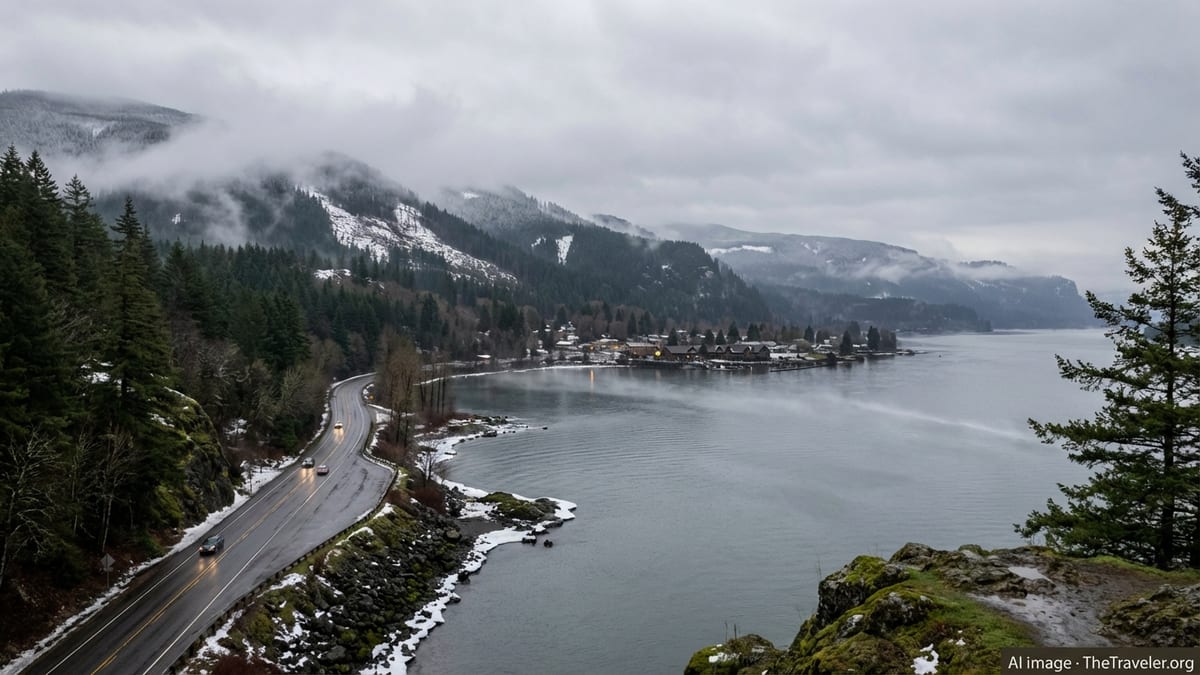
Winter in Skamania County has always been a test of endurance, with freezing temperatures, slick roads and sudden squalls sweeping through the Columbia River Gorge. Average February highs hover near the low 40s, while saturated air, gusty winds and dense river fog can make conditions feel far more punishing for casual visitors unused to the region’s volatility.
This year, local hoteliers and outfitters say the familiar litany of winter hazards has collided with a more cautious traveler mindset. After a string of powerful Pacific storms across the Northwest and flooding further north, many visitors have simply opted to stay closer to home or delay trips until spring. That has left gaps in bookings at a time when winter events and shoulder-season promotions usually help smooth out the county’s highly seasonal visitor flows.
Even marquee properties that heavily market winter getaways, such as lodge stays, spa packages and frozen-waterfall excursions, report softer midweek occupancy and shorter booking windows. Operators describe phones lighting up whenever forecasts call for ice or high winds through the Gorge, with some guests canceling outright rather than gambling on mountain passes and exposed highways.
Travel planners warn that the perception of Skamania County as a difficult winter destination can linger long after a particular storm clears, especially among out-of-state visitors who may not differentiate between a brief atmospheric river and day-to-day conditions on local trails and roads.
Safety Costs Mount as Rescue Calls Climb
At the same time that some would-be tourists are staying away, those who do come in winter are increasingly stretching local emergency services. Skamania County has seen a surge in search and rescue calls in recent seasons, particularly around steep, weather-sensitive trails and remote river corridors prized by hikers, snowshoers and paddlers.
County officials say the profile of those rescues has shifted toward visitors arriving with limited experience in mountain conditions, often lured by social media images of frozen waterfalls, snow-dusted viewpoints and fog-draped river scenes. When storms roll through or temperatures drop suddenly, day trips can quickly turn into all-day emergencies that require volunteers, sheriff’s deputies and specialized gear.
The financial strain has become significant for a small rural government already constrained by a limited tax base. Local leaders note that every prolonged search pulls deputies off patrol, delays other investigations and drains equipment budgets. The county has publicly discussed an ordinance that would allow it to bill unprepared or reckless hikers for rescues in egregious cases, arguing that escalating costs cannot be absorbed indefinitely without impacting other services.
Rescue professionals and outdoor groups have raised concerns that any talk of fees could make visitors hesitate to call for help, yet they also acknowledge that the pace of winter incidents is unsustainable. Caught in the middle are tourism businesses that rely on access to the very landscapes that challenge inexperienced visitors the most.
Infrastructure, Closures and the Access Problem
Beyond the weather and safety issues, Skamania County’s winter slump is magnified by constraints on access that are largely outside local control. Vast portions of the county lie within the Columbia River Gorge National Scenic Area and Gifford Pinchot National Forest, where federal land management decisions directly shape trail, road and viewpoint availability.
Seasonal and long-term closures on popular public lands have quietly chipped away at the menu of winter experiences. A multi-year closure near Wind Mountain to protect sensitive cultural and natural resources, for example, has removed a well-known viewpoint hike from many itineraries. Elsewhere, unpaved forest roads that lead to sledding hills, snow parks and trailheads are increasingly difficult to keep open amid repeated freeze-thaw cycles and limited maintenance budgets.
Transit access through the Gorge, promoted in recent years as a way to reduce congestion and broaden visitor options, also slows in winter. Regional bus routes face holiday suspensions, reduced weekend service and weather-related disruptions that make car-free trips harder to plan. For would-be visitors from Portland and Vancouver who do not want to drive in snow or black ice, those gaps in public transport can be decisive when choosing between Skamania and more urban destinations.
Local officials stress that maintaining safe access is a year-round challenge that spikes in cost when winter storms hit. Each closure or service reduction may be temporary, but together they erode the dependability that repeat visitors expect from a destination marketed as an easy, scenic escape.
Long-Term Economic Strains Limit Tourism Resilience
The pressures bearing down on Skamania County’s tourism economy land on a fiscal landscape that was already fragile long before this winter. With roughly 1.1 million acres and large swaths of national forest and scenic area lands, only a small fraction of the county’s territory is taxed at full market value. That leaves local government heavily dependent on a narrow mix of property, sales and lodging taxes that ebb and flow with visitor spending.
County leaders note that operating budgets have barely grown in more than a decade, even as costs for public safety, road maintenance and emergency response have climbed. Outmigration of families, shrinking school enrollment and the dominance of outside employment for many residents mean that much of the income generated by local households is earned elsewhere and spent across the river in Oregon.
In that context, winter tourism is not just a seasonal perk. It is a vital bridge that helps keep small businesses open, supports year-round staff at hotels and restaurants, and generates the tax receipts that help fund services stretched thin by federal land ownership. When storms, closures and safety incidents depress visitation, the ripple effects can be felt in school consolidations, deferred road work and delayed investments in new recreation infrastructure.
Economic development advocates argue that until Skamania can capture a larger share of the value created by its public lands and visitor traffic, every rough winter will test the county’s capacity to keep pace with demand while maintaining basic services.
Communities Push Education Over Retreat
Despite the headwinds, communities across Skamania County are leaning into education and smarter winter tourism rather than retreating from it. The local chamber of commerce and tourism offices have ramped up messaging about weather awareness, road conditions and trail readiness, directing visitors to real-time information and encouraging them to travel with proper clothing, traction devices and backup plans.
Guides and outfitters are rewriting itineraries to emphasize safer, lower-elevation options when storms hit, such as riverfront walks, photography outings centered on Gorge fog, and cultural or culinary events in town. Winter festivals and small-scale gatherings are being positioned as reasons to visit even when mountain access is limited, providing a measure of predictability for lodging and dining businesses.
Officials say the goal is to reset expectations, making it clear that Skamania in winter is a place for prepared, flexible travelers rather than spontaneous day-trippers chasing a single social media view. By pairing candid messaging about risks with promotion of accessible experiences, they hope to keep visitor numbers from cratering while reducing the strain on search and rescue teams.
For now, the chill in Skamania County’s tourism sector serves as a reminder that in a landscape dominated by public lands and dramatic weather, resilience depends as much on governance, infrastructure and visitor behavior as it does on whether the next storm hits on a weekday or a weekend.