

More news on this day
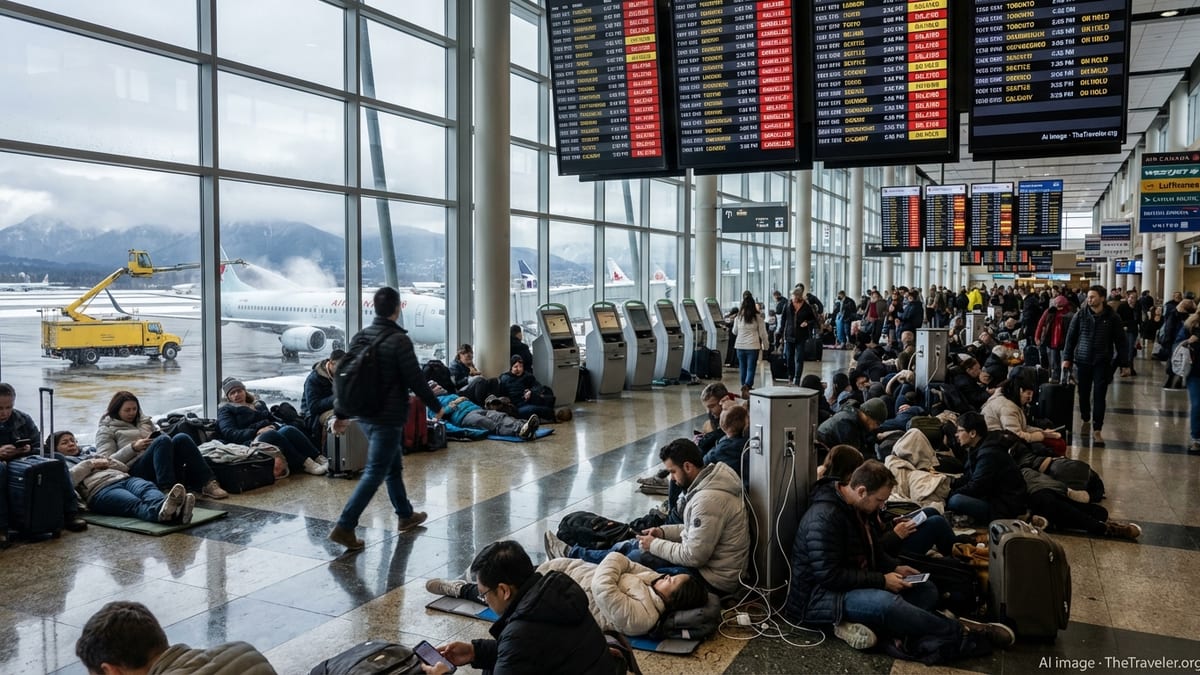
Hundreds of passengers were left camped out at Vancouver International Airport on February 17 as a fresh wave of winter weather and knock-on operational problems triggered 97 flight delays and 29 cancellations, snarling connections across Canada and rippling onto global routes operated by airlines including WestJet, Air Canada, Jazz, United and Cathay Pacific.
Vancouver Becomes Epicentre of New Wave of Travel Disruptions
By early afternoon local time, departure boards at Vancouver International Airport were dominated by yellow and red notices as airlines struggled to keep services running amid reduced capacity and lingering operational constraints across their networks. According to live flight-tracking data and airport performance statistics, almost one in three flights touching Vancouver on February 17 was running late, with around 4 percent canceled outright as carriers attempted to reset their schedules.
While winter slowdowns are a familiar feature of Canadian aviation, the concentration of delays at a key coastal hub created an outsized impact. Vancouver serves as a vital bridge between Western Canada and destinations across the Pacific as well as major cities such as Calgary, Edmonton, Montreal and Winnipeg. Even modest disruptions in arrivals and departures quickly cascaded into missed connections for passengers bound for Asia, the United States and other Canadian provinces.
Travellers reported long waits in customer-service lines, difficulty rebooking itineraries and uncertainty around when their flights would actually depart. With aircraft and crews out of position following earlier storms and operational issues elsewhere in the country, airlines resorted to tactical cancellations and last-minute schedule changes to protect the remainder of their networks.
The knock-on effects were visible across terminals as families spread out on the floor with carry-on bags, business travellers recharged laptops at overloaded power outlets and airport staff fielded repeated questions about revised departure times and accommodation options.
Airlines from WestJet to Cathay Pacific Feel the Strain
The latest disruption at Vancouver did not spare any one carrier. WestJet and Air Canada, the two largest operators at the airport, bore the brunt of delays and cancellations as they attempted to maintain dense domestic schedules while also feeding long-haul operations. Regional affiliate Jazz Aviation, which operates many of Air Canada’s shorter routes, was hit particularly hard where tight turnarounds left little margin for weather-related slowdowns.
International partners and codeshare airlines were drawn into the turmoil. Cathay Pacific, which relies on Vancouver as a key North American gateway for its trans-Pacific services, saw its operations affected when inbound flights encountered air-traffic restrictions and ground delays. United Airlines and other U.S. carriers also reported late departures and arrivals on routes linking Vancouver with American hubs, complicating onward international connections for hundreds of passengers.
Real-time flight data showed a pattern familiar from previous disruption days this winter: an early cluster of delays on morning departures that gradually spread throughout the day, as each late aircraft and crew missed their planned slot for the next leg. In some cases, airlines opted to cancel shorter domestic segments, such as regional hops into Vancouver, in order to preserve aircraft for long-haul services to Asia, Europe and major U.S. cities.
Airline representatives emphasized that safety remained paramount, particularly where de-icing, runway conditions and visibility were concerned. However, they acknowledged that the complexity of modern route networks leaves carriers vulnerable when multiple hubs are affected by weather or operational snags on the same day.
Calgary, Edmonton, Montreal and Winnipeg Caught in the Ripple Effect
The disruption at Vancouver was only one piece of a broader pattern of irregular operations across Canada in mid-February. On February 16, monitoring by aviation analysts and travel-industry outlets recorded more than 320 combined delays and cancellations nationwide, with Air Canada, WestJet, Jazz and regional affiliates all reporting significant operational headaches at Toronto, Montreal, Calgary, Edmonton and other airports.
Calgary and Edmonton, key Western Canadian hubs for WestJet and important focus cities for Air Canada and Jazz, were again affected as the new round of delays at Vancouver unfolded. Aircraft scheduled to shuttle between Alberta and the British Columbia coast found themselves departing late or being reassigned, leaving some passengers facing extensive waits and short-notice schedule changes. At Edmonton International, recent days have already seen dozens of disruptions, including cancellations on routes to Vancouver, Calgary and major U.S. cities such as Denver and Phoenix.
Montreal and Winnipeg also experienced consequences as traffic flows through Vancouver were interrupted. For many passengers originating in Quebec and Manitoba, itineraries to Asian destinations or to smaller communities in British Columbia depend on tightly timed connections through Vancouver. When those flights fell behind schedule, travellers were forced into overnight stays or lengthy re-routing via Toronto or U.S. hubs.
The result was a patchwork of local issues feeding into a national story: a Canadian aviation system under seasonal strain, where any problem at a single hub quickly reverberates across multiple provinces and international gateways.
Weather, Winter Operations and Crewing Challenges Under Scrutiny
Behind the immediate numbers at Vancouver lie recurring questions about how well Canada’s aviation system is equipped to handle the increasingly volatile winter climate and its operational side effects. Forecasts for southern British Columbia and the Prairies this week highlighted a mix of low cloud, scattered snow showers and changing wind patterns that required cautious management of runway capacity, increased de-icing and tighter spacing between aircraft.
While conditions at Vancouver on February 17 were less severe than the major snowstorms that slammed parts of Ontario earlier in the month, the timing of low ceilings and intermittent precipitation coincided with peak departure banks. That meant even small hold-ups at the de-icing bays or on taxiways could quickly result in rolling delays that extended well beyond the immediate weather window.
Carriers are also facing challenges in crew scheduling as irregular operations accumulate day after day. When flights arrive late or are diverted, pilots and cabin crews may “time out” under regulated duty limits, making them ineligible to operate subsequent legs without enforced rest periods. Airlines then scramble to find reserve crew, a task complicated by high demand across multiple bases during peak travel weeks.
Industry observers note that the combination of winter weather, tight schedules and limited spare capacity has left WestJet, Air Canada, Jazz and their partners with little room to recover quickly from disruptions. The result is a heightened risk that a day of difficulties at one or two airports, such as Vancouver and Calgary, cascades into Canada-wide delays the following day.
Passengers Face Long Lines, Uncertain Timelines and Patchy Communication
For stranded passengers at Vancouver International, the operational context was of little comfort compared with the immediate realities of long lines and uncertain departure times. By mid-morning, queues at airline service desks snaked along terminal corridors as travellers sought rebooking, meal vouchers or hotel accommodation after overnight cancellations and missed connections.
Some passengers described confusion around changing departure times, with smartphone apps and departure boards occasionally displaying conflicting information. Others reported difficulty reaching airline call centres, which were simultaneously fielding a surge in calls from across the country as word of the disruptions spread. Families traveling with children and elderly passengers were particularly affected, with limited seating in crowded gate areas and restaurants struggling to keep up with demand.
Despite these challenges, airport staff and airline ground crews were visible throughout the terminals, directing travellers, arranging priority assistance for those with special needs and distributing basic amenities where possible. Volunteers with airport assistance programs provided blankets, water and information to those who had been waiting overnight or who faced long gaps before replacement flights.
Nevertheless, travel advocates warned that the recurring scenes of stranded passengers at major Canadian hubs risk damaging public confidence in the reliability of domestic air travel, especially for those with time-sensitive journeys or limited flexibility in their plans.
Rebooking Options and Passenger Rights Under Canadian Rules
As operations faltered, airlines encouraged affected customers to use digital tools wherever possible to manage their disrupted itineraries. WestJet, Air Canada and Jazz all directed passengers to their apps and websites to check real-time flight status, request same-day changes where available and register for notifications about gate changes or schedule updates. In some cases, carriers offered flexible-change policies, waiving certain fees for travel on affected dates when delays and cancellations reached a significant scale.
Under Canada’s Air Passenger Protection Regulations, travellers whose flights are significantly delayed or canceled may be entitled to assistance, rebooking and, in some circumstances, compensation, depending on the cause of the disruption and the size of the operating carrier. That can include meal vouchers, hotel accommodation, ground transport and financial compensation when the airline is deemed responsible for the interruption and when safety-related exemptions do not apply.
Consumer-rights advocates reminded passengers to keep all receipts for out-of-pocket expenses such as food, transportation and overnight stays, and to document communications with airlines in case they need to file formal claims later. They also encouraged travellers to familiarize themselves with each airline’s specific policies, which can offer additional flexibility beyond the minimum legal requirements in the event of major operational disruptions.
Nonetheless, navigating the claims process can be complex, particularly when multiple airlines are involved on a single itinerary or when weather, air-traffic restrictions and staffing constraints intertwine. Passengers leaving Vancouver with onward international connections on partners such as United and Cathay Pacific faced the additional challenge of coordinating assistance between North American and overseas carriers.
Operational Lessons for Airlines and Airports as Winter Continues
The latest bout of disruption at Vancouver International adds to a growing list of irregular-operation events for Canadian aviation this winter, prompting industry discussion about how airlines and airports can better prepare for the remainder of the season. Analysts point to several areas where incremental changes could improve resilience, including more conservative scheduling during peak winter weeks, expanded use of spare aircraft and crews and closer coordination between carriers and airport authorities when weather systems threaten multiple hubs simultaneously.
For airlines such as WestJet, Air Canada and Jazz, the challenge lies in balancing commercial efficiency with robustness. Tight turnarounds and high aircraft utilization help keep costs in check but leave little slack when weather or air-traffic issues slow the system. Some experts argue that temporarily building more buffer time into schedules during the most volatile weeks of winter could reduce the risk of widespread cascading delays, even if it marginally reduces capacity.
Vancouver International and other major airports, meanwhile, continue to invest in infrastructure such as de-icing facilities, snow-removal equipment and improved passenger-information systems. The goal is to speed up ground operations in marginal weather and keep travellers better informed when things go wrong. Airport officials have underscored that real-time data sharing with airlines and air-traffic control is critical to managing limited runway capacity efficiently during high-demand periods.
With forecasts calling for further bouts of unsettled weather across parts of Canada in the coming days, the experience at Vancouver serves as a reminder that winter travel remains inherently unpredictable. For passengers planning journeys through the country’s major hubs, flexibility, advance planning and close attention to flight-status updates will remain essential tools for the rest of the season.
Global Routes Feel the Impact of Local Canadian Delays
While many of the disruptions recorded on February 17 involved short-haul hops within Canada, the consequences were felt across a much wider geographic footprint. Vancouver’s role as a trans-Pacific gateway means that delays to feeder flights from Calgary, Edmonton, Winnipeg and other cities can jeopardize onward departures to Asia, forcing airlines to hold long-haul aircraft, rebook passengers on later services or, in extreme cases, cancel entire rotations.
Cathay Pacific, which operates key links between Vancouver and major Asian hubs, had to contend with passengers arriving late from connecting Canadian cities, complicating boarding and baggage transfers. United Airlines and other Star Alliance partners also grappled with tight connections on routes funneling passengers from Western Canada through U.S. hubs on their way to Latin America and Europe.
These disruptions highlight the interconnected nature of modern aviation networks, where a delay of minutes at one airport can translate into hours of disruption thousands of kilometres away. Travel-industry observers noted that recent days have seen similar patterns emerging at other Canadian hubs, including Toronto and Montreal, where domestic weather events and staffing constraints created knock-on problems for flights to Europe, the Caribbean and the United States.
For global travellers passing through Vancouver, the episode offered a stark illustration of why airlines and airport authorities are increasingly focused on building resilience into their operations. As climate variability introduces more frequent weather shocks and demand for international travel remains strong, the ability of hubs like Vancouver to manage disruptions swiftly will play a growing role in shaping passenger confidence and Canada’s reputation as a reliable gateway for global air travel.