

More news on this day
Hundreds of airline passengers were left stranded across the United States on Monday as at least 95 flights were cancelled and 38 delayed, with carriers including Republic Airways, Southwest Airlines, Endeavor Air, JetBlue, United Airlines and others suspending operations amid a powerful winter storm that is disrupting travel from New York and Philadelphia to Los Angeles, Chicago, Orlando and beyond.
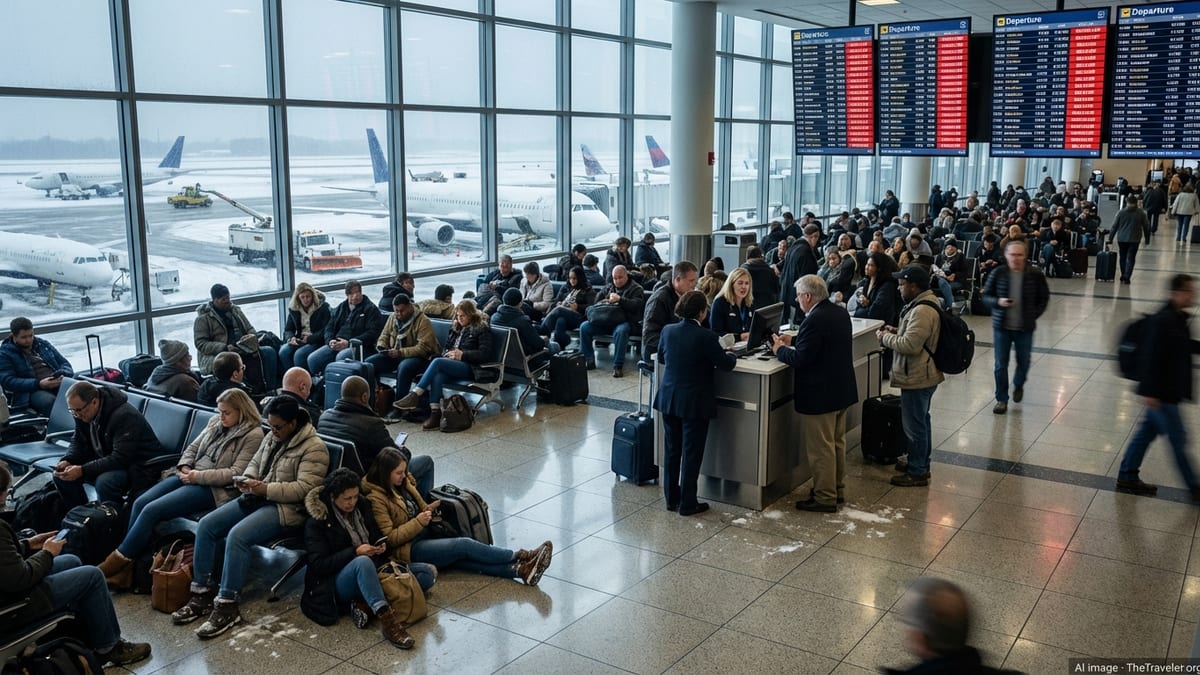
Storm System Turns Routine Travel Day Into Nationwide Disruption
The latest round of flight cancellations comes as a fast‑intensifying winter storm sweeps across the Northeast and ripples through the broader U.S. aviation network. While the most severe weather is concentrated from Washington and Philadelphia through New York and Boston, the operational fallout has quickly spread to airports across the country as airlines preemptively trim schedules and struggle to reposition aircraft and crews.
By Monday morning, flight‑tracking data showed at least 95 U.S. flights cancelled and 38 delayed on routes involving carriers such as Republic, Southwest, Endeavor Air, JetBlue and United, in addition to other regional and low‑cost operators. The figures represent just a slice of the thousands of cancellations attributed to the storm, but highlight how even a relatively small cluster of grounded flights can have an outsized impact on passengers when it touches multiple hubs at once.
For many travelers, the disruption began before they even reached the airport, as airlines issued weather advisories and encouraged customers to rebook or delay trips. Others discovered the scale of the chaos only after arriving at the terminal, confronted with departure boards thick with red “cancelled” notices and long lines at customer service counters.
Industry analysts note that while U.S. airlines have become more proactive in canceling flights ahead of major storms, the strategy still results in hundreds of passengers at each affected airport competing for limited replacement seats, particularly on already busy winter school break routes.
Major Hubs From New York to Philadelphia Bear the Brunt
New York City’s three major airports have again emerged as ground zero for weather‑related flight turmoil. With heavy snow, gusty winds and poor visibility sweeping across the region, John F. Kennedy International, LaGuardia and Newark Liberty all reported steep cuts to their Monday schedules. Many of the 95 cancellations and 38 delays tracked in the current disruption involved flights to or from at least one of these airports, magnifying the effect on connecting passengers.
Philadelphia International, another key node along the busy Northeast corridor, also reported a wave of grounded and delayed services. Carriers focused on East Coast shuttle routes, including regional affiliates operating under the banners of major airlines, have been particularly exposed. For travelers bound for smaller cities in the Mid‑Atlantic and New England states, the loss of a single regional leg can mean an unexpected overnight stay or the need to route through distant hubs such as Chicago or Atlanta.
Airport authorities in New York and Philadelphia said that plow teams and de‑icing crews had been working through the night and early morning, but warned that runway conditions and crosswinds would continue to limit operations. Officials urged passengers to avoid heading to the airport without a confirmed, operating flight and to stay in close contact with their airlines’ mobile apps or customer service channels.
Inside terminals, the impact was visible in snaking queues at rebooking desks, families camped on the floor near gate areas and food concessions doing brisk business as travelers settled in for long waits. Some passengers with early‑morning departures saw flights cancelled while they were already at the gate, leading to tense encounters as gate agents tried to juggle reassignments amid tightening seat availability.
Ripple Effects Reach Chicago, Los Angeles, Orlando and Beyond
Although the heaviest snowfall has been confined to the Northeast, the interconnected nature of U.S. airline networks means the storm’s impact has been felt thousands of miles away. In Chicago, a crucial mid‑continent hub, carriers reported a growing number of cancellations tied not to local weather but to aircraft and crews scheduled to arrive from storm‑hit New York, Boston and Philadelphia.
On the West Coast, Los Angeles International Airport saw selected departures scrubbed or delayed as airlines adjusted their transcontinental schedules. Flights to and from New York and other East Coast cities were among the hardest hit, leaving some California‑bound passengers temporarily stuck in the Northeast and others unable to begin their journeys west. Travelers arriving in Los Angeles from unaffected regions also experienced missed connections and re‑routes as carriers reshuffled capacity.
In Florida, Orlando International Airport reported cancellations on popular leisure routes that depend heavily on aircraft rotating through the Northeast. Families ending school‑break holidays and theme‑park trips found themselves in limbo as flights to northern cities disappeared from departure boards. Airline representatives warned that even destinations far from the storm zone could see lingering disruption for at least another day as metal and crew resources were rebalanced across networks.
Smaller regional airports from the Midwest to the Southeast also reported scattered cancellations and delays tied to the broader system shock. Aviation experts said this pattern is consistent with large‑scale winter events, in which an initial wave of cancellations in the Northeast can send schedule disruptions cascading through multiple time zones.
Republic, Southwest, Endeavor, JetBlue and United Adjust Schedules
Among the carriers most visibly affected in the current round of disruptions are Republic Airways, Southwest Airlines, Endeavor Air, JetBlue Airways and United Airlines, each of which operates significant capacity into the storm‑battered Northeast. Regional operator Republic, which flies under major‑carrier brands on many routes from New York and Philadelphia, has been forced to trim a series of short‑haul services as icy conditions and low visibility severely limit takeoffs and landings.
Southwest, known for its point‑to‑point network, has suffered cancellations on city pairs linking the Northeast with Florida, the Midwest and the West Coast. The airline has issued flexible rebooking policies for customers traveling through a number of affected airports, allowing passengers to change itineraries without additional charges on selected dates and routes.
Endeavor Air, a key regional partner providing feeder flights into major hubs, has also cut frequencies on routes that serve New York and surrounding cities. Those cancellations disproportionately affect travelers starting their journeys in smaller markets that rely on a single daily connection to reach larger hubs.
JetBlue and United, both with major presences at New York airports and strong transcontinental footprints, have reported multiple cancelled and delayed flights tied directly to the storm. Both airlines have activated winter weather waivers and redeployed larger aircraft on certain routes in an effort to accommodate stranded passengers once conditions allow flying to safely resume.
Passengers Face Long Lines, Thin Information and Tough Choices
For the hundreds of passengers directly affected by the 95 cancellations and 38 delays, the operational details provide little comfort. Many learned of their disrupted flights through last‑minute text messages or app alerts, while others only found out upon scanning airport departure boards. With call centers quickly overwhelmed, some travelers spent hours on hold or in line at ticket counters seeking alternative arrangements.
Families traveling with young children reported particular hardship as they tried to secure hotel rooms near busy hubs at short notice. With weather conditions making local ground travel hazardous in parts of the Northeast, even reaching an off‑airport hotel became a major logistical challenge for some stranded passengers. Others opted to sleep in terminals, wary of missing early‑morning standby opportunities on limited departing flights.
Business travelers, too, faced difficult decisions about whether to cancel meetings, shift to online alternatives or attempt complex multi‑stop routings around the storm zone. For some, the combination of winter weather and already‑tight airline schedules left few viable options, especially on heavily booked Monday morning departures.
Consumer advocates reminded travelers that in the United States, airlines are generally not required to provide hotel rooms or meal vouchers when cancellations are caused by weather, though individual carriers may choose to assist as a goodwill gesture. They advised passengers to document expenses, retain receipts and carefully review each airline’s customer‑service commitments and weather‑waiver policies.
Operational Recovery Could Take Days Despite Improving Weather
Even as forecasters expect conditions to gradually improve in key Northeast cities, aviation analysts warn that the operational hangover from the storm could linger well into the week. Aircraft and crews displaced by the day’s cancellations and delays must be returned to their scheduled routes, a process that can take multiple rotations to fully resolve.
Air traffic control staffing, runway clearing and de‑icing capacity will also determine how quickly airlines can restore more normal schedules. If the storm’s heavy snow bands shift or intensify unexpectedly, fresh rounds of ground stops or capacity reductions could be ordered, forcing carriers to cancel additional flights even after an initial recovery plan is in place.
Passengers booked on flights later in the day or on Tuesday have been urged to monitor their itineraries closely, as airlines continue to fine‑tune schedules in response to evolving weather data and crew‑duty limits. Some carriers are blocking the sale of remaining seats on key routes in order to preserve space for rebooked customers caught up in the initial wave of cancellations.
Industry observers say the episode underscores how vulnerable modern air travel remains to major weather systems, particularly when they strike densely trafficked corridors like the one stretching from Washington through New York to Boston. While airlines have invested heavily in predictive technology and more robust recovery planning, large‑scale storms still present cascading challenges that can take days to unwind.
What Travelers Can Do If Their Flight Is Affected
Travel experts recommend that passengers with upcoming flights into or out of impacted cities take proactive steps to reduce the risk of being stranded. The first is to ensure that airline apps and contact information are up to date, as mobile alerts are often the fastest way to receive notice of schedule changes or rebooking options.
When a flight is cancelled, customers are typically entitled to a refund if they choose not to travel, even on non‑refundable tickets, although processing times can vary. If continuing the journey is essential, rebooking through an airline’s website or app can often be quicker than waiting in line at an airport desk. Travelers with flexibility may have better luck securing seats by shifting to off‑peak times or routing through secondary hubs that are less exposed to the storm’s direct effects.
For those still planning itineraries, experts suggest building in extra connection time, avoiding the last flight of the day where possible and considering travel insurance that covers weather‑related interruptions. While such measures cannot eliminate the risk posed by a major winter storm, they can provide more options when widespread cancellations strike.
As airlines and airports across the country work to clear runways, de‑ice aircraft and stabilize schedules, the immediate priority remains getting hundreds of stranded passengers to their destinations safely. With more winter weather still in the forecast for parts of the country, both carriers and travelers are likely to face further tests of resilience before the season is over.