

More news on this day
Travelers across the United States and Canada are facing major disruptions today at Ronald Reagan Washington National Airport, as a powerful winter storm sweeping the Northeast forces PSA Airlines, Jazz, JetBlue, Republic Airways and Southwest Airlines to cancel multiple flights, snarling connections across North America and stranding hundreds of passengers in Washington, D.C. and beyond.
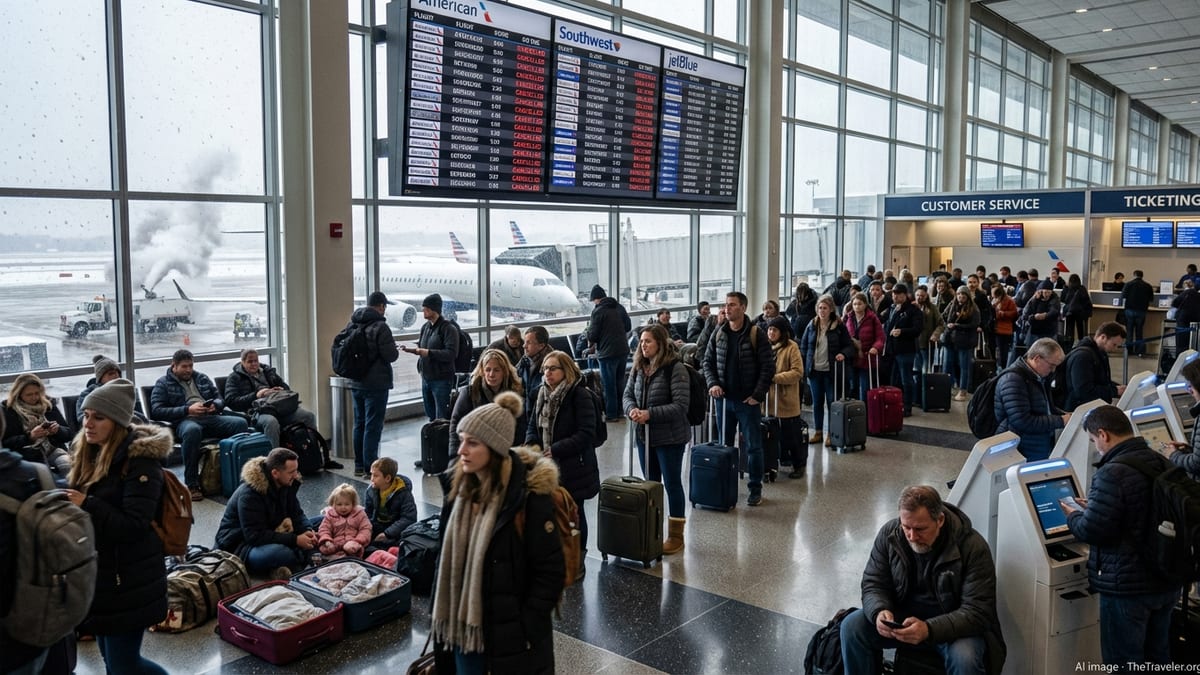
Storm-Battered Northeast Ripples Through Reagan National
The latest wave of cancellations at Reagan National comes as a severe winter system continues to batter major hubs from Boston to New York and Washington. The storm, which has already led to thousands of flight cancellations nationwide over the past several days, has pushed airlines to trim schedules and preemptively cancel departures to keep aircraft, crews and passengers out of deteriorating conditions.
According to operational data reviewed today, Reagan National is reporting a fresh cluster of cancellations that includes four key services operated by PSA, Jazz, JetBlue, Republic and Southwest. Though modest in number compared with the worst days of the storm, these flights sit at the heart of busy shuttle-style corridors and regional links, magnifying the impact for travelers connecting across the United States and into Canada.
The cancellations are affecting routes to and from major East Coast gateways as well as cross-border connections, including links to Toronto and other Canadian cities that are already contending with heavy snow, gusty winds and air-traffic flow restrictions. With aircraft and crews out of position, even airports experiencing improving weather are seeing knock-on disruption.
Airlines operating at Reagan National have been working under traffic-management initiatives coordinated by federal air-traffic authorities, who have imposed ground delays and reduced arrival and departure rates at several Northeast airports because of low visibility, icy runways and high winds.
Key Carriers Trim North American Networks
The four cancellations tied to PSA, Jazz, JetBlue, Republic and Southwest represent just a slice of the storm’s broader impact, but they underscore how a single weather event can reverberate through interconnected airline networks. PSA and Republic, both major regional partners for larger U.S. carriers, operate many of the shorter-haul flights that feed traffic from smaller cities into Washington and onward to national and international destinations.
When those regional flights are pulled from the schedule, passengers can lose crucial onward connections to the Midwest, South and West Coast, as well as to Canadian gateways. Jazz, a key regional operator in Canada, has seen its cross-border services hit particularly hard, as storm conditions and runway contamination issues constrain operations on both sides of the border.
JetBlue and Southwest, which maintain high-frequency service along the Eastern Seaboard, have been forced to make tactical cuts at Reagan National to preserve operational stability. By canceling select departures early, the carriers aim to reduce day-long rolling delays and avoid situations in which aircraft and crew are left stranded.
Industry analysts note that these targeted cancellations, while disruptive in the short term, can ultimately speed up the recovery once the worst of the weather passes, allowing airlines to resume more reliable operations and get stranded passengers moving sooner.
Passengers Face Long Lines, Limited Rebooking Options
Inside Reagan National’s terminals, passengers affected by the cancellations have been met with crowded check-in hallways and extended waits at customer-service counters. With seats at a premium during an already compressed schedule, many travelers are finding that same-day alternatives are scarce, especially on popular shuttle routes linking Washington with Boston and New York.
Airline agents have been prioritizing rebooking for travelers with imminent international connections and for those whose journeys involve multiple segments. Others are being offered itineraries over alternate hubs, sometimes involving additional stops or overnight stays as carriers work to reposition aircraft and crews.
While some passengers have been able to rebook via airline apps and websites, spikes in online traffic and changing seat availability have made digital self-service tools less reliable than usual. Travelers are being advised to monitor their bookings frequently, arrive at the airport early for any confirmed departures and keep a close eye on gate information screens, as boarding times remain fluid.
Airport staff at Reagan National have deployed additional wayfinding teams and are coordinating with airlines to provide updated information on security wait times and terminal changes, with some flights being reassigned to different concourses to streamline operations.
Broader Impact Across U.S., Canada and International Routes
The disruptions at Reagan National are part of a much wider pattern of winter-weather chaos across North America. Over recent days, storms have forced airlines to cancel or delay thousands of flights across major hubs in the United States, particularly in the Northeast, while Canadian airports have reported significant schedule reductions of their own.
From Washington, the four affected flights touch a broad range of destinations, with onward connections into the Midwest, Southeast and West Coast, as well as network links into Toronto and other Canadian cities. As a result, cancellation of a single Reagan departure can strand passengers not only in the capital region but also at outstations where inbound aircraft never arrive.
International traffic has also been affected. Several long-haul services that depend on timely feeder flights from Reagan National have seen lighter passenger loads or have departed with missed connections, as travelers from secondary U.S. cities fail to reach their transatlantic or Caribbean departures in time. Airlines have responded by re-accommodating these passengers on later flights from larger hubs, further stretching already tight capacity.
Travel advisors say the episode underlines the vulnerability of heavily banked schedules in congested airspace. When a storm hits the East Coast, the concentration of flights at a handful of hubs means that even limited cancellations at one airport can cascade into widespread disruption of domestic and international travel.
Airlines and Regulators Focus on Recovery and Resilience
As conditions gradually improve, attention at Reagan National is turning to recovery and the broader question of resilience in the face of increasingly volatile winter weather. Airlines are preparing for what is likely to be a multi-day cleanup, repositioning aircraft, calling in reserve crews and reviewing maintenance schedules to ensure fleets are ready as operations ramp back up.
Regulators and airport authorities, meanwhile, are monitoring how well new operational playbooks are performing. Over recent seasons, carriers and air-traffic managers have relied more heavily on preemptive cancellations, streamlined deicing procedures and more conservative scheduling on storm-prone days. Early indications from the current disruption suggest that while these measures may limit the worst gridlock, they cannot fully insulate passengers from significant delays and missed connections.
For travelers, the latest turmoil at Reagan National serves as a reminder to build flexibility into winter itineraries, particularly on routes involving multiple connections or cross-border segments. Travel experts recommend allowing extra time between flights, avoiding tight same-day turnarounds for important events and considering travel insurance products that cover weather-related disruptions.
With the winter season still underway, both airlines and passengers at Reagan National and across North America are bracing for the possibility of additional weather systems. For now, the four cancellations affecting PSA, Jazz, JetBlue, Republic and Southwest at Washington’s close-in airport encapsulate the broader story of how a single storm can send shockwaves through an interconnected global network.