

More news on this day
Thousands of air travelers across Canada are facing another day of grounded planes and frayed nerves as a powerful winter storm system linked to severe U.S. weather disrupts operations at major airports from Vancouver to St. John’s, triggering more than a hundred cancellations and delays for carriers including Air Canada, Jazz, WestJet, Porter and PAL Airlines.
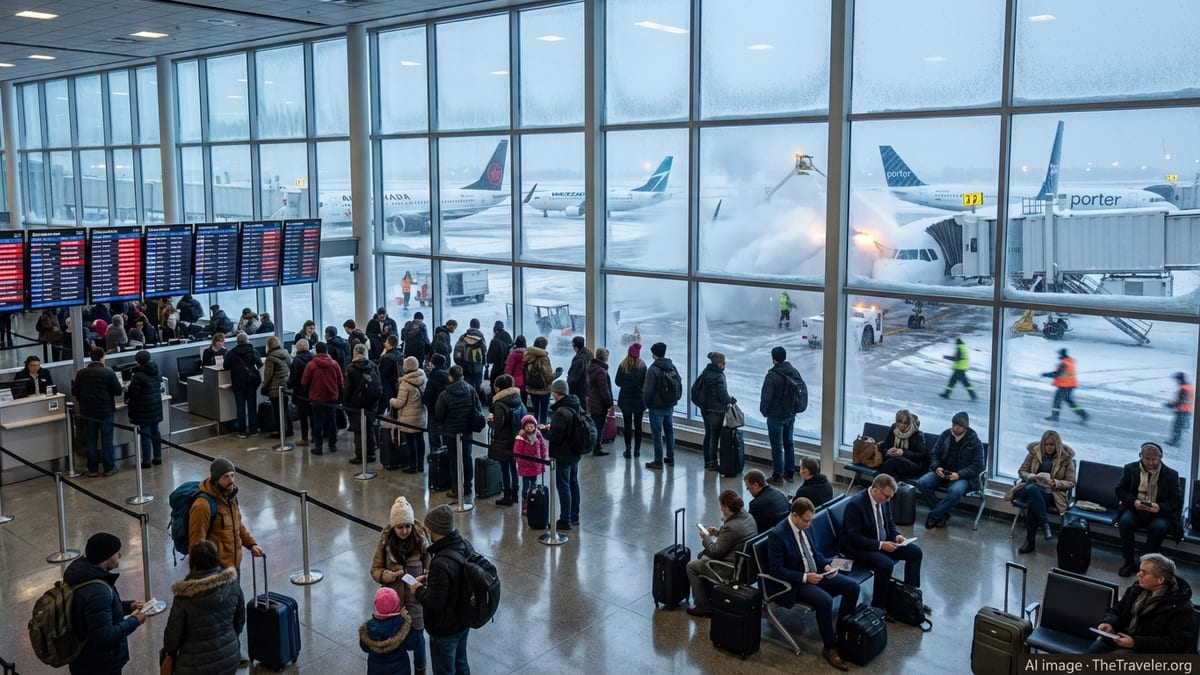
Storm System Spreads Disruption From U.S. Northeast Into Canada
The latest wave of cancellations in Canada is being driven by a sprawling winter storm that pounded the U.S. Northeast with record snowfall and fierce winds, forcing thousands of flight cancellations south of the border and sending shockwaves through the wider North American air network. As aircraft, crews and airport operations remain out of position, Canadian carriers are contending with fresh schedule upheaval on Tuesday, February 24.
According to airport and flight-tracking data, Canadian hubs including Toronto, Montreal, Vancouver, Halifax, Ottawa and St. John’s have all reported significant disruption as the storm’s effects ripple northward. While snow and high winds have been the primary culprit in eastern Canada, operations in western hubs such as Vancouver are also feeling the knock-on impact of aircraft stuck or delayed elsewhere in the system.
Ground conditions remain challenging particularly in Atlantic Canada and the St. Lawrence Valley, where blowing snow, icy runways and reduced visibility have forced airport authorities to cycle between periods of active de-icing and temporary holds on departures and arrivals. Even where skies have begun to clear, the backlog of displaced aircraft and crews means normal schedules are still out of reach.
Meteorologists say the storm has been sustained by a sharp clash between Arctic air and moist Atlantic air, an atmospheric setup that has produced repeated bands of heavy snow and gusty winds across key aviation corridors. That pattern has made it difficult for airlines to predict when conditions will stabilize long enough to reset their operations.
Hundreds of Flights Scrapped as Major Canadian Hubs Strain
By Tuesday morning, airlines operating in Canada had collectively cancelled scores of domestic and transborder flights and delayed many more, with the running total climbing through the day as conditions shifted. Service at Toronto Pearson and Montreal Trudeau, the country’s busiest international gateways, has been especially strained as they juggle a mix of long-haul arrivals, transcontinental routes and regional connections.
Regional centres have not been spared. Halifax and St. John’s have seen a disproportionate impact on short-haul routes, with multiple early-morning and evening services scrubbed as airlines prioritize safety and attempt to consolidate capacity on remaining flights. Ottawa has reported a steady stream of cancellations and weather-related delays, particularly on routes linking the capital with Atlantic Canada and the U.S. Northeast.
Vancouver International, while not in the direct path of the worst snow, has nonetheless had to manage a rolling series of disruptions tied to aircraft and crew rotations from storm-battered airports to the east. Flights arriving from Toronto and Montreal have often landed hours behind schedule, forcing tight connections to be rebooked and late-night operations to stretch into the early hours.
Airport authorities across the network have deployed extra ground staff and snow-clearing equipment, but the pace of cancellations has underscored how quickly a severe continental storm can overwhelm the resilience measures put in place for winter operations.
Airlines Activate Flexible Policies and Operational Workarounds
Major Canadian carriers have responded to the storm-related chaos with a patchwork of flexible travel policies and operational adjustments intended to keep passengers and staff safe while preserving as much connectivity as possible. Air Canada, WestJet, Jazz, Porter and PAL Airlines have all urged passengers to verify their flight status before leaving for the airport and to consider rebooking where travel is not essential.
Air Canada has expanded its change-fee waivers for affected routes, allowing customers to move their bookings without penalty within a specified window, subject to seat availability on alternate flights. WestJet and regional affiliates have followed suit on a range of domestic and cross-border services, while Porter has focused its waivers on core eastern routes linking Toronto, Ottawa, Montreal, Halifax and St. John’s.
Jazz, which operates regional services on behalf of Air Canada, has played a critical role in shuttling passengers between smaller centres and main hubs as schedules are rebuilt, though many of its shorter sectors have been the first to be cancelled when cross-country aircraft repositioning is required. PAL Airlines, a key player in Newfoundland and Labrador and Atlantic Canada, has been juggling limited good-weather windows to operate essential routes while warning guests of last-minute changes.
Behind the scenes, operations teams are drawing up rolling recovery plans that can be activated as soon as runway conditions improve and winds subside. That work includes repositioning aircraft from less-affected regions, adjusting crew pairings to comply with duty-time rules and consolidating lightly booked flights to free up capacity for stranded travelers.
Passengers Face Long Lines, Rebookings and Uncertain Itineraries
For passengers, the cascading disruptions have translated into long queues at check-in counters and customer service desks, extended waits on airline call centres and a scramble for hotel rooms near major airports. Families returning from school breaks, business travelers heading to critical meetings and vacationers with tightly timed connections have all found themselves rethinking itineraries on short notice.
At Toronto Pearson, travelers arriving to find their flights cancelled have described early-morning lines snaking across departure halls as they waited to be rebooked on later departures or routed through alternative hubs. Similar scenes have played out in Montreal and Vancouver, where departure boards have featured a patchwork of cancellations, delays and cautiously scheduled departures.
Passengers in Atlantic Canada have faced the added complication of fewer alternative routes when flights are scrubbed, with some opting to travel by road or rail where possible, and others choosing to wait out the storm in airport seating areas equipped with charging stations and food concessions. Many have expressed appreciation for frontline staff managing difficult conversations, even as frustration mounts over limited real-time information and shifting departure times.
Travel advisors and consumer advocates are urging affected passengers to document expenses, keep copies of communications from airlines and review the specifics of both carrier policies and any additional travel insurance coverage. While weather-related disruptions often fall outside mandatory compensation rules, meal vouchers, hotel accommodation and rebooking priority are being offered in many cases as airlines work to maintain customer goodwill.
What Travelers Should Do If Flying Through Impacted Airports
With conditions expected to improve unevenly across the country, aviation experts say the next 24 to 48 hours will be critical as carriers attempt to clear backlogs and restore normal schedules. Travelers booked to fly through Toronto, Montreal, Halifax, Vancouver, Ottawa or St. John’s this week are being advised to build extra time into their plans and to remain flexible in case of further last-minute changes.
Industry guidance emphasizes the importance of checking flight status frequently through airline apps or direct notifications and avoiding reliance on third-party schedules that may not reflect the latest operational decisions. Passengers are also encouraged to consider carry-on luggage where feasible, which can make it easier to accept last-minute rebookings and reduce the risk of checked baggage going astray during irregular operations.
For those who can postpone non-essential travel, rebooking into later dates may reduce stress and ease pressure on an already stretched system. Where trips cannot be delayed, choosing early-day departures can increase the odds of flying as planned, as morning flights often operate before cumulative delays begin to stack up across the network.
While Canadian airlines are well practiced in winter operations, the current crisis highlights how quickly a major continental storm can disrupt even the most robust plans. As the weather system gradually moves off and runways are cleared, the focus will shift from triage to recovery, with both airlines and passengers hoping for a swift return to more predictable skies.