

More news on this day
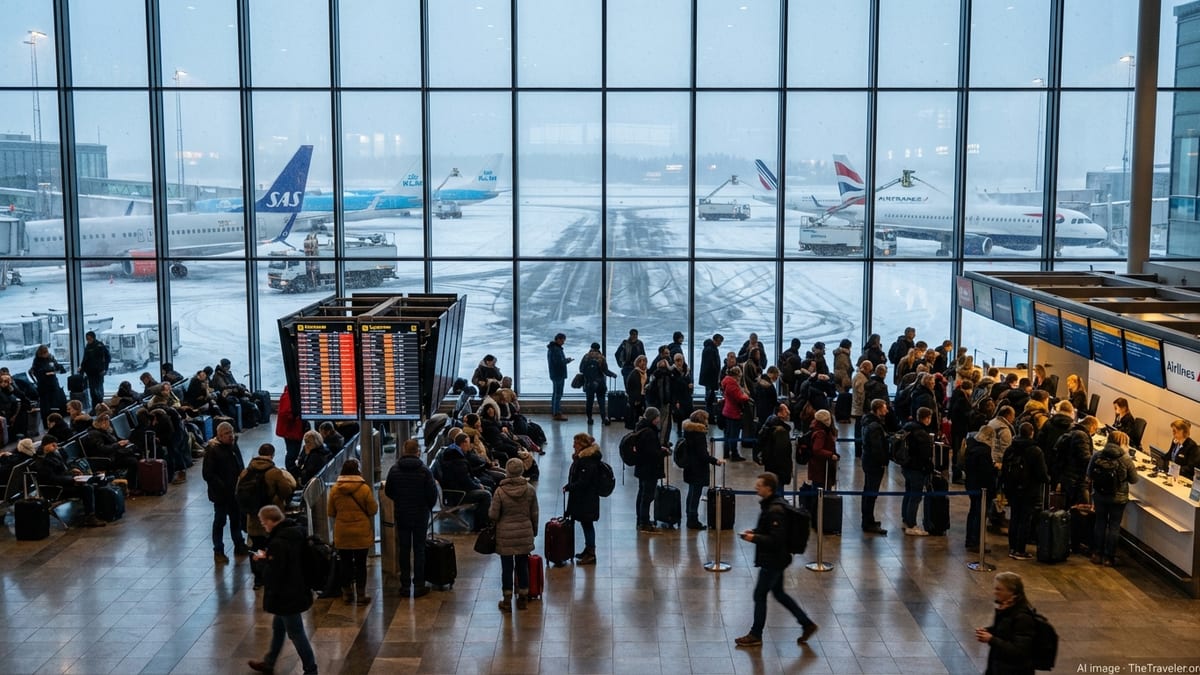
Hundreds of passengers across northern Europe faced hours of uncertainty this weekend as a powerful winter system triggered at least 22 flight delays and 15 cancellations, disrupting operations by SAS Link, KLM, British Airways and Air France at major gateways in Oslo, Copenhagen and Paris.
Storm-Battered Network Brings Nordic and French Hubs to a Standstill
The latest wave of disruption hit as snow, freezing rain and sub-zero temperatures swept across Scandinavia and parts of France, complicating de-icing operations and forcing air traffic authorities to slow traffic flows. Airport departure boards at Oslo Gardermoen, Copenhagen Kastrup and Paris Charles de Gaulle filled with amber and red alerts as early-morning banks of flights began to slip behind schedule.
While weather-related delays are a familiar winter story in Europe, the concentration of disruptions among four major network carriers magnified the impact. SAS Link, SAS’s regional subsidiary, alongside fellow SkyTeam members KLM and Air France, and IAG-owned British Airways all reported operational challenges on short-haul and feeder routes that are critical for connecting passengers onward to long-haul services.
Analysts note that even a relatively modest tally of 22 delayed departures and 15 outright cancellations can cascade through tightly timed schedules. At hubs like Copenhagen and Paris, where aircraft and crews are rotated rapidly between European and intercontinental sectors, a single cancelled regional service can mean dozens of missed connections and mispositioned aircraft later in the day.
By late morning, passengers were contending with growing queues at service desks, stretched call centres and crowded seating areas around the affected terminals. Airport staff worked to rebook travellers, arrange hotels for those facing overnight stays and manage fraying tempers as the knock-on effects rippled through the system.
SAS Link Feels the Strain on Nordic Regional Routes
SAS Link, which operates regional services on behalf of SAS using Embraer jets and other smaller aircraft, was among the first to feel the strain as conditions deteriorated across Norway and Denmark. Early wave departures linking secondary Scandinavian cities into Copenhagen and Oslo are especially vulnerable when de-icing times lengthen and taxiways become slick.
Regional flights are designed around tight turnarounds and high-frequency patterns, meaning even a short ground hold can cause an aircraft to miss its next slot. As weather thresholds were reached at several Nordic airports, dispatchers were forced to push back departure times or cancel entire rotations, affecting both local travellers and those relying on regional hops to reach long-haul departures.
For passengers, the impact was immediate and tangible. Families heading for winter holidays reported being turned back from boarding gates or advised not to travel to the airport at all as airlines pre-emptively thinned schedules. Business travellers attempting same-day returns between smaller Norwegian cities and Copenhagen found themselves scrambling for later flights or alternative routing through Stockholm and other hubs.
Industry observers say SAS Link’s experience is emblematic of the vulnerability of regional networks during severe weather. With limited spare aircraft and crew based at outstations, the carrier has little flexibility when multiple airports across Norway, Denmark and Sweden face simultaneous weather-related restrictions.
KLM, Air France and British Airways Confront Ripple Effects at Paris and Beyond
Further south, Air France and KLM continued to wrestle with the broader winter-weather pattern that has dogged European operations over recent weeks. Paris Charles de Gaulle, already coping with earlier capacity cuts ordered by French aviation authorities during snow and icing episodes, again saw reduced movement rates as runway teams prioritised safety and de-icing crews struggled to keep up with demand.
For Air France, the pressure was most evident on short-haul links into and out of Paris from northern Europe, including services connecting to Oslo and Copenhagen. Any cancellation on these routes not only disrupts point-to-point passengers but also strands connecting travellers bound for North America, Africa and Asia, many of whom require rebooking on later long-haul departures or even on partner airlines.
KLM, whose Amsterdam hub has also endured successive spells of snow and freezing rain this month, faced knock-on issues as aircraft and crews positioned through Paris and the Nordic capitals. Even when Amsterdam remained nominally open, flow restrictions at neighbouring hubs and congested European airspace reduced the carrier’s ability to recover on-time performance, forcing further tactical delays.
British Airways, operating a mix of London–Paris and London–Nordic services that feed its own long-haul network, reported similar challenges. Tight slot controls at London Heathrow, combined with weather-driven constraints over northern Europe, left little spare capacity to absorb delays. When a flight into Oslo or Copenhagen ran late, the return sector often departed behind schedule, multiplying disruptions for passengers in both directions.
Oslo, Copenhagen and Paris: Three Hubs Under Winter Siege
For airports in Oslo, Copenhagen and Paris, the weekend’s events were the latest chapter in a difficult winter marked by repeated bouts of disruptive weather. At Oslo Gardermoen, freezing temperatures and intermittent snow showers required constant runway and taxiway clearing, as well as sustained de-icing operations on departing aircraft. Even minor lapses risked the accumulation of ice on wings and control surfaces, something regulators will not allow.
Copenhagen Kastrup, one of northern Europe’s busiest transfer points, faced similar challenges but with the added complexity of dense connecting traffic. Aircraft arriving late from secondary Nordic and continental airports often missed their onward slots in the carefully choreographed departure waves. That, in turn, forced air traffic controllers to resequence departures and arrivals, lengthening holding times and further eroding schedule resilience.
In Paris, Charles de Gaulle and Orly had only just begun to recover from a previous spell of heavy snow and hard frosts that triggered capacity reductions and widespread cancellations. Fresh bands of precipitation and continued low temperatures again put pressure on ground operations, with de-icing queues stretching and some parked aircraft needing repeat treatments when snow resumed mid-process.
Airport authorities in all three cities emphasised that safety remained the overriding priority. They highlighted the need to maintain adequate time for runway inspection, friction testing and de-icing, even if that meant frustrating delays for passengers. Meteorologists warned that further bursts of wintry weather could not be ruled out in the coming days, keeping operations on a knife edge.
Passengers Face Missed Connections, Overnight Stays and Confusing Updates
For travellers caught in the disruption, the human cost extended well beyond simple schedule changes. At Oslo and Copenhagen, passengers reported spending hours in queues at ticket counters and customer service desks, often receiving differing information from airport screens, airline apps and text alerts. Some learned of their cancellations only after passing security, while others were still making their way to the airport when messages advising them to stay home were sent.
The situation was particularly fraught for those with tight international connections. A delayed regional flight into Paris or Copenhagen could mean missing long-haul departures to North America or Asia, leaving passengers to negotiate scarce seats on later services. With cabin factors already high due to school holidays and pent-up demand, airlines had limited spare capacity to re-accommodate stranded customers.
Families with young children, elderly passengers and those with mobility needs faced an additional layer of difficulty as hotel rooms near airports quickly filled. In some cases, travellers were offered accommodation on the city outskirts or vouchers for use in airport seating areas when no beds were available. Food outlets inside the terminals reported long lines, prompting some airports to distribute water and basic refreshments in crowded gate zones.
Social media channels for the affected airlines quickly filled with posts from frustrated travellers, many complaining about delayed notifications, limited live chat availability and difficulty securing clear information about their rights. While some praised frontline staff for their efforts under pressure, others called for more proactive communication and more generous rebooking options when weather disruption becomes protracted.
Airlines Activate Contingency Plans and Flexible Rebooking Policies
As the scale of the disruption became clear, SAS, Air France, KLM and British Airways all activated established contingency protocols designed for severe weather events. These typically include crew and aircraft repositioning, pre-emptive schedule trimming to build in recovery time, and the introduction of more flexible rebooking and refund policies for affected passengers.
Network planners moved to consolidate lightly booked flights, swap larger aircraft onto busy routes where feasible and cancel select rotations in advance to give travellers more warning. In some cases, airlines opened up the option to rebook onto partner carriers or alternative routings, such as rerouting passengers via Stockholm, Frankfurt or Amsterdam rather than through Copenhagen or Paris.
Carriers also encouraged customers to use digital self-service tools to manage disrupted trips. Mobile apps and websites allowed many passengers to select new flights, request vouchers or initiate refund claims without joining physical queues at the airport. However, high volumes of simultaneous log-ins at peak disruption periods occasionally slowed systems and left some users unable to complete changes on the first attempt.
Operations control centres will continue to monitor weather models and air traffic constraints over the coming days. If conditions improve, airlines are expected to gradually rebuild their schedules, but they have warned that residual delays are likely as aircraft and crew are repositioned and maintenance checks are completed on aircraft that spent extended periods on the ground.
What Travellers Should Do If Their Flight Is Hit
For passengers whose flights are delayed or cancelled, aviation experts recommend a series of practical steps to minimise disruption. First, travellers are urged to monitor their flight status regularly using official airline apps, text alerts and departure boards, rather than relying solely on third-party platforms. In fast-changing weather conditions, schedule information can shift quickly as new air traffic restrictions are issued.
Once a disruption is confirmed, customers should act promptly to secure alternative arrangements, particularly during busy travel periods. Rebooking options are often more plentiful in the early stages of an event, before thousands of passengers compete for the same limited seat inventory. Those who can be flexible with their departure time or routing, for example by accepting early-morning or late-night departures, may have better odds of reaching their destination the same day.
Travellers are also advised to keep receipts for meals, local transport and accommodation if they incur additional costs while waiting for a rebooked flight. Depending on the precise cause of the disruption and the regulatory framework that applies to their journey, some of these expenses may be partially reimbursable or covered under airline care obligations.
Finally, passengers should ensure that airlines have up-to-date contact details, including mobile numbers and email addresses, so they receive real-time notifications of any changes. In an era of rolling weather events and congested skies, timely communication can make the difference between a manageable delay and an extended, costly ordeal.
Regulators and Airports Review Resilience as Winter Disruptions Mount
The latest bout of delays and cancellations has once again focused attention on how well European aviation infrastructure copes with severe winter weather. Regulators in Scandinavia and France have already tightened rules around de-icing, crew duty times and runway friction thresholds in recent years, but the increasing frequency of intense cold snaps and snowstorms is testing those frameworks.
Airport operators in Oslo, Copenhagen and Paris have signalled that they will review the performance of their winter operations plans after the current disruption subsides. Areas under scrutiny are likely to include the availability of de-icing trucks, the capacity of glycol storage systems, runway clearing equipment and staffing levels across critical ground-handling functions.
Airlines, for their part, face growing pressure to build more slack into schedules during the most weather-prone months, even if that reduces overall capacity and yield. Some aviation strategists argue that trimming marginal flights and lengthening ground times in January and February could prevent smaller localised problems from escalating into network-wide breakdowns.
With climate patterns in flux and passenger demand remaining robust, carriers and airports alike are being forced to rethink the balance between efficiency and resilience. For the thousands of travellers stranded or delayed this weekend in Oslo, Copenhagen and Paris, meaningful improvements cannot come soon enough.