

More news on this day
A powerful winter storm pummeling major East Coast hubs sent shockwaves through the nation’s air network on Monday, triggering 59 flight cancellations and more than 160 delays at Nashville International Airport and leaving passengers with Southwest, Delta, American, JetBlue and other carriers facing long lines, rolling rebookings and uncertain arrival times.
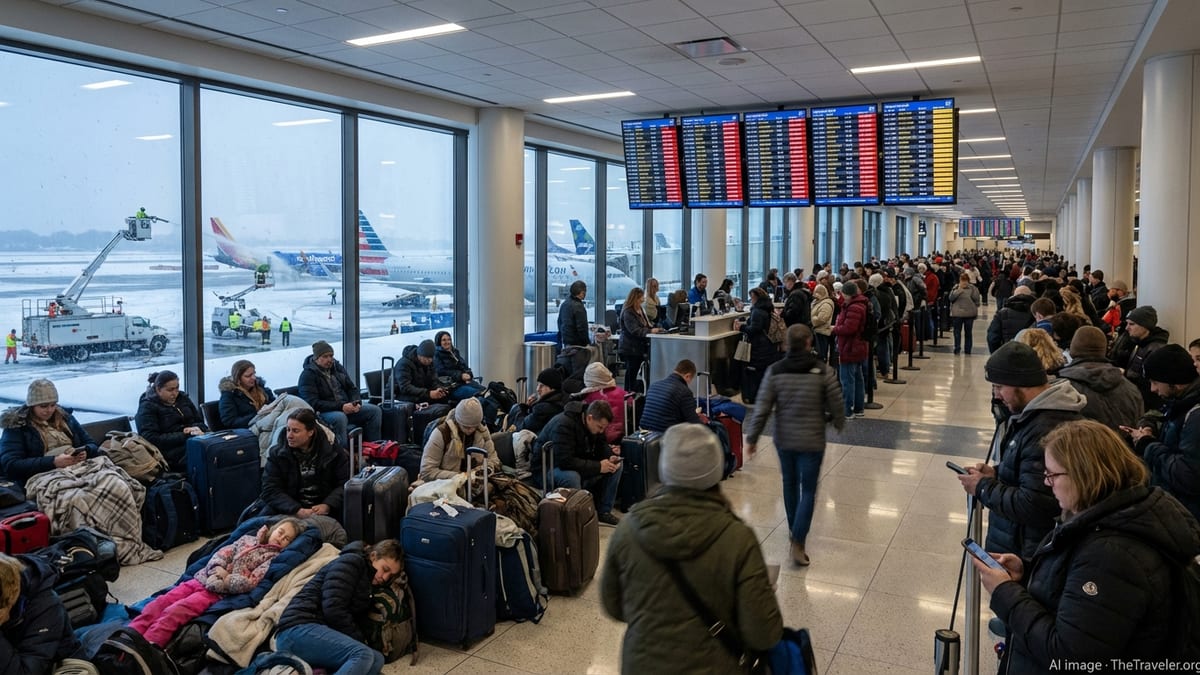
Winter Weather Upends a Busy Travel Day in Nashville
What began as a routine winter travel day in Tennessee quickly unraveled as a sprawling storm system bearing snow, freezing rain and strong crosswinds disrupted operations at some of the country’s busiest East Coast airports. Those disruptions cascaded into Nashville International Airport, where a normally steady midwinter schedule gave way to blinking departure boards filled with red "canceled" and "delayed" notices. By late afternoon, airport data showed 59 flights canceled outright and roughly 160 others delayed, reflecting both local weather constraints and mounting gridlock at major hubs.
Although Nashville itself saw lighter snowfall than some coastal cities, the airport’s role as a key connection point for routes into Atlanta, New York, Washington, Boston and other storm-battered hubs meant that aircraft and crews were often stuck hundreds of miles away. Carriers struggled to reposition planes, sequence deicing operations and work around air-traffic control spacing requirements imposed along the storm’s path. Airline staff described a fluid situation, with schedules being reworked in blocks of hours rather than full days.
The resulting patchwork of cancellations and holds meant that travelers experienced very different kinds of delays. Some saw modest pushbacks of 45 to 90 minutes as crews waited for inbound aircraft to arrive. Others, particularly those with connections through the hardest-hit East Coast airports, saw flights scrubbed entirely or rebooked for the following day, compounding an already strained winter travel season.
East Coast Hubs Paralyzed, Ripple Effects Hit Music City
The winter storm’s most severe impacts were centered on the East Coast corridor, where heavy snow bands and periods of freezing rain forced air-traffic managers to dramatically reduce arrivals and departures at key hubs. Operations slowed at Atlanta, Charlotte, Washington, the New York area’s trio of major airports and Boston, among others, as airlines canceled hundreds of flights and implemented long ground holds to keep taxiways and runways safe.
Those disruptions had an outsized impact on Nashville, which relies heavily on connections through those cities to move passengers to and from the Northeast and Mid-Atlantic. Aircraft scheduled to operate early-morning flights into Tennessee never left their originating airports, while others diverted or returned to gates after extended tarmac waits awaiting deicing or improved visibility. The resulting shortage of planes and flight crews reverberated through Nashville’s schedule as the day wore on.
Industry analysts noted that the interconnected nature of U.S. aviation means even a localized storm can cripple operations over a wide area. As East Coast hubs throttled back departures, Nashville became one of many mid-continent airports forced into reactive mode, juggling what remained of the day’s schedule with limited flexibility to add backup flights or swap in spare aircraft.
Major Carriers Struggle to Keep Passengers Moving
The worst of the disruption at Nashville International Airport was borne by the airlines that move the largest share of passengers through the city. Southwest Airlines, which maintains a major presence in Nashville, saw a significant number of its point-to-point routes to East Coast and southeastern cities affected, with multiple departures canceled and many more delayed as crews navigated weather holds and deicing queues further east.
Legacy giants Delta Air Lines and American Airlines also faced substantial operational headaches. Both rely heavily on East Coast hubs that were either under ground stops or forced to run at reduced capacity for much of the day. Flights feeding into those hub-and-spoke systems from Nashville were trimmed or consolidated, while downline connections for already-booked passengers grew increasingly tenuous. On some routes, American and Delta shifted travelers onto later departures or rerouted them through less congested hubs, adding hours of travel time.
JetBlue, which concentrates much of its network on the Boston and New York markets, reported notable delays and selective cancellations on its Nashville services, particularly on routes bound for storm-battered Northeast cities. Smaller and regional carriers operating on behalf of major airlines faced similar disruption, with some short-hop flights into nearby cities canceled preemptively to keep limited aircraft and crews available for higher-demand routes.
Despite the turmoil, airline representatives stressed that safety remained the overriding priority, pointing to conservative decisions around deicing, crosswind limits and visibility requirements. With winter weather, they noted, the safest choice can often be to keep airplanes on the ground until conditions improve.
Scenes of Frustration in the Terminal
Inside Nashville International Airport’s concourses, the human dimension of the storm’s impact played out in real time. By midday, security checkpoints were feeding into crowded gate areas as passengers hovered around outlets, fielding text notifications from airlines that pushed back departure times in 30 and 60 minute increments. Some families traveling with young children camped on the floor near charging stations, surrounded by carry-on bags and snacks as they tried to keep everyone entertained.
Lines formed quickly at customer service counters whenever a wave of cancellations hit the boards. Travelers queued to rebook flights, request lodging or meal vouchers where available, and explore alternate routings that could keep long-planned vacations, business meetings or family reunions intact. Others turned to airline apps and social media channels to avoid the physical lines, tapping into self-service tools that allowed them to select new travel dates, monitor standby lists or accept reroutes by a few taps on a smartphone screen.
While some passengers took the upheaval in stride, others voiced growing frustration as the storm’s impact extended throughout the day. Long wait times to speak with agents, limited remaining seat inventory, and uncertainty over whether rescheduled flights would themselves operate all added to the stress. Airport volunteers and staff circulated through the busiest gate areas, directing travelers, answering basic questions and encouraging those with flexible plans to consider rebooking for later in the week.
Why a Distant Storm Can Disrupt Flights in Tennessee
For many passengers watching flurries taper off outside Nashville’s windows, the scale of disruption seemed at odds with local conditions. Aviation experts pointed to several factors that explain why a winter storm centered hundreds of miles away can wreak havoc on operations at an inland airport like Nashville. Chief among them is aircraft and crew positioning: a jet scheduled to operate a late-afternoon departure from Tennessee may have flown two or three earlier legs that day, any one of which could be delayed or canceled because of conditions at an East Coast hub.
Air-traffic management plays a complementary role. When storms affect busy airspace along the East Coast, the Federal Aviation Administration often imposes flow restrictions that limit how many planes can arrive or depart from certain airports over a set period. These caps ripple across the network, forcing airlines to sequence flights carefully and sometimes cancel lower-demand departures outright to preserve room for higher-priority routes. Even when the weather at Nashville is manageable, departures bound for an affected hub may be barred from taking off until the destination can safely accept them.
Winter weather also complicates ground operations. Deicing lines add minutes, sometimes hours, to each departure as crews apply glycol-based fluids to aircraft surfaces to prevent ice buildup. Runway plowing, braking assessments and temporary ground stops during heaviest bursts of snow or freezing rain all reduce the number of takeoffs and landings an airport can safely handle per hour. When multiplied across multiple hubs, these reductions create the kind of cascading delays seen in Nashville and at other mid-sized airports today.
What Stranded Travelers Can Expect from Airlines
The storm’s impact at Nashville raised immediate questions among passengers about what airlines are obligated to provide when weather grounds flights. Under U.S. Department of Transportation rules, airlines are not required to compensate travelers with meals or hotel rooms when cancellations or long delays are caused by weather or other events outside their direct control. In practice, most carriers treat winter storms as "uncontrollable" events, meaning that reimbursement for out-of-pocket costs is unlikely.
However, airlines typically offer a suite of options to affected passengers. Customers whose flights are canceled are generally entitled to a full refund if they choose not to travel, even on nonrefundable tickets. Those who still want to take their trip are often able to rebook without change fees, and in many cases without paying any fare difference if they can travel within a specified window. Major carriers including Southwest, Delta, American and JetBlue widely publicize these so-called weather waivers when large storms are forecast, advising customers to adjust their plans before conditions deteriorate further.
Travel experts recommend that stranded passengers act quickly, whether through airline apps, websites, or customer-service lines. The earlier travelers request new arrangements, the more likely they are to find available seats on alternative departures or to secure more favorable routing options. They also encourage passengers to keep documentation of any additional expenses, such as hotel stays or meals, in case an airline or travel insurance provider later offers partial reimbursement or goodwill credits.
Travel Waivers, Insurance and Tips for Future Trips
The latest storm has again highlighted the importance of proactive planning during the heart of winter weather season. When forecasts signal a major system bearing down on busy corridors, airlines frequently announce flexible rebooking policies or waivers several days before the first flake falls. For travelers passing through airports like Nashville, monitoring these advisories can provide an early opportunity to reschedule trips, depart a day ahead of the storm or shift connections away from the most vulnerable hubs.
Travel insurance has also drawn renewed attention from frequent flyers. Comprehensive policies that cover trip interruption, additional hotel nights and missed connections can help offset some of the financial pain of storm-related disruptions, particularly for international itineraries or expensive nonrefundable arrangements. However, experts caution that policies vary widely and that travelers should read terms closely to understand what weather scenarios are covered and what documentation is required when filing a claim.
For those already en route when weather strikes, seasoned travelers suggest several practical steps: keeping essential medications, chargers and a change of clothes in carry-on bags; downloading airline apps and enabling notifications; and considering alternate airports within driving distance if a final leg of the journey is canceled. While such measures cannot eliminate the risks posed by a powerful winter storm, they can make the difference between an uncomfortable delay and a full-blown travel nightmare.
Airport and Airline Recovery Efforts in the Days Ahead
As the storm system gradually moves off the East Coast and conditions improve at the hardest-hit hubs, Nashville International Airport and its airline partners are preparing for a multi-day recovery effort. Clearing backlogs of stranded passengers, repositioning aircraft and moving flight crews back into legal duty windows will take time, even after skies brighten. Early indications suggest that airlines plan to boost capacity on select routes with larger aircraft and additional frequencies where possible, especially to and from key hubs that saw the largest number of cancellations.
Airport operators in Nashville are also focusing on lessons learned. Each significant weather event provides data on how snow and ice treatments, runway clearing schedules and coordination with airlines can be improved. Officials are expected to review how communications with passengers performed, from terminal announcements to digital signage and social media updates, with an eye toward delivering more timely and targeted information during the next major disruption.
For travelers, the experience will likely serve as a reminder of both the vulnerabilities and resiliency of the modern air-travel system. While a single winter storm can still bring a network of jets and schedules to a standstill, the rapid mobilization of crews, technology and contingency plans in its aftermath aims to get passengers in and out of cities like Nashville more quickly than in years past, even after a long and exhausting day of cancellations and delays.