

More news on this day
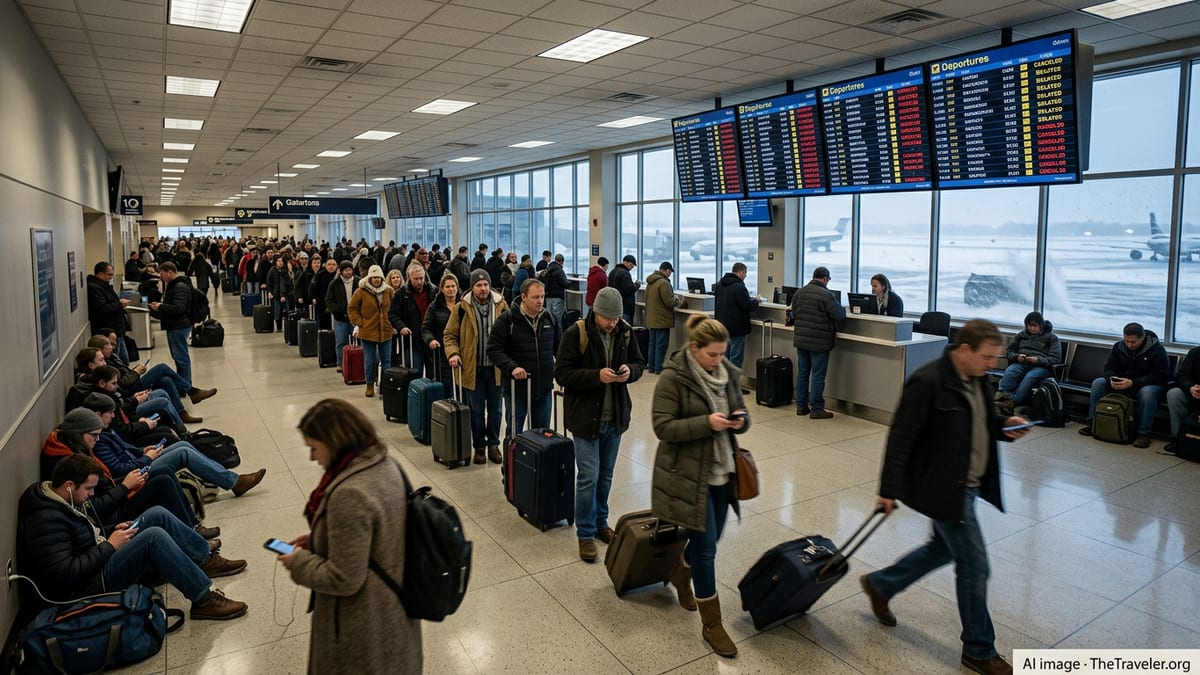
Travelers across the United States have faced an unforgiving mix of winter weather and cascading flight disruptions centered on James M. Cox Dayton International Airport in recent days, with widespread delays, diversions, and cancellations rippling through airline networks and turning even short domestic trips into hours-long ordeals.
Get the latest news straight to your inbox!
Storm Systems Turn a Regional Hub into a National Bottleneck
James M. Cox Dayton International Airport may be a midsize Midwest facility, but its role as a connector in several airline networks has amplified the impact of recent storms sweeping across the southern Ohio River basin and much of the eastern United States. Published meteorological summaries of the late-January North American winter storm describe a system that disrupted flight operations on a national scale, with Ohio among the states experiencing significant operational strain.
As the storm system stalled over key corridors, carriers adjusted their schedules into and out of Dayton, cutting frequencies, consolidating flights, and holding aircraft and crews out of position. Data compiled from national flight-tracking services for the broader network show thousands of cancellations and delays across multiple days, a portion of which were tied to aircraft that would ordinarily route through or reposition via Dayton, turning the airport into a choke point for itineraries that might not have originally involved Ohio.
For passengers originating in cities as far-flung as Dallas, Denver, and Orlando, relatively minor schedule changes became full-day disruptions when their connections in Dayton were canceled outright or repeatedly re-timed. Publicly available airline operations dashboards indicated rolling delays that often extended well beyond the immediate period of severe weather, as carriers struggled to restore regular rotations once skies cleared.
The result has been a travel pattern in which a single missed connection at Dayton can push onward journeys back by half a day or more, with many passengers being rebooked through alternate hubs only to encounter fresh logjams there.
Network Outages Compound Weather-Related Disruptions
Complicating the winter storm fallout, a series of high-profile technology and equipment issues across the United States has underscored the vulnerability of the aviation system to digital infrastructure failures. In mid-January, a nationwide telecommunications outage affecting a major wireless provider disrupted mobile data and voice services, hindering some travelers’ ability to access airline apps, rebooking tools, and digital boarding passes at airports including Dayton. While airport and airline systems continued to function, passengers increasingly rely on personal devices for real-time updates, meaning any communications breakdown can magnify perceived chaos inside terminals.
In parallel, recent equipment outages affecting air traffic control facilities in other regions, documented in specialized aviation forums and public discussion boards, have required temporary ground stops and reroutes at major hubs. Even when such events occur hundreds of miles away, the ripple effects are quickly felt in secondary markets. Flights scheduled to route from those hubs to Dayton have been delayed or held at origin, forcing cascading schedule changes that squeeze already-limited seat capacity for days afterward.
The combination of weather-sensitive operations, digital dependency, and intermittent infrastructure problems has made what might once have been a manageable snow event into a prolonged disruption cycle. For travelers attempting to connect through Dayton on complex itineraries, these overlapping vulnerabilities have significantly reduced the margin for error in making onward flights.
Inside the Passenger Experience: Long Lines and Limited Options
For those on the ground at Dayton, the most visible consequence of the recent turmoil has been the breakdown of predictable travel routines. Publicly available accounts from social media and travel forums describe crowded gate areas, lengthy customer service queues, and frustrated passengers trying to piece together alternate routings using a patchwork of airline counters, automated kiosks, and mobile tools that sometimes lagged behind real-time conditions.
Although Dayton is generally known for short security screening times and relatively easy terminal navigation, unexpected schedule waves concentrated large numbers of travelers into specific morning and late-afternoon banks. When multiple flights in the same bank were delayed or canceled, rebooking options quickly narrowed. With fewer daily departures than a major hub, a canceled flight at Dayton often meant waiting many hours for the next available seat, or accepting multi-stop itineraries that extended total journey times well into the night.
Families traveling during school breaks, business travelers on tight schedules, and connecting passengers with separate onward tickets have been especially vulnerable. Travelers have reported missed cruises, postponed meetings, and additional out-of-pocket spending on hotels and meals when irregular operations made same-day arrival plans unrealistic. Travel insurance and flexible ticket policies have mitigated some costs, but the time lost in queues and in transit has been a recurring theme.
At the same time, the airport’s role as a regional employer and economic driver means that disruption has local impacts beyond stranded visitors. Logistics schedules, rental car inventories, and nearby hotels have all had to adjust repeatedly to unpredictable surges and drop-offs in demand.
Airlines and Airport Work to Stabilize Operations
According to published schedules and operational updates, airlines serving Dayton have begun to rebalance their networks by repositioning aircraft and crews, restoring frequencies to key hubs, and selectively adding capacity on routes where backlogs have been most severe. Some carriers have extended flexible change policies, allowing customers to move their trips to later dates or alternate airports without standard penalties when itineraries touch Dayton during affected windows.
Publicly available information from the airport operator points to ongoing infrastructure projects that aim to improve resilience in the long term, including runway rehabilitation and modernization of facilities. While these upgrades are designed to support more reliable operations and growth in passenger numbers over time, the construction phase can introduce additional constraints on gate availability and runway scheduling during already challenging weather periods.
In the near term, travelers are being encouraged through airline and airport communication channels to build extra time into their journeys, monitor flight status closely, and prepare contingency plans if connections involve Dayton or other storm-affected hubs. Industry observers note that while individual disruptions may subside as winter weather eases, the structural pressures revealed by this episode point to a system that remains highly sensitive to concurrent shocks.
For now, James M. Cox Dayton International Airport stands as a case study in how a relatively small facility can become the focal point of a much larger travel nightmare, as weather, technology, and network design converge to test the patience of passengers across the country.