

More news on this day
Newark Liberty International Airport is grappling with fresh waves of disruption as a powerful winter storm and lingering operational constraints combine to delay 113 flights and cancel 10 more, unsettling travel plans for passengers flying with United Airlines, Icelandair, Philippine Airlines, JetBlue, Spirit and other carriers between the United States, Iceland, Israel, Guatemala, Canada, Germany and Portugal.
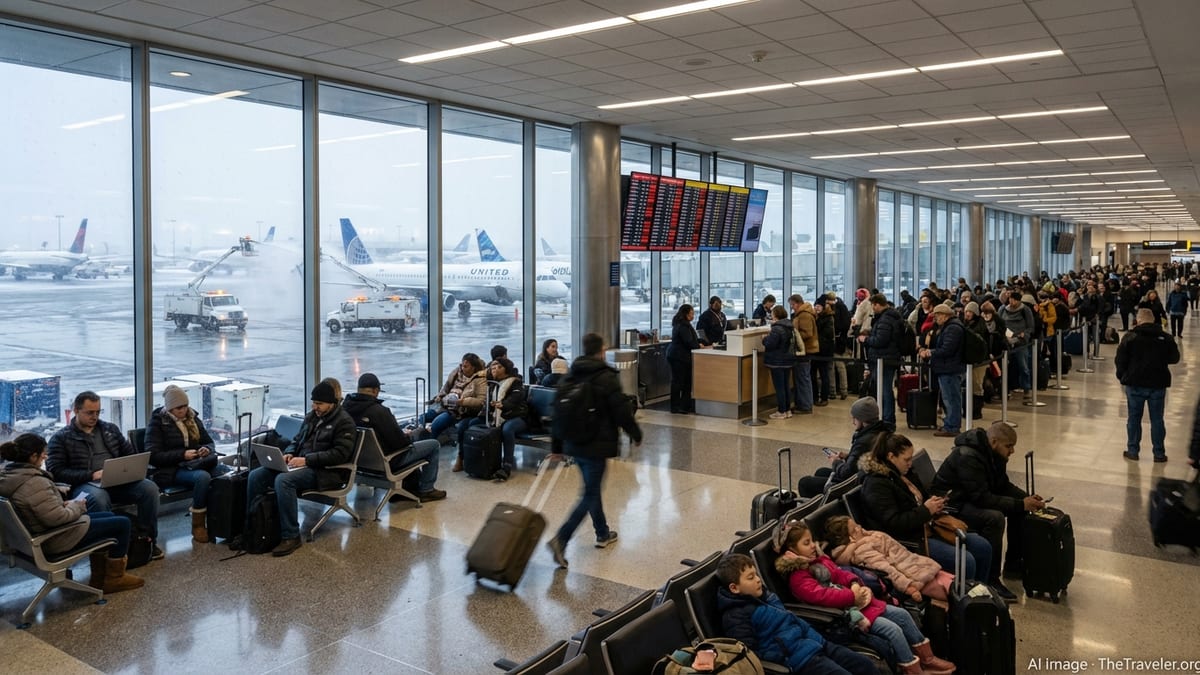
Storm-Battered Northeast Leaves Newark Playing Catch-Up
The latest disruptions at Newark come on the heels of a severe late-February blizzard that has hammered the U.S. Northeast with heavy snow, fierce winds and poor visibility, forcing widespread schedule cuts and intermittent airport closures from New Jersey through New England. While runways and taxiways have largely been cleared and operations have technically resumed, airlines are still working through a complex backlog of aircraft and crew displacements triggered when the storm was at its worst.
Newark, one of the primary international gateways for the New York City metropolitan area, has been particularly exposed. As carriers consolidated or preemptively canceled flights at the height of the weather emergency, aircraft were left out of position and flight crews were pushed up against duty-time limits, creating ripple effects that are now surfacing as a wave of delays and targeted cancellations rather than a full shutdown.
On Thursday, airport data showed 113 departures and arrivals running late and 10 outright cancellations tied to the continuing recovery effort and residual weather challenges across the region. For many travelers, that has translated into missed connections, extended tarmac waits and abrupt last-minute changes to itineraries that had already been reshuffled once this week.
Although the Federal Aviation Administration currently lists Newark as operating “on time,” the official status masks the on-the-ground reality of airlines stretching their schedules, swapping aircraft and rebooking passengers as they work to restore normal operations after multiple days of storm-related turbulence.
United, JetBlue, Spirit and Partners Bear the Brunt
United Airlines, which maintains one of its largest hubs at Newark, has again found itself at the center of the disruption. The carrier has been juggling long-haul transatlantic and transcontinental operations alongside dense domestic shuttle traffic, making it especially vulnerable to bottlenecks when weather or staffing issues arise. Delayed departures at Newark have in turn affected United’s schedules at other U.S. hubs and key international gateways.
JetBlue and Spirit, both with significant presences in the New York area, have also been hit by the storm’s aftershocks. Their point-to-point networks rely heavily on quick aircraft turnarounds and tightly sequenced rotations. When a single departure from Newark is held or canceled, it can cascade into later flights, particularly on high-demand routes serving Florida, the Caribbean and major business markets in the Midwest and West.
Regional and codeshare partners feeding United and other major carriers have had to adapt as well, trimming frequencies or combining services where possible. For many connecting passengers, the most visible impact has been at Newark itself, where departure boards continue to show clusters of late flights even as ground operations attempt to move aircraft briskly through de-icing, fueling and baggage handling.
Airlines say they are prioritizing safety and regulatory compliance while doing what they can to limit the number of outright cancellations. However, with planes and crews still trying to get back into their normal rhythm after several days of systemwide strain, operational slack remains limited and delays can build quickly once minor issues arise.
International Routes to Iceland, Israel, Canada and Europe Disrupted
The current wave of disruptions has had an outsized impact on Newark’s international network, particularly flights linking the United States to Iceland, Israel, Guatemala, Canada, Germany and Portugal. Routes normally operated on predictable overnight or long-haul schedules have been subject to rolling delays or rescheduling as carriers wait for weather windows and available aircraft.
Iceland-bound passengers flying with Icelandair have reported altered departure times and extended connections as the airline recalibrates transatlantic services in response to the storm’s impact at East Coast hubs. In some cases, aircraft and crews positioned in Europe have been held back or redirected when conditions at Newark and other U.S. airports temporarily limited arrivals during the height of the weather system.
Travel to and from Israel has likewise been complicated. An El Al service to Newark earlier in the week was forced to turn back to Tel Aviv amid reports of airport closures and hazardous conditions in the New York region, illustrating how quickly transatlantic plans can unravel when a major U.S. gateway is severely affected by winter weather. Passengers booked on subsequent services have faced longer-than-expected journeys and, in some instances, unplanned overnights.
Further north, Canadian carriers operating between Newark and major cities such as Toronto and Montreal have had to contend both with storm conditions in their own hubs and with congestion and gate availability issues in New Jersey. European routes linking Newark with Germany and Portugal have also seen their schedules stretched, as airlines use tactical delays and occasional cancellations to rebuild timetable integrity.
Knock-On Effects for Travelers Across the Americas
The fallout from Newark’s operational challenges has not been confined to transatlantic and North American corridors. Routes connecting the United States and Central America, including flights to Guatemala, have been caught in the crosscurrents as carriers reposition aircraft and crews. For leisure and visiting-friends-and-relatives travelers who rely on these services, the result has been an uneasy blend of uncertainty and long waits at both origin and connecting airports.
Philippine Airlines passengers traveling between North America and Manila via connections involving Newark have also felt the pinch. Although many of the airline’s long-haul services touch other U.S. gateways, disruptions at one major interchange point can complicate through-ticketed journeys, especially when minimum connection times are already tight and alternative routings are limited.
Across the broader U.S. network, delays at Newark have fed into a familiar pattern: aircraft expected to operate onward segments from the New York area arrive late into secondary cities, where turnaround times are then compressed or subsequent legs are rescheduled. For travelers, this can mean arriving hours later than planned even on flights that did not originally pass through the storm-battered Northeast.
Airport hotels, rental car desks and customer service counters around Newark and at affected destination airports have once again become de facto waiting rooms as travelers weigh whether to stick with delayed flights, accept rebookings days out or abandon trips altogether. For business travelers on tight timelines and families heading off on long-planned holidays, those choices can be especially fraught.
Managing Expectations as Recovery Continues
With weather gradually improving and runways fully reopened, airlines and airport officials emphasize that conditions at Newark are markedly better than during the height of the storm, when hundreds of flights were grounded outright. Still, they caution that recovery from such a significant disruption is rarely instantaneous and that residual delays and selective cancellations are likely to persist until fleets and crews are fully back on schedule.
Travel advisers recommend that passengers due to fly from or through Newark in the coming days build in extra time, monitor their flight status frequently and stay alert for schedule changes that might affect connections. Many carriers have waived change fees or offered flexible rebooking options for travelers prepared to shift to alternate routes or travel dates in order to avoid peak congestion.
The latest bout of disruption also underscores longer-running concerns about congestion and capacity at Newark, which has operated under FAA-imposed slot and schedule restrictions designed to improve reliability and reduce chronic delays. While those measures have helped limit some of the worst gridlock during normal operations, major weather events continue to expose how vulnerable tightly packed schedules remain when storms and staffing constraints collide.
For now, the expectation among both airlines and airport officials is that each day should bring incremental improvement. But for the thousands of passengers whose flights were among the 113 delays and 10 cancellations recorded on Thursday, the lingering effects of this winter storm have already turned routine journeys into an arduous test of patience and flexibility.