

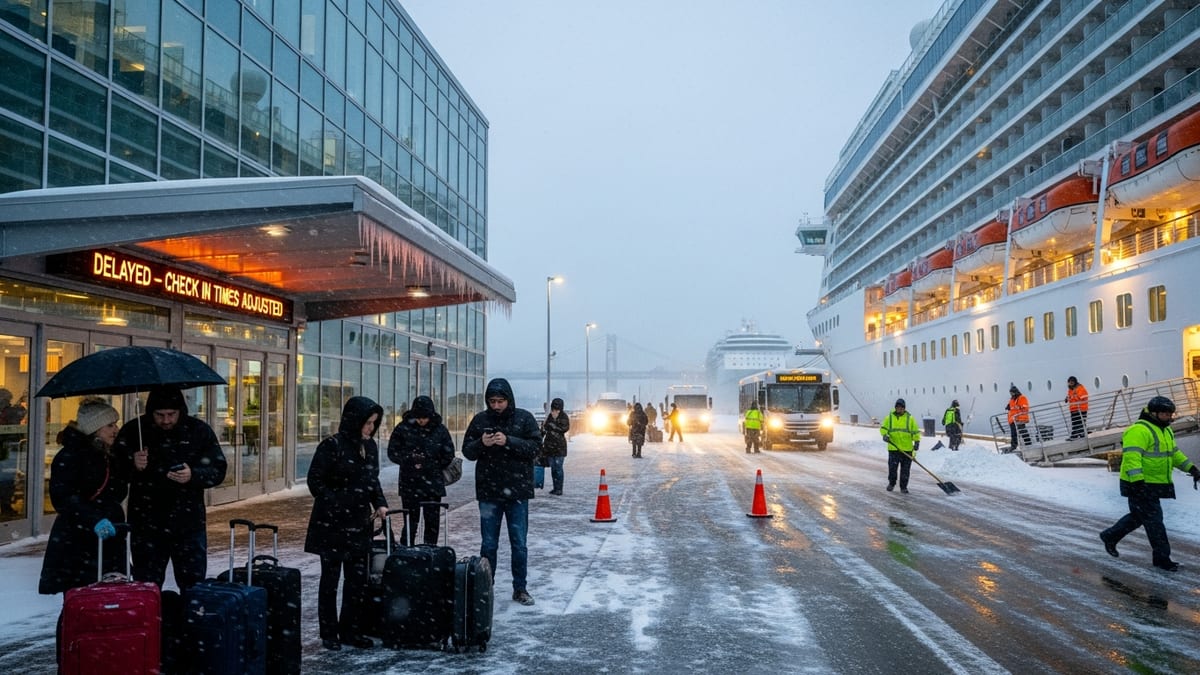
Winter Storm Fern is reshaping cruise plans along the U.S. Gulf and East Coasts, with sailings from Galveston, Baltimore, New York, and Norfolk experiencing delays, shortened itineraries, and port cancellations as operators work around dangerous snow, ice, and wind.
As the powerful system continues to affect travel on January 25 and 26, 2026, thousands of cruise passengers are finding their embarkation and return plans adjusted at short notice in an effort to preserve safety on land and at sea.
More News
- Edinburgh and Glasgow Overtake London as UK Nightlife Capitals, Airlines Boost Scottish Routes
- Canada Tightens Travel Warnings as Extreme Weather Claims 83 Lives
- Snowstorm Chaos in Manali: Tourists Stranded as Himachal Issues Urgent Travel Alert
Historic Winter Storm Fern Slams Key Cruise Gateways
Fern, named by The Weather Channel and tied to the wider January 2026 North American winter storm, has brought disruptive ice and heavy snow to 34 states, from Texas through the Mid Atlantic and into New England. The National Weather Service has warned of treacherous roads, flight disruptions, and prolonged power outages across a corridor that includes several major cruise homeports.
For Galveston, the issue is less about deep snow and more about hard-freeze conditions and icing that complicate port operations and passenger access from the Houston region. In the Mid Atlantic and Northeast, including Baltimore, New York, and Norfolk, snow accumulation, low visibility, and high winds have triggered marine safety restrictions and slowed everything from baggage handling to gangway setup. Port authorities and cruise lines are coordinating closely to time arrivals and departures between the worst of the conditions.
Because cruise ships operate on tightly choreographed turnarounds, even a few hours of weather disruption on the pier, at airports, or on surrounding highways can unravel an entire day’s plan. As Fern’s footprint widened over the weekend, operators began issuing advisories, revising itineraries, and in several cases changing the length of voyages to avoid docking during the peak of the storm.
Galveston: Harmony of the Seas Returns Early to Beat the Freeze
The most visible adjustment so far has come from Royal Caribbean’s Harmony of the Seas, which cut its Western Caribbean sailing short in order to return to Galveston ahead of Fern. Guests received letters on board explaining that the line was tracking a major winter storm projected to affect Southeast Texas beginning late Saturday, with potential impacts on roads, flights, and port access.
Instead of making its scheduled call in Cozumel, Mexico, Harmony of the Seas sailed directly back to Texas, with Royal Caribbean targeting an early arrival so that guests could disembark before conditions deteriorated. The company framed the move as a logistics decision as much as a nautical one, emphasizing that getting passengers safely from ship to car, bus, or plane was the priority.
For travelers booked on upcoming Galveston departures, the episode underscores how winter weather, even in relatively mild Gulf cities, can quickly upend plans when it disrupts the wider regional infrastructure. Those driving from Dallas, Austin, or San Antonio, or connecting via Houston airports, are being advised to build in additional travel time, monitor state highway updates, and stay in close communication with their cruise line in case embarkation windows shift.
Baltimore: Carnival Pride Delayed and Next Cruise Shortened
Baltimore’s year round cruise operations have also been directly affected by Fern’s Mid Atlantic snow. Carnival Cruise Line’s Carnival Pride, which had been sailing a 14 night Caribbean itinerary, was forced to remain at sea an extra day to avoid poor visibility, high winds, and snow at the Port of Baltimore. Instead of returning on Sunday, January 25, the ship is arriving on Monday, January 26.
That delay has a knock on effect for the next voyage. Carnival has already notified guests that the subsequent Bahamas cruise from Baltimore will be shortened from seven nights to six. The revised plan trims at least one scheduled port call, including Bimini, and compresses the ship’s turnaround time in Maryland. Passengers are being offered compensation in the form of partial fare refunds and credits, along with automatic refunds for canceled shore excursions.
In addition to the schedule change, Carnival has warned that embarkation on January 26 will be pushed into the late afternoon to allow for snow clearance on terminal access roads, security areas, and parking facilities. Guests are being asked not to arrive at the port earlier than their assigned check in windows, both to ease congestion and to avoid unsafe waiting conditions while crews finish clearing snow and ice.
New York and Norfolk: Port Operations Under Pressure
While Galveston and Baltimore have seen some of the most dramatic schedule changes, New York and Norfolk are also contending with Fern’s reach. Heavy snowfall and strong winds in the New York City area are affecting sailings from both Manhattan and Brooklyn cruise terminals, as well as operations at nearby airports that feed a large share of cruise passengers.
Lines homeporting or making winter calls in New York have been preparing for the possibility of shortened port days, adjusted arrival times, or modified itineraries that swap out weather exposed calls for more sheltered alternatives. Any decision to alter a ship’s path typically depends on the timing of the storm relative to arrival and departure windows, as well as Coast Guard directives on river and harbor traffic.
Farther south, Norfolk is dealing with freezing rain, sleet, and strong coastal winds that can complicate berthing and gangway setup. Even when a ship is able to navigate safely into the harbor, port authorities must confirm that piers, passenger walkways, and vehicle ramps are free of ice and suitable for heavy foot traffic. Cruise lines serving Norfolk during this period are closely monitoring marine forecasts and may opt to adjust arrival times, shorten calls, or in some cases bypass the port if conditions deteriorate.
How Cruise Lines Are Managing Safety and Schedule Decisions
For passengers caught up in Fern related disruptions, itinerary shifts can feel sudden, sometimes coming with only a day or two of advance notice. Behind the scenes, however, cruise executives say they are working from constantly updated forecasts, port status reports, and aviation and highway advisories. The goal is to keep ships south of the worst winter weather while ensuring that departures and arrivals align with realistic shore side logistics.
Typical measures now in play include cutting short current voyages to arrive ahead of the storm, delaying departures to allow for safe transit to the terminal, and dropping individual ports where local harbor conditions or ground infrastructure are most compromised. Power outages, which have affected more than a million customers across the storm zone at various points, add a further layer of complexity, particularly where terminal facilities, customs systems, or traffic lights depend on backup generation.
Compensation policies vary by line and by specific change. In the case of Harmony of the Seas, Royal Caribbean has offered guests a refund equivalent to one day of cruise fare as onboard credit for the canceled Cozumel visit, with unspent refundable amounts processed back to original forms of payment after the trip. Carnival, for its part, is applying partial fare credits and refunding prepaid experiences associated with dropped ports. Both lines have stressed that safety remains the decisive factor, even when it means altering long planned vacations at short notice.
What Affected Passengers Should Do Right Now
Travel advisers recommend that anyone with a cruise scheduled from Galveston, Baltimore, New York, or Norfolk in the coming days treat Winter Storm Fern as a dynamic situation and act accordingly. The single most important step is to monitor official communication from the cruise line via email, text alerts, and app notifications, since last minute timing updates and documentation requirements, particularly in ports with delayed turnarounds, will come directly from the operator.
Guests should also review their air and land arrangements with Fern in mind. Those flying into storm affected airports may find that earlier flights are already canceled or heavily delayed, making same day arrivals risky. Where possible, flying in at least a day before embarkation or rebooking via less affected hubs can reduce the chance of missing a sailing. Drivers should check state transportation department updates for highway closures, chain requirements, or icing advisories that could extend travel times significantly.
Travel insurance, including policies purchased either independently or through the cruise line, may provide some protection for additional hotel nights, rebooked flights, or trip interruptions, depending on the specific wording and whether weather disruptions are covered. Experts advise documenting all communication from the cruise line and keeping receipts for any out of pocket expenses related to the storm, which can be critical when pursuing claims after the trip.
Practical Tips for Embarkation and Disembarkation in Severe Weather
For those who are still able to sail, Fern’s impact will likely be felt most acutely at the beginning and end of the voyage. At embarkation, passengers should be prepared for modified security and check in procedures, longer lines, and extended wait times as port staff juggle snow removal, safety protocols, and staggered arrival patterns. Wearing appropriate winter clothing, including waterproof footwear and layers, is advised even for sailings headed to the tropics, since boarding may involve walking or waiting outdoors.
On disembarkation, guests returning to storm affected ports might encounter slower baggage delivery, limited availability of taxis and ride share services, or long queues for airport shuttles. Where power outages or traffic restrictions are present, it can take considerably longer than usual to move from ship to plane or to long distance ground transport. Some lines, including those currently adjusting schedules in Galveston and Baltimore, have indicated that passengers will be allowed to remain on board for longer disembarkation windows if local conditions are especially challenging.
With airline schedules also disrupted by Fern, travelers should avoid booking tightly timed connections on disembarkation day. Allowing a wide buffer before outbound flights, or planning an overnight stay before flying home, can significantly reduce stress if disembarkation takes longer than anticipated or if airport operations are still recovering from the storm.
Outlook for the Coming Days and the Wider Cruise Season
Meteorologists expect Winter Storm Fern’s most intense impacts to ease as the system moves off the Northeast coast, but lingering cold, residual ice, and the time needed for cleanup may continue to affect road networks and port access into early this week. Cruise lines will make case by case decisions on whether to restore full itineraries, add back canceled ports, or maintain modified schedules until the broader transportation network stabilizes.
Looking ahead to the rest of the 2025 to 2026 winter cruise season, Fern is a reminder that even traditionally milder ports like Galveston and Norfolk are not immune to severe winter systems that can stretch from the southern Plains to New England. Cruise planners say operators are likely to review contingency protocols, including backup port options, enhanced communication tools, and stronger coordination with local authorities, after the storm passes.
For travelers, the key takeaway from Fern’s disruption is to approach winter sailings with added flexibility, both in terms of pre and post cruise plans and expectations about ports of call. As the situation continues to evolve in Galveston, Baltimore, New York, and Norfolk, passengers are being urged to stay informed, stay patient, and keep safety at the center of their decisions as they navigate one of the most consequential winter storms in recent cruise memory.