

More news on this day
Winter Storm Fernando is pummeling the northeastern and midwestern United States with heavy snow, ice and fierce winds, crippling air travel and disrupting tourism in major hubs including New York City, Chicago and Atlanta at the height of the late-February travel period.
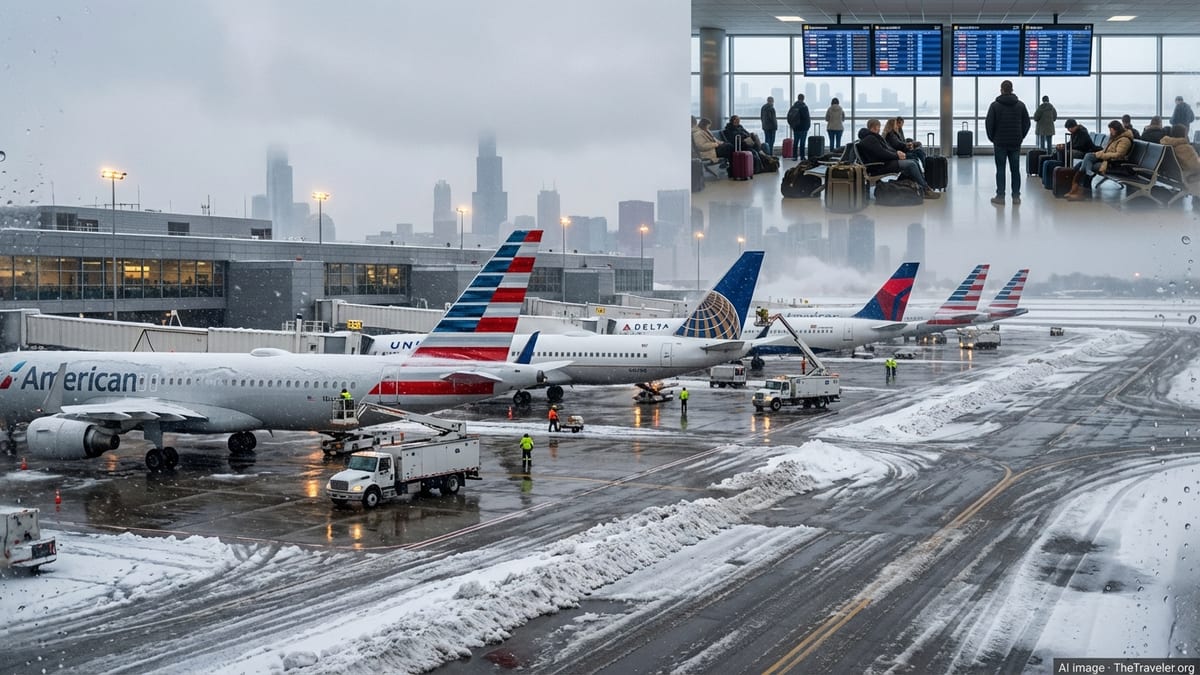
Flight Cancellations Ripple Through National Air Network
Air travel across the United States has been thrown into disarray as Winter Storm Fernando drives a powerful nor’easter across the Northeast and a broad shield of snow and ice over the Midwest. Airlines began preemptively scrubbing schedules over the weekend, but by Monday and Tuesday the scale of the disruption had escalated sharply, with several outlets reporting that thousands of flights had been canceled or delayed nationwide as conditions deteriorated at key hubs.
Airlines serving New York City’s three major airports, Chicago O’Hare and Midway, and Atlanta’s Hartsfield-Jackson have issued flexible rebooking waivers, allowing passengers to change itineraries without penalty as they attempt to work through extensive backlogs. Carriers are prioritizing crew positioning and de-icing operations, but limited runway availability and persistent low visibility at times have prevented normal schedules from resuming.
Aviation analysts note that the cascading effect is being felt well beyond the storm zone. With New York, Chicago and Atlanta all operating at reduced capacity or intermittent shutdowns, connecting traffic from the West Coast, the South and even some transatlantic routes has been disrupted. Travelers bound for leisure destinations in Florida, the Caribbean and the Mountain West have found themselves unexpectedly stranded in airport terminals far from their intended winter getaways.
The Federal Aviation Administration has periodically instituted ground-delay and ground-stop programs at the hardest hit airports to manage congestion and maintain safety, slowing the pace of arrivals and departures even during brief lulls in the weather. Industry observers say it could take several days after the storm exits for carriers to rebalance fleets and restore something resembling normal operations.
New York City’s Tourism Engine Grinds to a Halt
New York City, one of the world’s busiest urban tourism destinations, has been among the communities most directly affected by Winter Storm Fernando. The nor’easter swirling just offshore has delivered blizzard conditions to the metropolitan area, with forecasters reporting snowfall totals over two feet in some nearby communities and strong winds that have pushed visibility near zero at times. Local authorities enacted citywide travel bans during the height of the storm, shuttering nonessential road traffic and sharply curtailing public transportation.
The restrictions, coupled with thousands of flight cancellations at John F. Kennedy, LaGuardia and Newark Liberty International airports, have left many visitors confined to hotels or short-term rentals. Hoteliers in Midtown Manhattan and Lower Manhattan report a wave of last-minute extended stays as guests wait for new departure options, while others are canceling upcoming arrivals entirely, citing uncertainty over when airports and rail service will fully recover.
Major attractions including observation decks, harbor cruises and walking tours have scaled back or suspended operations as staff contend with buried sidewalks, drifting snow and intermittent power outages in parts of the wider region. The city’s cultural calendar has also taken a hit, with some Broadway productions, museum programs and live events canceled or rescheduled as both performers and audiences struggle to reach venues safely.
Yet tourism officials stress that the disruption, while sharp, is likely to be temporary. Once streets are cleared and transit service is restored, New York’s dense mix of hotels, restaurants and attractions tends to rebound quickly from winter storms. Still, with Fernando aligning with a busy weekend-to-weekday changeover in business and leisure travel, the near-term economic impact on the city’s hospitality and service sectors is expected to be significant.
Snow and Ice Snarl Chicago Travel and Urban Sightseeing
In the Midwest, Chicago has faced its own set of challenges as Fernando’s sprawling storm field pushed bands of heavy snow and freezing rain across the Great Lakes region. At O’Hare International Airport, a critical hub for both domestic and international connections, airlines have cycled through rounds of cancellations and delays as plows struggle to keep runways clear and de-icing crews work through long queues of departing aircraft.
Visitors who planned to use Chicago as a gateway to other destinations have instead found themselves in holding patterns. Many have been forced to extend hotel stays near the airport or in the Loop, while others attempt to rebook via alternative hubs with mixed success. Travel advisers say that even passengers whose flights remain scheduled should expect long lines at security and check-in counters, as well as potential last-minute gate changes and rolling delays as the weather shifts.
Within the city, winter conditions have complicated urban tourism at iconic sites along the lakefront and in popular neighborhoods. Blowing snow and slick sidewalks around Millennium Park, the Magnificent Mile and the Museum Campus have prompted some attractions to shorten opening hours or move activities indoors. River and architectural cruises, a popular off-season draw, have in many cases been suspended outright until winds ease and visibility improves.
Chicago’s tourism officials are urging visitors already in the city to lean into indoor experiences such as museums, galleries and restaurants while monitoring transit alerts and airline notifications closely. They emphasize that, as with previous winter storms, the primary concern remains visitor and resident safety until the worst of Fernando’s snow and ice moves eastward and road and rail conditions stabilize.
Atlanta Hub Struggles With Knock-On Disruptions
Farther south, Atlanta is contending less with direct blizzard conditions and more with the network effects of a storm that has paralyzed gateways to the north. Hartsfield-Jackson Atlanta International Airport, typically one of the world’s busiest hubs, has remained operational, but carriers with large footprints in New York and the Midwest have thinned schedules as inbound aircraft and crews fail to arrive from frozen-out cities.
Passengers connecting through Atlanta have reported unusually long layovers and abrupt itinerary changes as airlines reroute traffic around the worst weather impacts. Some flights to and from northern destinations have been consolidated, while others have been canceled outright when crews exceeded duty-time limits after earlier delays. For visitors using Atlanta as a springboard to destinations across the Southeast and Latin America, the result has been a patchwork of last-minute rebookings and overnight stays.
Within the city, tourism partners say the immediate weather has remained comparatively manageable, with cold rain and occasional wintry mix rather than the heavy snow seen farther north. Attractions such as downtown museums, the BeltLine and major sports and entertainment venues have largely stayed open, though many are seeing higher numbers of unplanned visitors as stranded travelers look for ways to fill unexpected free time between flights.
Local hospitality officials are encouraging hotels near the airport and in central neighborhoods to offer flexible check-in and check-out policies, aiming to accommodate the influx of travelers whose plans have been upended by Fernando’s broader reach. At the same time, they caution that lingering disruptions to flights into and out of the Northeast and Midwest could continue to affect Atlanta’s visitor numbers over the coming days.
Tourism Industry Braces for Short-Term Losses and Slow Recovery
Across the affected regions, the tourism industry is taking stock of Fernando’s immediate impacts and the likely pace of recovery. Early estimates from travel analysts suggest that the storm’s timing, spanning a busy weekend and the start of the work week, has amplified its economic toll on airlines, hotels, restaurants and attractions from the Mid-Atlantic to the Great Lakes.
In New York City, Chicago and Atlanta, visitor bureaus are coordinating with local governments and transit agencies to communicate real-time information on closures, reopening timelines and transportation options. Many are using social media, hotel concierge networks and airport information desks to reach travelers who may not be familiar with regional emergency protocols or alternative routes.
Travel advisers are broadly recommending that would-be visitors postpone nonessential trips into the Northeast and upper Midwest until after crews have fully cleared main highways and public transit systems have returned to regular schedules. For those already en route or on the ground, flexibility has become the key word, with experts urging travelers to build in extra time, keep digital boarding passes and alerts handy, and stay in close contact with airlines and accommodation providers.
While Fernando is expected to move away from the region relatively quickly, the operational disruptions it has caused could linger in airline and rail networks for much of the week, particularly if crews and equipment remain out of position. For destination cities that rely heavily on seamless connectivity, the storm has offered a stark reminder of how vulnerable modern tourism can be to sudden, large-scale weather events, even in seasons when winter storms are an expected part of the landscape.