

More news on this day
A powerful late season winter storm has brought exceptional rainfall to Hawaii in mid March, triggering flooding, road closures and transport disruptions that are complicating travel plans across the islands during a normally busy spring break period.
Get the latest news straight to your inbox!
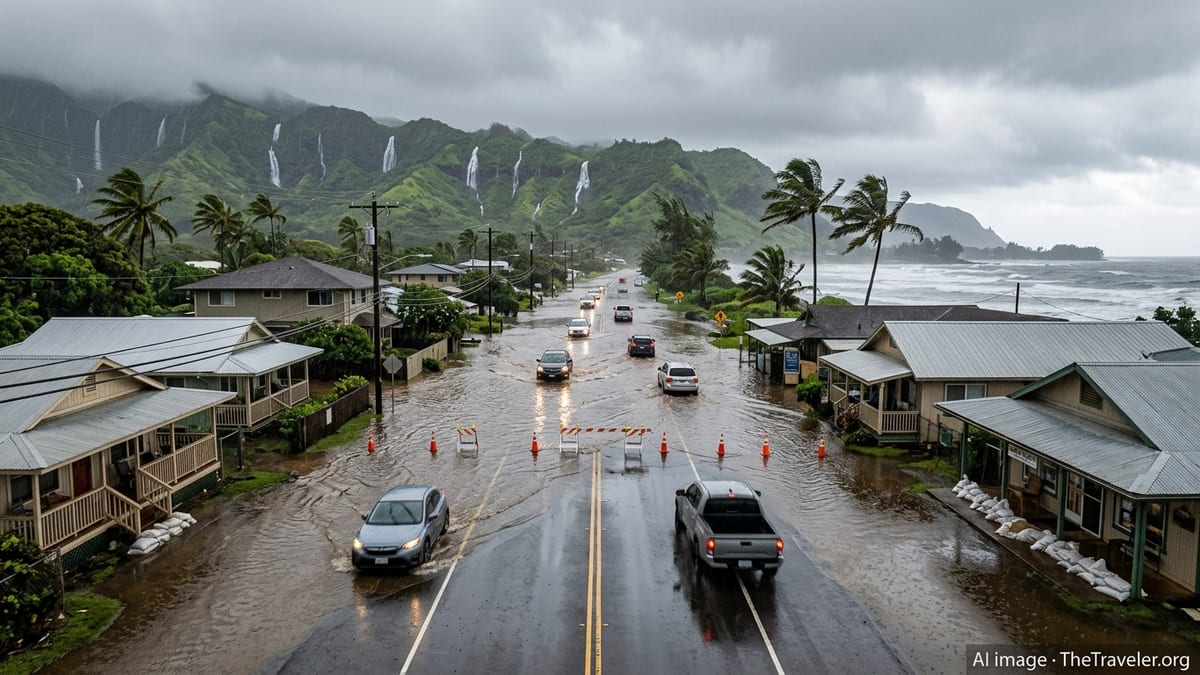
Record Rainfall and Widespread Flooding
Publicly available data from the National Weather Service and local media coverage indicate that a kona low type winter storm settled over the state in recent days, funneling deep tropical moisture across the islands. Maui has been among the hardest hit, with reports suggesting some locations received more than half a meter of rain in a single day and well over a meter over several days, an intensity described in local reporting as historic for the area.
On Oahu and Kauai, radar estimates and official gauges have shown many communities receiving several inches of rain in short periods, leading to rapid rises on streams and low lying urban flooding. Social media posts and local discussion boards describe streets in parts of Honolulu ponding with water, with standing water reported near the convention center and other busy corridors.
While Hawaii experiences periodic heavy rain events, climate assessments for the Pacific region have noted a growing tendency toward more intense downpours, increasing the risk that winter season systems can overwhelm drainage and older infrastructure. The latest storm arrived on the heels of an already wet late winter, compounding saturated ground conditions and increasing the likelihood of runoff, debris flows and localized landslides.
Meteorologists tracking the system describe it as part of a broader pattern that has also produced severe weather across the mainland United States in mid March. Forecast products suggest that, although the heaviest rain bands are beginning to weaken or shift, additional showers and isolated thunderstorms may continue to affect travel conditions through the weekend.
Road Damage Closes Key Visitor Routes
The torrential rain has caused significant damage to several roads popular with visitors, particularly on Maui. Local news reports and visitor advisories describe sections of South Kihei Road in southwest Maui as heavily damaged or washed out, with sinkholes, eroded shoulders and undermined pavement complicating access for both residents and tourists.
The Hana Highway, one of Hawaii’s signature scenic drives, has also been affected. Recent updates shared with travelers indicate that the highway has been closed from near Twin Falls, with access restricted to local traffic heading to Hana Town. Rockfalls, mudslides and downed trees have been reported along portions of the route, and maintenance crews are working in difficult, waterlogged terrain to clear debris and assess the stability of slopes.
Elsewhere on the island, steep mountain roads and higher elevation routes, including access roads toward Haleakala, have periodically experienced hazardous conditions due to strong winds, fog and runoff. Visitor oriented forums describe travelers turning back from planned sunrise and crater trips as a precaution, while others report navigating around localized closures and detours.
On the Big Island and Kauai, scattered road closures have been reported where streams have overtopped low crossings and where flooding has affected coastal routes. Transportation summaries for the region emphasize that conditions can change quickly as new rain bands move through, and travelers are being urged through public messaging to check the latest state and county updates before setting out by car.
Flight Disruptions and Itinerary Changes
The storm has also affected air travel within and to the islands. While Hawaii’s major airports have generally remained open, publicly available flight tracking information and traveler reports point to a spike in delays and cancellations during periods of heaviest rain and strongest winds, particularly on days when thunderstorms or low visibility have been in place over Maui and other islands.
Visitors posting on travel forums in recent days describe last minute cancellations on interisland segments and some mainland connections, with airlines citing weather and operational constraints. Some travelers heading to Maui reported that their flights were cancelled during peak flooding and that rebooking options were limited due to high seasonal demand.
Airlines serving Hawaii typically activate flexible travel policies during significant weather events, allowing changes without standard penalties when flights fall within published impact windows. However, several travelers have noted that not all dates have been included in these waivers, leaving some visitors weighing whether to forgo nonrefundable accommodation on Maui or risk traveling into an area still dealing with infrastructure repairs.
For those already on the islands, interisland travel has remained possible but subject to last minute schedule adjustments. Public advisories continue to recommend that passengers monitor airline notifications closely on the day of travel, arrive with extra time, and be prepared for longer lines as operations recover from earlier disruptions.
Beach, Ocean and Water Quality Concerns
Beyond roads and flights, the storm’s heavy runoff has raised concerns about water quality and ocean conditions at popular beaches. Large volumes of brown, sediment laden water have been photographed entering nearshore areas on Maui, Oahu and Kauai, carrying soil, debris and potential contaminants from upland areas into bays and reefs.
State health officials routinely issue brown water advisories after major rain events, and public information platforms have highlighted active advisories at several locations this week. Such notices typically advise people to avoid swimming in discolored water, since heavy runoff can elevate bacteria levels and conceal hazards such as floating debris.
Wave conditions have also been unsettled. The kona low pattern has produced periods of strong onshore winds, rough surf and rip currents on some coasts, even as the system begins to weaken. Lifeguard agencies and county updates have urged heightened caution, particularly for inexperienced swimmers and visitors who may not be familiar with local currents.
Travel specialists with experience in Hawaii note that, while many beaches will begin to clear as runoff subsides and seas calm, residual turbidity and debris can persist for days in certain bays and river mouth areas. Visitors are being encouraged through publicly shared advisories to follow posted signage, consult local conditions on arrival, and remain flexible with snorkeling and ocean activity plans.
What Travelers Planning Hawaii Trips Should Know
For travelers with imminent departures to Hawaii, the evolving situation calls for flexibility and close attention to local updates. Tourism information channels and community forums report that many resort areas away from the most damaged roads remain open and functioning, with hotels, restaurants and tour operators adjusting schedules based on weather and access.
However, those whose itineraries rely heavily on driving the Hana Highway, staying along storm damaged sections of South Kihei, or undertaking long scenic drives through interior mountains may find that certain experiences are still constrained. Some visitors with trips scheduled for late March report weighing whether to postpone or adjust their stays to focus on areas with more reliable access.
Travel industry analysts observing the situation suggest that the broader appeal of Hawaii as a destination remains strong, but that this latest event underscores ongoing vulnerabilities in roads, drainage and coastal infrastructure exposed to increasingly intense rainfall events. Recent climate and transportation studies for the region have highlighted the need for resilience measures along critical tourism corridors, especially routes that hug steep, erosion prone slopes or low lying shorelines.
Looking ahead, forecasts indicate that while additional showers are possible, the worst of the current storm appears to be passing. Cleanup and repairs, particularly on secondary and scenic roads, are expected to continue for days or weeks in harder hit pockets. Visitors are being advised through public information outlets to stay informed, work closely with airlines and accommodation providers on any needed changes, and remain prepared for itineraries that may look different from what was planned even as the islands work to welcome travelers back to their beaches and towns.