

More news on this day
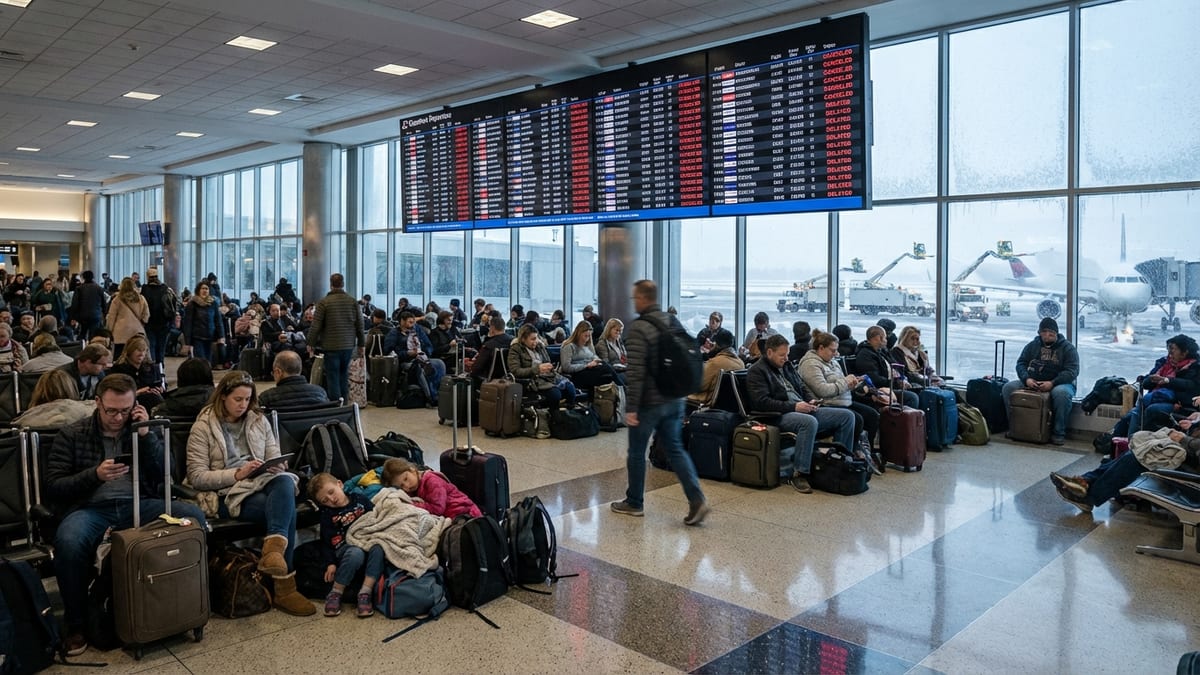
A powerful winter storm sweeping across the United States has triggered more than 700 flight cancellations in a single day, freezing operations at major airports from Los Angeles to Seattle and leaving thousands of passengers stranded as airlines struggle to keep up with fast-changing conditions.
Storm System Ripples Across Coasts and Key Hubs
The latest wave of winter weather has collided with one of the busiest domestic air networks in the world, forcing airlines to quickly trim schedules at major hubs including Los Angeles International, Denver International, Philadelphia International, Seattle-Tacoma International and Southwest Florida International near Fort Myers. While the Northeast has borne the brunt of a broader multi-day storm system, cold air, high winds and icing risks are now cascading into other regions and disrupting wider national operations.
Data from flight-tracking services show that hundreds of departures and arrivals have been cut preemptively as carriers attempt to stay ahead of deteriorating conditions, with more than 700 cancellations logged nationwide over a 24-hour period and additional delays rippling through subsequent days. Airlines have increasingly turned to early schedule reductions to avoid last-minute chaos at boarding time and to keep crews and aircraft positioned for a faster recovery once weather improves.
The timing is especially painful for travelers heading to or from sun destinations in Florida or transcontinental routes linking Southern California and the Pacific Northwest with the East Coast. With aircraft and crews tied up at snow- and ice-affected airports, knock-on disruption has reached cities experiencing only light precipitation or high winds, amplifying the impact far beyond the immediate storm zone.
In recent days, similar winter systems across the Northeast have already forced thousands of cancellations and delays, underscoring how quickly a single storm can paralyze aviation when it intersects with dense corridors such as New York, Boston and Philadelphia. As operations there slowly recover, the latest weather impact in the West and Rockies is compounding what has become one of the most challenging winter stretches of the season for US carriers.
Airports From Los Angeles to Seattle Scale Back Operations
On the West Coast, Los Angeles International Airport has seen morning and evening departure banks trimmed as low clouds, heavy rain bands and wind gusts complicate approaches and departures at one of the nation’s most congested fields. Even modest runway slowdowns at LAX can create outsized delays, as airlines reduce frequencies, consolidate flights and reassign aircraft to protect long-haul connections.
Farther north, Seattle-Tacoma International has faced a mix of freezing levels, wet snow in higher elevations and gusty winds that can trigger de-icing requirements and slower ground handling. Airlines have canceled and delayed dozens of flights to provide extra time for crews to safely turn aircraft and to reduce the risk of go-arounds or diversions when conditions deteriorate suddenly.
In the Rockies, Denver International Airport has once again found itself on the frontline of winter weather. Blowing snow, icy taxiways and visibility drops routinely push Denver into ground-delay programs, and carriers have proactively scrubbed services to and from the hub to avoid gridlock at gates. Those decisions are felt nationwide, as Denver is a key connecting point for itineraries spanning the Mountain West, Midwest and coasts.
Even airports with less extreme conditions, such as Southwest Florida’s gateway at Fort Myers, are dealing with secondary disruption as aircraft arriving from storm-affected cities fail to depart on schedule. That mismatch between where planes are and where they need to be is central to why a few hundred weather-related cancellations can cascade into widespread national disruption.
Thousands of Passengers Stranded as Rebooking Options Shrink
For travelers, the immediate effect of the latest cancellations is stark: long lines at customer service counters, packed hold lines for airline call centers and jammed apps as passengers scramble for scarce open seats. With multiple storm days already on the books this week, many of the easiest rebooking options have been taken, leaving some travelers facing waits of one to three days for the next available nonstop flight.
Airlines generally prioritize same-day rebooking for disrupted passengers, but winter storms quickly absorb spare capacity. When entire departure banks from a major hub are wiped out, even carriers with large fleets can struggle to accommodate everyone, especially on popular business and leisure routes. That is leaving some passengers cobbling together multi-stop itineraries through smaller hubs or even switching to rail or rental cars for regional journeys.
Stranded travelers are also running into the limits of what airlines are required to provide during weather-related disruptions. Because cancellations tied to storms are typically classified as “outside the carrier’s control,” most US airlines are not obligated to cover hotel stays or meals, although policies vary and some may offer vouchers as a goodwill gesture. That has prompted many passengers to shoulder unexpected out-of-pocket expenses while they wait for the weather and schedules to clear.
Families traveling with children and older passengers have been particularly affected, as overnight waits and terminal crowding increase stress levels. Airport staff and volunteers in several cities have been distributing blankets and basic supplies, while local hotels near major hubs have reported near-capacity bookings fueled by grounded travelers.
What Airlines and Airports Are Doing to Manage the Chaos
Carriers have leaned on lessons from past disruptions to manage this latest round of cancellations. Many switched early to reduced schedules once updated forecasts showed worsening conditions, rather than attempting to operate full timetables and risk cascading delays into the late evening. This strategy, while painful for passengers whose flights are axed in advance, often leads to a cleaner, faster restart once runways and taxiways are cleared.
Major airlines have issued flexible travel alerts covering a range of affected airports, allowing passengers to change dates or reroute trips without standard change fees and, in some cases, with fare differences waived. These waivers are typically limited to specific travel dates and routes, so passengers are being urged to check eligibility before altering their plans. Moving early under a waiver can significantly improve the odds of finding a workable alternative itinerary.
On the ground, airports have activated winter operations plans, deploying plows, de-icing trucks and extra maintenance teams to keep runways, taxiways and gate areas serviceable. At hubs in Denver and the Pacific Northwest, specialized crews work in rotating shifts to remove snow and ice while coordinating closely with air traffic control and airline operations centers.
To ease passenger frustration, some airports have added extra staff at information desks, extended concessions hours and boosted cleaning rounds in crowded gate areas. Digital displays and public address announcements are being updated frequently as airlines adjust schedules on the fly in response to changing weather windows.
What Travelers Need to Know Before Heading to the Airport
With conditions still in flux, aviation officials and consumer advocates are urging passengers to treat any upcoming trip through the affected cities as highly weather-sensitive. The single most important step is to monitor your flight status frequently through the airline’s app or text alerts rather than relying on third-party sites or assuming that an early-morning “on time” status will hold throughout the day.
Travelers who have some flexibility are being encouraged to consider rebooking for later in the week or shifting to midday departures, which can offer better odds of operating during winter events than early-morning flights that depend on overnight de-icing or late-evening departures vulnerable to crew time limits. Where possible, booking nonstop routes rather than connections through storm-prone hubs can also reduce the risk of getting stuck mid-journey.
Passengers should also review each airline’s policies on weather disruptions, including how to request refunds when flights are canceled and what forms of compensation, if any, may be available if delays stretch for many hours. Although hotels and meals are not guaranteed in most weather scenarios, documenting expenses and keeping boarding passes and receipts can be helpful if goodwill credits or future travel vouchers are later offered.
Finally, travelers passing through Los Angeles, Denver, Philadelphia, Southwest Florida and Seattle over the coming days should expect crowded terminals, longer security lines and tight seating in gate areas, even if their own flights remain on schedule. Arriving early, packing essentials such as medications and chargers in carry-on bags, and preparing mentally for potential last-minute changes can make a difficult travel day a little more manageable.