

More news on this day
A major late-season winter storm targeting Minneapolis–St. Paul has forced Delta Air Lines and United Airlines to cancel large numbers of flights through Minneapolis–St. Paul International Airport, prompting fresh warnings and itinerary checks for international travelers from Canada, the United Kingdom, Mexico, China and Japan who rely on the hub for transits across the United States and overseas.
Get the latest news straight to your inbox!
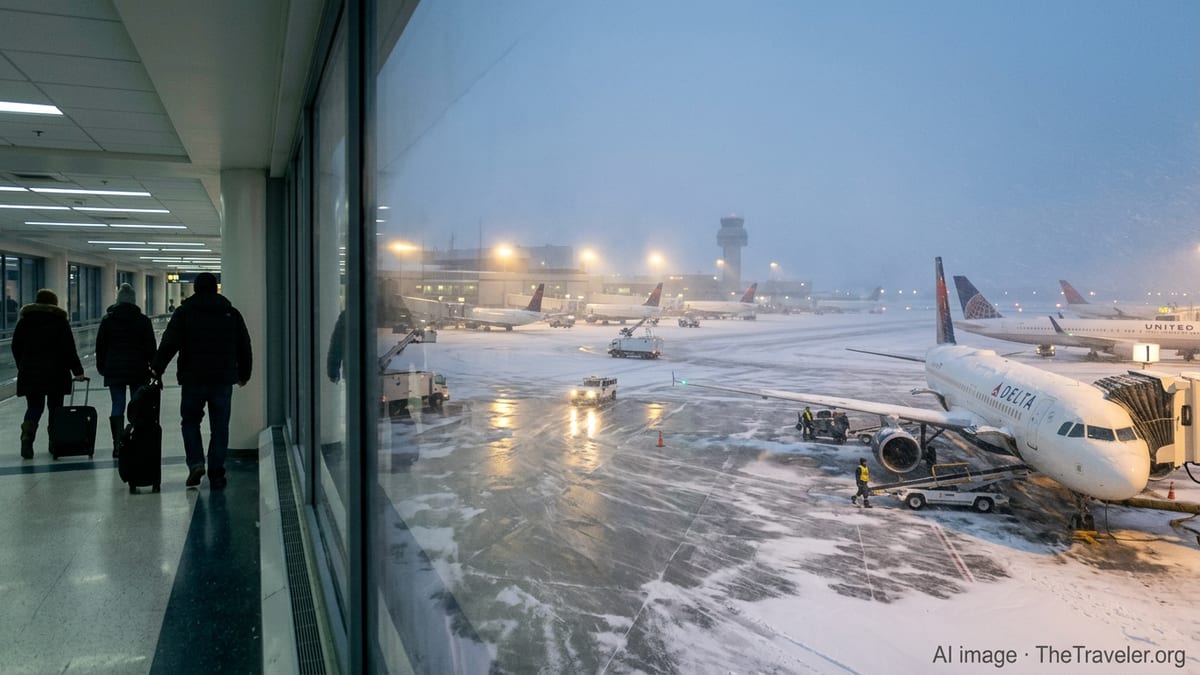
Storm Disrupts Operations at a Key Midwestern Hub
Forecasts for March 15 indicate heavy snow, strong winds and deteriorating visibility across the Twin Cities, with Minneapolis–St. Paul International Airport (MSP) directly in the path of the system. Publicly available flight-tracking data and airline schedules show that both Delta and United have proactively scrubbed numerous departures and arrivals in an effort to keep aircraft and crew out of the worst conditions.
Reports from airline-focused forums and local media coverage indicate that Delta has canceled many Sunday flights into and out of MSP through early afternoon, while United has activated a Midwest winter weather travel waiver that includes the Minneapolis hub. Travelers are being advised to expect rolling disruptions beyond the peak of the storm as aircraft and crews reposition and delayed passengers are accommodated on later services.
MSP is a critical connecting point for domestic U.S. routes and for transborder and long-haul services, so concentrated cancellations there have an outsize impact on itineraries that span multiple countries. Even travelers whose journeys do not begin or end in Minnesota but route through MSP are seeing cancellations or significant schedule changes reflected in online booking tools and airline apps.
Airlines frequently cancel flights ahead of major winter weather rather than allowing large numbers of aircraft to become stranded. In this case, publicly accessible data suggests both Delta and United have opted for broad, preemptive cuts to Sunday operations at MSP, signaling confidence among forecasters that the storm will significantly affect runway and taxiway conditions for much of the day.
International Travelers Among the Most Affected
The latest disruptions are particularly consequential for international travelers whose routes are built around MSP connections. Delta operates links that feed passengers from Canadian cities, Mexico, Europe and Asia into Minneapolis–St. Paul, where they connect onward to destinations across the United States or overseas. United itineraries that use MSP in combination with other hubs are also being reshaped by the winter weather response.
Travelers from Canada and the United Kingdom are seeing Minneapolis connections affected on itineraries that use MSP as a jumping-off point for U.S. business centers, sun destinations and ski resorts. For visitors originating in Mexico, MSP is often the connecting hub for reaching secondary U.S. cities that lack nonstop links to Mexican airports, making these cancellations especially disruptive at the tail end of winter travel season.
The situation is also complicated for passengers from China and Japan, many of whom are bound for U.S. interior cities through one or more domestic connections. While nonstops between the United States and East Asia are concentrated at coastal hubs, publicly viewable schedules show that some travelers still rely on MSP as part of longer routings, especially when using alliance partners or codeshare services.
When a storm hits a central hub like MSP, these long, multi-leg itineraries become vulnerable to a single canceled domestic segment. Even if an international flight from a gateway such as Seattle, Detroit or Chicago remains scheduled, a canceled Minneapolis connection can cause the entire routing to misalign, forcing rebooking and, in some cases, overnight stays.
Rebooking Options and Flexibility for Impacted Passengers
In response to the storm, both Delta and United have published travel waivers on their customer-facing channels, allowing eligible passengers to change their flights without typical change fees and, in many cases, without paying a fare difference if they move to nearby dates. Publicly available waiver details indicate that MSP is included alongside several other Midwestern airports, reflecting the wider reach of the storm system.
Travelers are being encouraged through airline notifications and app alerts to check their flight status repeatedly in the hours leading up to departure, as additional cancellations or equipment changes may be loaded into schedules at short notice. Many passengers have reported online that they received proactive messages suggesting they move their travel to earlier or later days, even before their flights showed as officially canceled.
Those whose plans involve international segments are generally being advised, in publicly shared guidance, to prioritize protecting long-haul flights by adjusting domestic connections where possible. That may mean rerouting around MSP entirely in favor of other hubs such as Chicago, Detroit or Denver, depending on available inventory. For some passengers from Canada, the UK, Mexico, China and Japan, the most realistic option may be to postpone travel by a day or two to avoid tight connections in the immediate aftermath of the storm.
Online resources for each airline remain the primary tools for rebooking, but travelers are also turning to call centers and airport ticket counters, especially when their itineraries involve multiple carriers or separate tickets. Given the scale of the disruption at MSP, publicly available commentary suggests that wait times for live assistance may be elevated until operations stabilize.
Knock-On Effects Across North American and Transpacific Networks
Operational disruptions at a major hub like Minneapolis–St. Paul rarely remain confined to one city. Aircraft and crews scheduled to pass through MSP on March 15 are tied into rotations that stretch across North America and, in some cases, link to transatlantic and transpacific services. As a result, cancellations and significant delays in Minnesota can reverberate into subsequent days and affect flights elsewhere, including those serving Canada, Mexico and Asia.
Publicly available scheduling data and historical patterns from earlier winter storms indicate that even once snowfall tapers off, airlines may need additional time to restore normal operations. De-icing queues, gate constraints and crew duty-time limitations all play a role in determining how quickly airlines can restart a full schedule. This means travelers whose flights are technically operating may still experience substantial delays as the system absorbs earlier disruptions.
For transpacific markets linked to Japan and China, these ripple effects come at a time when demand has been gradually rebuilding after earlier pandemic-era restrictions. Capacity between the United States and East Asia remains more limited than on some other long-haul corridors, so missed connections or canceled feeder flights can be harder to recover with same-day alternatives.
Observers of airline operations note that winter storms often expose the tight margins on which global route networks operate, especially when key interior hubs are affected. With MSP enduring a significant weather event in mid-March, passengers across multiple continents are receiving a reminder that even late in the season, North American winter remains a major variable in international travel planning.
What Travelers Should Monitor in the Coming Days
For visitors from Canada, the UK, Mexico, China and Japan planning imminent journeys that connect through MSP, the most important step in the short term is to monitor flight status frequently and be prepared to adjust plans. Travel experts who comment publicly on airline operations often recommend keeping at least one backup routing in mind, especially during winter weather events, and being flexible about travel dates where possible.
Travelers may also wish to review the specific terms of the active travel waivers issued by Delta and United, paying attention to eligibility windows, permitted date ranges for rebooking and any conditions tied to origin and destination cities. These waivers, as described in publicly available information, can significantly reduce the financial impact of changing itineraries in response to the storm.
As ground crews in Minneapolis work to clear runways and airline teams reset aircraft rotations, the outlook for the early part of the coming week will depend on how fast operations can safely return to something closer to normal. Even after the storm passes, some passengers from overseas markets may find limited seat availability as airlines prioritize re-accommodating those whose journeys were disrupted on March 15.
With winter still asserting itself over the Upper Midwest, the situation at MSP underscores the value of building extra buffer time into complex itineraries, particularly for international trips involving multiple connections. For now, publicly observable data and airline communications suggest that patience and flexibility will be essential for anyone whose plans route through Minneapolis–St. Paul as the storm unfolds.