

More news on this day
Winter Storm Hernando battering the northeastern United States and Atlantic Canada has sent shockwaves through transcontinental aviation, forcing American Airlines, Delta, LATAM, Air Canada, United and other major carriers to cancel multiple flights linking Brazil with New York, Boston, Orlando, Madrid and other key international hubs.
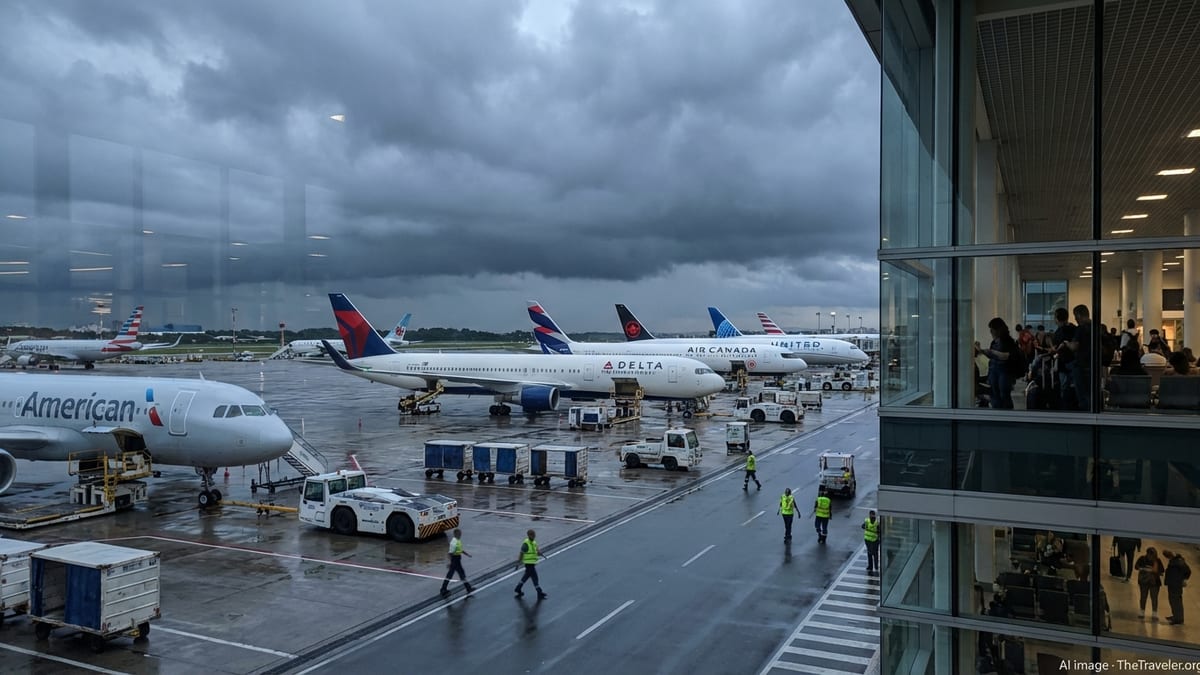
Brazil–North America Links Severed as Hernando Slams Northeast
A growing number of Brazil’s long-haul flights to the United States and Canada were scrubbed on Sunday and Monday as airlines reacted to the fast-intensifying winter storm Hernando. Services to New York, Boston and Orlando were among the first to be affected, severing some of the region’s most heavily trafficked corridors just as the southern summer holiday period draws to a close.
Flight-tracking data and airline advisories show major US and Canadian carriers implementing broad schedule cuts across the northeastern United States from February 22 through at least February 24, with ripple effects extending deep into South America. The resulting disruption has left Brazil-originating aircraft without arrival slots or onward aircraft available, prompting airlines to preemptively cancel or consolidate departures from São Paulo, Rio de Janeiro and other Brazilian gateways.
Passenger itineraries that once connected smoothly via New York or Boston to onward domestic US destinations have instead been swallowed by systemwide irregular operations. At Brazil’s largest airports, electronic boards on Monday showed a cluster of cancellations on northbound routes, many tied directly to Hernando’s projected peak over the US Northeast.
American, Delta and United Slash New York and Boston Services
Delta Air Lines has been among the most aggressive in scaling back operations in the storm’s path. The carrier has announced it expects to suspend flights at its New York LaGuardia and John F. Kennedy hubs, as well as Boston Logan, into Tuesday, February 24 because of blizzard conditions, high winds and poor visibility. That decision effectively shuts down Delta’s main entry points for Brazil routes that rely on those hubs for both passenger and aircraft flow.
American Airlines and United Airlines have also sharply reduced their schedules to New York and Boston as Hernando intensifies over the Northeast corridor. US media and airline updates indicate thousands of flights have been canceled across the region through Tuesday, with American pausing operations at key New York area airports and United drastically trimming departures and arrivals as snow, gusty winds and potential whiteout conditions move in.
For travelers in Brazil, the implications are immediate. American’s and Delta’s nonstop services from São Paulo to New York, along with single-stop itineraries from cities such as Rio de Janeiro and Brasília via northeastern US hubs, have become highly vulnerable to last-minute changes. United’s Brazilian operations, which flow heavily through Newark and other northeastern gateways, are likewise susceptible to knock-on delays as crews and aircraft become out of position.
Carriers emphasize that safety is the primary driver of these decisions, citing forecasts of heavy snowfall, powerful gusts and hazardous runway conditions across the affected airports. However, the operational complexity of rehousing aircraft, reassigning crews and rebooking thousands of passengers across multiple continents means the consequences for Brazilian travelers will likely extend beyond the storm’s passing.
LATAM, Air Canada and Transatlantic Partners Feel the Strain
The disruption reaches well beyond US-based airlines. LATAM Airlines, the largest carrier in Latin America and a key player on Brazil–North America and Brazil–Europe routes, has had to adjust schedules that rely on smooth coordination with codeshare and alliance partners in the United States and Canada. Services linking São Paulo and Rio de Janeiro with New York and Boston are closely tied to the availability of gates and connection windows at those congested northeastern airports.
Air Canada, which connects Brazil to its Toronto and Montreal hubs with onward links to the northeastern United States and Atlantic Canada, has also come under pressure from Hernando’s wide geographic footprint. With Atlantic Canada among the regions forecast to be impacted by the storm’s heavy snow and strong winds, northbound flights from Brazil into the Canadian network face elevated risk of delays, diversions or cancellations as conditions worsen.
The ripple effects continue across the Atlantic. While Hernando is primarily a North American weather event, schedule disruptions in New York and Boston can quickly cascade into transatlantic operations, affecting flights to Madrid and other European hubs that share aircraft or crews with Brazil services. European carriers and joint venture partners that coordinate closely with US airlines on transatlantic flights may find their Brazil-bound passengers stranded on the wrong side of the ocean as aircraft are held out of position by the storm.
For LATAM and other Brazil-based operators, this creates an intricate puzzle of rescheduling and capacity management. Even flights that technically operate outside Hernando’s direct weather footprint, such as those from São Paulo to Madrid, may experience timing changes or equipment swaps as airlines attempt to rebalance their global networks.
Orlando, Leisure Routes and Brazil’s Summer Tourism Hit
While New York and Boston attract a large share of corporate and VFR (visiting friends and relatives) traffic, Orlando stands out as one of Brazil’s most popular leisure destinations. Nonstop and one-stop services from Brazilian cities to Orlando feed a steady stream of holidaymakers into Florida’s theme parks, outlet malls and resorts, particularly during the southern summer school holidays that peak in January and February.
Hernando’s broad impact on East Coast operations, combined with earlier bouts of winter weather this season, has complicated travel plans for Brazilian families returning home or embarking on late-season vacations. Although Orlando itself is far from the center of the blizzard, its connectivity to hubs in New York, Boston and the broader northeastern corridor means flights can be disrupted by cascading delays and aircraft rotations originating farther north.
Travel agents in Brazil report a spike in inquiries from clients concerned about whether their Orlando trips will go ahead as scheduled. Many itineraries rely on connections through New York, Newark, Boston or Philadelphia, all of which face significant operational constraints as the winter system peaks. Even direct flights from São Paulo to Orlando can suffer when aircraft scheduled to operate those routes become stranded at northern airports or are reassigned to other recovery missions within the airline’s network.
For Brazil’s outbound tourism industry, any sustained interruption on US-bound leisure routes at the tail end of the season represents a financial and logistical blow. Operators must juggle hotel bookings, park tickets and ground transportation while they wait for clarity on revised flight timetables from airlines struggling with one of the strongest storms of the winter.
Passengers Confront Cancellations, Long Lines and Limited Options
At Brazil’s main international gateways, including São Paulo–Guarulhos and Rio de Janeiro–Galeão, passengers scheduled to travel to or through the storm-affected hubs have been greeted by departure boards peppered with the word “canceled.” With airlines proactively scrubbing flights as Hernando’s forecast worsened, many travelers received notifications in the days leading up to departure, but a significant number still learned of changes only upon arriving at the airport.
Airline desks for American, Delta, United, LATAM and Air Canada have reported heavy foot traffic as passengers line up to seek rebooking options, refunds or overnight accommodation. With multiple carriers simultaneously cutting flights, remaining seat capacity on alternative routes via Miami, Atlanta, Houston or other less-affected hubs has quickly filled, leaving some travelers stranded in Brazil for an extra day or more.
For those already en route, missed connections at intermediate airports have created further headaches. Passengers arriving from secondary Brazilian cities who were due to connect to long-haul flights in São Paulo or via US gateways found themselves facing long queues at transit counters and uncertain timelines for getting to their final destinations. Families and elderly travelers have been particularly affected, as last-minute overnight stays and complex rebookings add stress and expense to their journeys.
Airlines have urged customers to use digital channels and mobile apps where possible to manage their bookings, change dates or request flight credits. However, during large-scale disruptions, call centers and online systems often struggle under heavy demand, pushing many passengers back toward in-person assistance at already crowded airport counters.
Flexible Policies and What Affected Travelers Should Do
In response to Hernando, Delta, American, United, Air Canada and major partners have rolled out or extended flexible travel policies for customers bound to, from or through impacted airports over the February 22 to 24 window. Delta, for example, has issued a detailed winter weather advisory covering a broad list of East Coast airports, allowing affected passengers to rebook travel without change fees and, in many cases, without paying fare differences if they shift to flights outside the storm window.
American and United have adopted similar approaches, encouraging customers originating in Brazil to proactively move their trips forward or backward where possible, particularly if their itineraries involve New York, Boston or other northeastern hubs. Air Canada and codeshare partners are likewise offering waivers or travel vouchers in line with their own policies, creating a temporary patchwork of exceptions designed to give travelers more room to maneuver.
For travelers in Brazil, the most important step is to monitor flight status frequently and stay attuned to notifications from airlines. Anyone scheduled to fly to New York, Boston, Orlando, Madrid or other hubs over the coming days should check whether their ticket falls within the travel advisory windows and, if so, consider adjusting plans before flights are formally canceled and remaining seats disappear.
Airline and airport officials also advise allowing extra time at the airport and preparing for extended waits at check in, security and customer service desks. Bringing essential medications, chargers, snacks and a change of clothes in carry-on luggage can make unexpected overnight stays more manageable. Travelers with complex itineraries that include separate tickets or different carriers may wish to contact travel agents or corporate travel managers to coordinate rebookings across multiple systems.
Operational Recovery Could Stretch Beyond the Storm
While the worst of Hernando’s snowfall and wind is expected to pass the northeastern United States by February 24, aviation experts caution that the recovery for long-haul operations, including Brazil routes, may take considerably longer. Clearing runways and taxiways, deicing aircraft and repositioning both planes and crews will require a carefully sequenced effort across multiple hubs.
Airlines will likely prioritize restoring core domestic connections first, ensuring that aircraft and crew rotations are stabilized within the United States before ramping up the full slate of international departures. This could mean that some Brazil-bound flights remain consolidated or shifted to alternative hubs even after the blizzard warnings expire, especially if aircraft have been diverted or parked far from their usual bases.
For Brazil’s airports, that translates into a staggered return to normality rather than an immediate snapback once the snow stops falling. Schedules may continue to show irregular gaps or last-minute timing adjustments as carriers work through backlogs of displaced passengers. Travelers whose trips are not time-sensitive may wish to delay nonessential journeys by several days to avoid the tail end of the disruption.
Looking ahead, the Hernando episode underscores once again how quickly weather in one part of the world can disrupt global aviation networks, particularly those linking South America with the densely trafficked Northeast corridor of the United States and key European gateways. For Brazil’s growing community of international travelers, staying informed and building flexibility into trip planning is becoming as essential as securing the right fare.