

More news on this day
A fast‑moving winter storm linked to a powerful nor’easter is causing mounting disruption at Cleveland Hopkins International Airport on Sunday, with at least 37 flight delays and 41 cancellations reported across carriers including Republic Airways, Endeavor Air, United Airlines and Southwest Airlines, snarling connections to major East Coast hubs such as New York, Washington D.C. and Boston as airlines and travelers brace for worsening conditions into Monday.
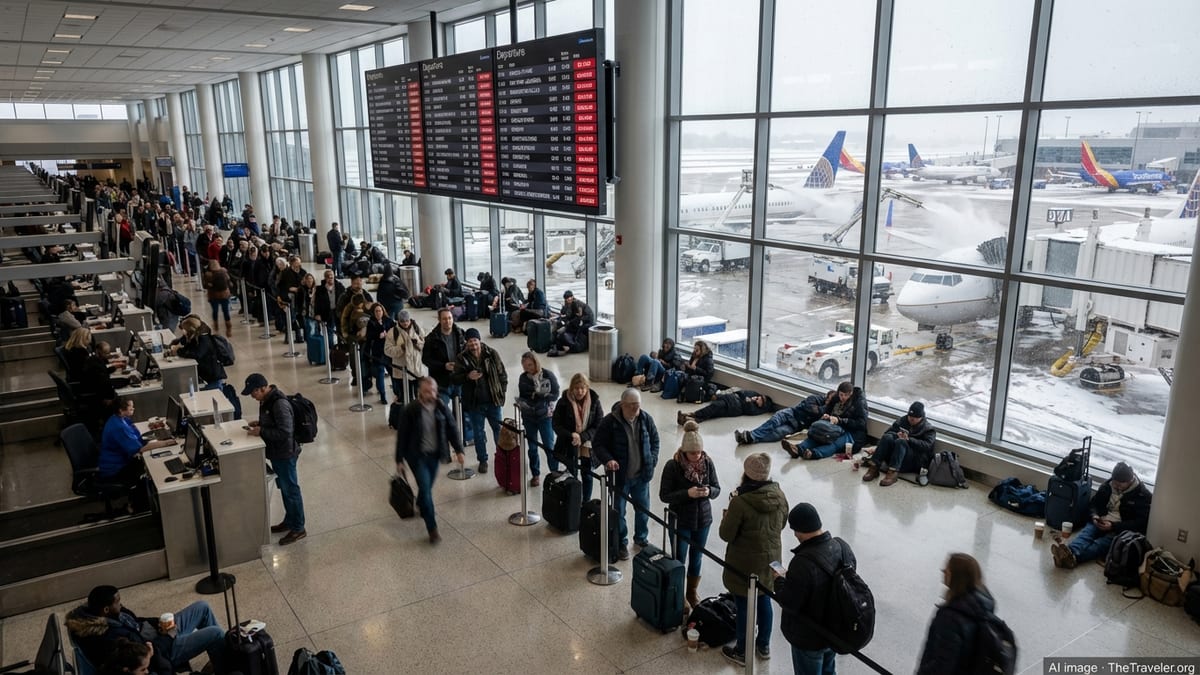
Storm System Hernando Sends Shockwaves Through Flight Schedules
The disruption at Cleveland Hopkins International Airport on February 22 comes as Winter Storm Hernando barrels into the Mid‑Atlantic and Northeast, triggering blizzard warnings for New York City and winter storm alerts from Washington D.C. to Boston. Heavy snow bands and strong crosswinds along the Eastern seaboard are forcing airlines to cut flying schedules preemptively, with ripple effects stretching into the Midwest.
Data from national flight‑tracking services on Sunday show thousands of flights canceled or delayed across the United States as the system intensifies over some of the country’s busiest air corridors. Carriers have focused their largest schedule reductions on the Northeast, but Cleveland’s role as a key connecting point for regional and mainline routes means even modest schedule trims there translate into a noticeable hit for passengers.
At Hopkins, Sunday’s 37 reported delays and 41 cancellations represent a significant share of the airport’s typical daily operations, with many affected flights tied to complex networks of regional feeder routes operated for larger airlines. As aircraft and crews become misaligned, delays that begin on the East Coast quickly migrate into Midwest airports such as Cleveland, even where local conditions remain manageable.
Airport delay statistics mid‑morning Sunday showed departure delays averaging around half an hour, with a growing proportion of flights being scrubbed altogether as airlines recalibrated for the afternoon and evening storm peak. Arrivals were also affected, with some inbound aircraft diverted or held at origin points when runways and airspace along the East Coast became constrained.
Republic and Endeavor Bear the Brunt of Regional Cancellations
Regional carriers Republic Airways and Endeavor Air, which operate flights on behalf of major airlines under brands such as American Eagle, Delta Connection and United Express, were among those facing concentrated disruption. These carriers form the backbone of short‑haul connectivity between Cleveland and key East Coast markets, so cancellations at their hubs quickly translate into holes in Hopkins’ departure boards.
Republic, a major operator of Embraer regional jets linking Cleveland with East Coast and Midwestern cities, has been one of the hardest‑hit airlines nationwide in recent storm events, reflecting the vulnerability of dense regional networks when weather shuts down hub airports. On Sunday, a number of its CLE‑based departures into the New York and Washington D.C. areas were either significantly delayed or removed from the schedule altogether as the nor’easter intensified along the coast.
Endeavor Air, which feeds Delta’s hubs and plays a smaller but important role in Cleveland’s schedule, faced similar pressures. Routes connecting the Midwest to New York and Boston, particularly those feeding into congested airports like LaGuardia and Logan, were prone to disruption as arrival slots tightened and crews approached duty‑time limits. When those flights cancel or divert, the returning legs that would bring passengers back into Cleveland disappear as well, compounding the impact for Ohio‑based travelers.
For passengers, the regional nature of these cancellations often means limited alternative options. Smaller aircraft and thinner schedules give airlines less flexibility to upgauge or add replacement flights quickly, forcing many travelers onto multi‑stop routings, overnight stays or outright trip cancellations when key regional links vanish for the day.
United and Southwest Adjust Operations as East Coast Hubs Slow
Mainline carriers United Airlines and Southwest Airlines also adjusted operations through Cleveland on Sunday as their wider networks absorbed the shock of Winter Storm Hernando. Both airlines serve Hopkins with a mix of nonstop routes to major hubs and point‑to‑point services that rely heavily on on‑time performance at other airports.
United, which depends on East Coast hubs such as Newark and Washington Dulles for connecting traffic, faced schedule constraints as those airports dealt with deteriorating weather. Delays on flights inbound to Cleveland led to aircraft arriving late for their next departures, a cascading effect that pushed back subsequent services and, in some cases, resulted in proactive cancellations where recovery within crew duty limits proved unrealistic.
Southwest, whose operational model centers on quick turns and a network of point‑to‑point routes, experienced its own challenges. Even when individual flights out of Cleveland initially remained scheduled, minor departure pushes of a few minutes at a time added up over the course of a day in which the carrier was contending with significant disruption across multiple regions touched by the storm. Where downline airports in the East were constrained, Southwest adjusted Cleveland departures to avoid sending aircraft into congested airspace with uncertain arrival windows.
Both airlines, like their competitors, urged customers to check their flight status frequently and use mobile apps, kiosks and call centers to explore rebooking options. With Sunday’s winter weather expected to linger into Monday in the Northeast, carriers warned that the full impact on their networks, including at midcontinent airports such as Cleveland Hopkins, would likely extend beyond a single day.
New York, Washington D.C. and Boston Routes Hit Hardest
Routes linking Cleveland with New York City’s airports, Washington D.C. and Boston were among the most disrupted on Sunday, reflecting how closely Hopkins is integrated with the Northeast corridor. These markets are essential not only for business and government travelers, but also for leisure passengers using East Coast airports as gateways to international destinations.
Flights between Cleveland and the New York area, including Newark and LaGuardia, saw a growing number of cancellations and extended delays as arrival caps were introduced to manage deteriorating visibility, gusting winds and runway contamination from accumulating snow. When aircraft cannot reliably land or depart in the New York region, the resulting bottleneck quickly backs up across connecting cities like Cleveland, where crews and planes are scheduled to cycle rapidly between hubs.
Service to Washington D.C. area airports, including Reagan National and Dulles, experienced similar turbulence. Winter storm watches and advisories around the nation’s capital forced airlines to thin schedules and leave additional time buffers between flights, decisions that helped maintain safety but also reduced overall capacity on the corridor linking Ohio with federal agencies, government contractors and political organizations.
Boston Logan, squarely in the projected path of the heaviest snow and strongest winds, also factored heavily into Sunday’s disruption patterns. Cleveland passengers bound for Boston or connecting onward to New England and Atlantic Canada faced elevated odds of misconnections as airlines weighed whether to operate full schedules into a region under blizzard warnings or to consolidate flights and resume normal operations once the storm passed.
Travelers at Cleveland Hopkins Face Long Lines and Limited Options
Inside the Cleveland Hopkins terminal, travelers reported growing lines at airline service counters and gate podiums as the day wore on. As cancellations accumulated, rebooking options narrowed, especially for those heading into storm‑affected cities with limited remaining capacity later in the day or early Monday.
Airline agents worked to accommodate passengers on remaining flights, but with so many East Coast arrivals constrained by weather, travelers were often offered multi‑stop itineraries through cities less affected by the storm, or departures delayed by several hours. For some, particularly those with shorter trips planned or critical appointments at their destination, the changing landscape made continuing the journey impractical.
Families traveling with young children, elderly passengers and those with tight connection windows felt the strain most acutely. Prolonged waits at gates and security checkpoints, coupled with uncertainty about departure times, added to the stress level in an already busy winter travel period. Airport restaurants and seating areas grew crowded as passengers settled in for extended waits, while others chose to leave the airport and monitor flight status from hotels or homes until they received confirmation of new itineraries.
Customer advocates again stressed the importance of using airline apps and online tools as the first line of defense in any disruption, noting that many carriers offer the ability to self‑rebook, track bags and receive proactive notifications. For travelers departing from Cleveland in the coming days, monitoring the evolution of Winter Storm Hernando and building extra time into itineraries were key recommendations.
Government Shutdown and Security Strains Add Another Layer of Risk
The latest bout of weather‑related disruption has been compounded by the broader context of a partial U.S. government shutdown that has affected key aviation functions. With some security and air traffic control staff working without pay and trusted traveler programs such as TSA PreCheck and Global Entry temporarily suspended at many airports, baseline strain on the system was already elevated even before Winter Storm Hernando intensified.
Across the country, travelers have reported longer security lines and sporadic staffing shortages at checkpoints, factors that reduce the margin for error when weather begins to impact flight schedules. For Cleveland Hopkins, which handles a mix of business and leisure travelers and serves as a regional gateway, any additional friction at security magnifies the impact of delayed or canceled flights as more passengers arrive early and spend longer in pre‑departure queues.
Industry analysts note that the combination of a major storm and a prolonged shutdown highlights the fragility of the U.S. aviation system when multiple stressors collide. Even when airports like Cleveland enjoy relatively stable local weather, constraints elsewhere in the network and institutional pressures can leave them exposed to waves of disruption originating hundreds of miles away.
Trade groups representing airlines and airport operators have called for a swift resolution to the funding impasse in Washington, arguing that predictable staffing and fully functional security programs are crucial to mitigating the impact of severe weather and other operational shocks on travelers.
Airlines Roll Out Waivers and Urge Passengers to Rebook Early
In an effort to ease the burden on stranded travelers, many U.S. airlines have expanded weather waivers that allow customers to change travel dates without incurring typical change fees, provided they meet certain conditions. These waivers generally cover flights to and from major storm‑affected airports in the Northeast and Mid‑Atlantic, but they can also apply to connecting cities like Cleveland when itineraries pass through disrupted hubs.
United and Southwest, along with the major network carriers that contract Republic and Endeavor, urged customers to consider moving trips away from the peak of Winter Storm Hernando where feasible. By spreading demand over several days, airlines hope to avoid the kind of multi‑day backlog that can develop when thousands of passengers need reaccommodation after a single day of widespread cancellations.
Passengers holding nonrefundable tickets whose flights are canceled outright are typically entitled to a refund if they choose not to travel, including for certain ancillary fees tied to the unused flight. However, U.S. regulations do not require airlines to provide additional cash compensation for delays or to cover hotels and meals in most circumstances, leaving many travelers shouldering the incidental costs of disruption even when airlines proactively alter their schedules.
Consumer advocates encourage passengers at Cleveland Hopkins to familiarize themselves with each airline’s specific storm‑related policies and to keep documentation of delays, cancellations and out‑of‑pocket expenses. While airlines often provide meal vouchers or hotel discounts in the most severe cases, those benefits are issued at the carrier’s discretion and can vary by airport and day.
Outlook: Continued Disruptions Likely as Storm Pushes Through
Forecasts indicate that Winter Storm Hernando will continue to affect the Northeast through at least late Monday, meaning that travelers at Cleveland Hopkins should prepare for the possibility of further delays and cancellations into the start of the workweek. As crews and aircraft are repositioned and runways along the East Coast are cleared, airlines will face the complex task of rebuilding their schedules and clearing passenger backlogs.
Operational recovery after a storm of this magnitude typically occurs in phases. Airlines first prioritize restoring core hub‑to‑hub routes and high‑demand corridors, then gradually reintroduce thinner regional services as capacity and crew availability allow. For Hopkins, this could mean that some connections to New York, Washington D.C. and Boston remain constrained even after local weather has improved, particularly at peak morning and evening departure times.
Travel planners caution that the knock‑on effects of Sunday’s 37 delays and 41 cancellations at Cleveland, compounded by thousands more nationwide, may be felt for several days in the form of fuller flights, fewer remaining seats for last‑minute changes and sporadic equipment substitutions. Travelers with flexible schedules are advised to consider midday flights, which frequently prove less vulnerable to early morning deicing delays and late‑night curfew restrictions at East Coast airports.
For now, Cleveland Hopkins remains operational, but the day’s events underscore how closely the airport’s fortunes are tied to weather hundreds of miles away. As Winter Storm Hernando continues its march up the coast, passengers and airlines alike will be watching forecasts and flight boards closely, hoping that the system moves through quickly enough to restore a measure of normalcy to one of the busiest winter travel weekends of the season.