

More news on this day
Thousands of travelers across Canada are facing unexpected airport overnights and missed connections as Winter Storm Iona disrupts operations at major hubs, triggering at least 134 new flight cancellations and more than 450 delays for carriers including Jazz, Air Canada, Endeavor, PSA, WestJet and others.
Get the latest news straight to your inbox!
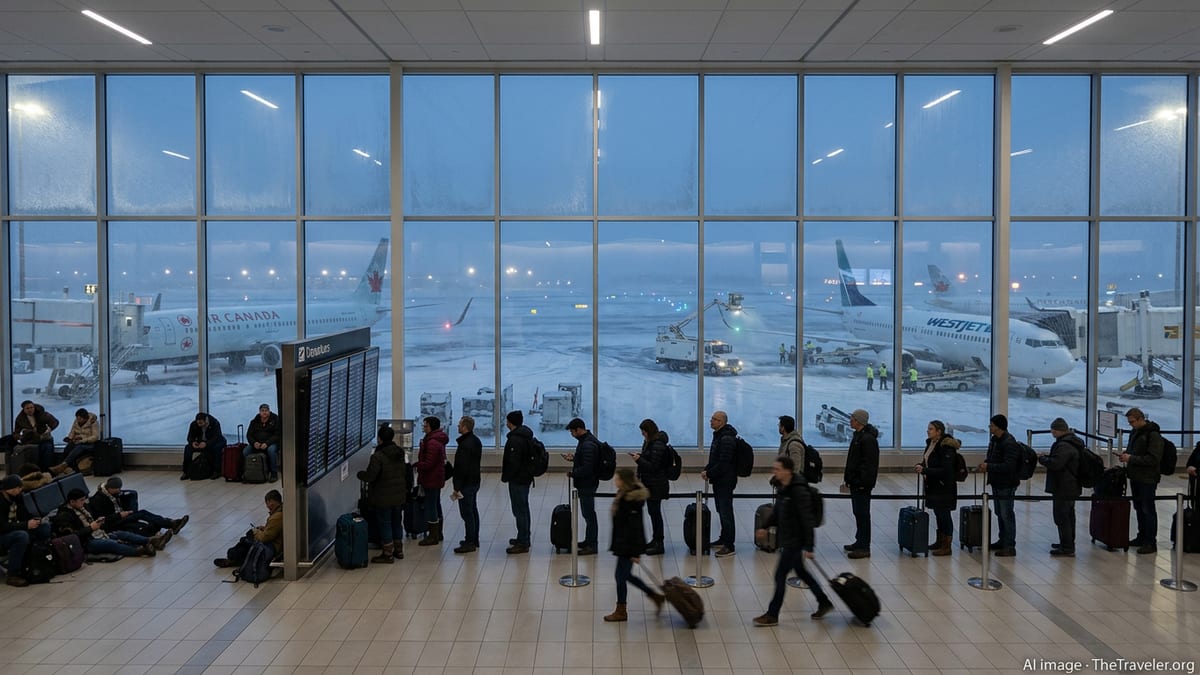
Major Canadian Hubs Struggle Under Winter Storm Iona
Winter Storm Iona swept into western and central Canada with heavy snow, freezing rain and gusty winds, slowing aircraft turnaround times and making runway clearing a continual challenge at several of the country’s busiest airports. Publicly available flight-tracking data on Monday showed fresh disruptions rippling through Vancouver, Montreal, Toronto, Kelowna and Calgary, with knock-on effects at secondary airports across the national network.
The storm’s timing, overlapping with a busy late-winter travel period, has heightened the impact on both leisure and business passengers. Travelers connecting through Canada to destinations in the United States and overseas have been particularly affected, with rolling delays compounding missed connections and forcing extensive rebooking efforts.
Operational updates from airports and carriers indicate that the combination of low visibility, icy taxiways and constrained de-icing capacity has forced airlines to thin their schedules. Rather than operating heavily delayed flights throughout the day, several carriers have opted to proactively cancel select services, contributing to the tally of 134 new cancellations and 452 delays attributed to Iona’s latest phase.
Reports from airport terminals describe long but generally orderly queues at rebooking counters and self-service kiosks as airlines work through backlogs. While some flights are still departing close to schedule when brief weather windows allow, many passengers are being offered later same-day or next-day departures, particularly on high-frequency domestic routes.
Air Canada, Jazz and U.S. Regionals Adjust Schedules
Canada’s largest carrier, Air Canada, along with its regional partner Jazz, has been at the center of the disruption simply due to the scale of its network. Publicly available information shows multiple cancellations and delays affecting key trunk routes linking Vancouver, Calgary, Toronto and Montreal, alongside regional spokes into smaller communities.
Jazz-operated flights, which provide much of the connectivity for smaller markets, have seen selective cancellations where storm conditions or limited de-icing capacity make operations more difficult for regional aircraft. This has had an outsized effect on passengers in secondary cities who rely on early-morning departures to connect through major hubs.
U.S.-based regional carriers Endeavor Air and PSA Airlines, which operate under larger U.S. airline brands, have also been impacted when their cross-border services intersect with storm-affected Canadian hubs. According to flight-status boards, several transborder flights into and out of Toronto and Montreal have been delayed or scrubbed, creating additional complications for travelers with onward domestic connections in the United States.
Recovery for these carriers is further complicated by aircraft and crew positioning. When flights into storm-affected airports are canceled, the planes and crews scheduled for subsequent legs are left out of place, triggering additional schedule adjustments even after local weather begins to improve.
WestJet and Western Canada Face Prolonged Disruptions
In western Canada, Calgary and Vancouver have faced repeated waves of wintry precipitation linked to Iona, placing particular strain on WestJet and its regional affiliates. Public data from airline operations and airport advisories indicate that WestJet’s departures from both hubs have been subjected to a mix of outright cancellations and extended delays, especially in early-morning and late-evening banks when temperatures are lowest.
Kelowna, a key interior British Columbia gateway, has also seen storm-related disruptions, with several flights to and from Vancouver and Calgary affected. Limited runway and apron capacity at smaller airports can magnify the operational impact; when aircraft must wait for de-icing or snow clearing, the resulting bottlenecks quickly cascade through the day’s schedule.
WestJet’s network structure, which relies heavily on Calgary as a central hub, means that operational slowdowns there can send ripples across the country. Travelers originating from or connecting through Calgary have reported rebookings onto later flights or alternate routings via Vancouver or Toronto when space allows, while others have faced overnight stays as aircraft and crews cycle back into position.
Despite the challenges, publicly available information suggests that airlines and airports are attempting to maintain a core schedule on primary domestic routes where conditions permit. However, officials have signaled that additional tactical cancellations remain possible if snowfall rates increase again or if de-icing backlogs grow during peak departure periods.
Travelers Confront Long Waits, Missed Connections and Limited Options
For passengers, Iona’s impact is being felt most acutely in lengthy queues at check-in counters, security lines and customer service desks. With hundreds of flights delayed or canceled across multiple hubs, rebooking options on the same day have quickly become scarce on popular domestic corridors such as Vancouver to Toronto, Calgary to Montreal and Toronto to Halifax.
Publicly available coverage from Canadian media and travel-industry outlets notes that some travelers have opted to rebook themselves on competing carriers when space is available, particularly where interline agreements or flexible tickets make that feasible. Others have had no choice but to wait for airlines to provide alternative itineraries, often involving multiple connections and extended layovers.
The situation has also highlighted the vulnerability of tightly timed connections. Passengers originating from regional centers on Jazz and other feeder carriers have been especially hard hit when initial legs into major hubs depart late or are canceled outright. Once missed, international and long-haul departures typically cannot be replaced until the following day, filling local hotels and further straining airport services.
At the same time, reports indicate that some travelers have successfully leveraged airline apps and online tools to secure earlier rebooking than would have been possible by waiting in physical lines. Digital self-service options, where functional, have helped reduce congestion at counters and enabled passengers to confirm new itineraries while still in transit or waiting at the gate.
What Passengers Can Expect in the Coming Days
With Winter Storm Iona still influencing weather patterns across portions of British Columbia, Alberta, Ontario and Quebec, aviation observers caution that the operational recovery may be uneven over the next several days. Even as skies clear in some locations, low temperatures and lingering snow and ice can slow the pace at which airlines return to normal schedules.
Publicly accessible forecasts indicate that conditions may gradually improve at larger hubs like Vancouver, Calgary and Toronto, but residual delays are likely as airlines work through aircraft repositioning and crew duty-limit constraints. This means that even flights scheduled well after the storm’s peak may operate off-schedule if they depend on aircraft arriving from previously disrupted legs.
Travel experts and consumer advocates consistently recommend that passengers monitor their flight status frequently, keep contact information updated with airlines and consider allowing extra time for connections during active winter weather events. Travelers are also encouraged to review fare rules and passenger rights information published by carriers and regulators, which outline what support is available in cases of weather-related disruption versus controllable operational issues.
While the immediate priority for airlines remains moving stranded passengers to their destinations, schedule planners will also be looking ahead to upcoming busy periods, including school breaks and holiday weekends. How quickly carriers can clear the backlog created by Winter Storm Iona will influence capacity and pricing on popular routes in the days that follow, particularly for last-minute travelers seeking limited remaining seats.