

More news on this day
Winter Storm Iona is unleashing fresh chaos across the U.S. air network this weekend, with Southwest Airlines passengers in Chicago and Des Moines facing a surge of cancellations, cascading delays and packed rebooking lines as the carrier struggles to keep its Midwest schedule moving.
Get the latest news straight to your inbox!
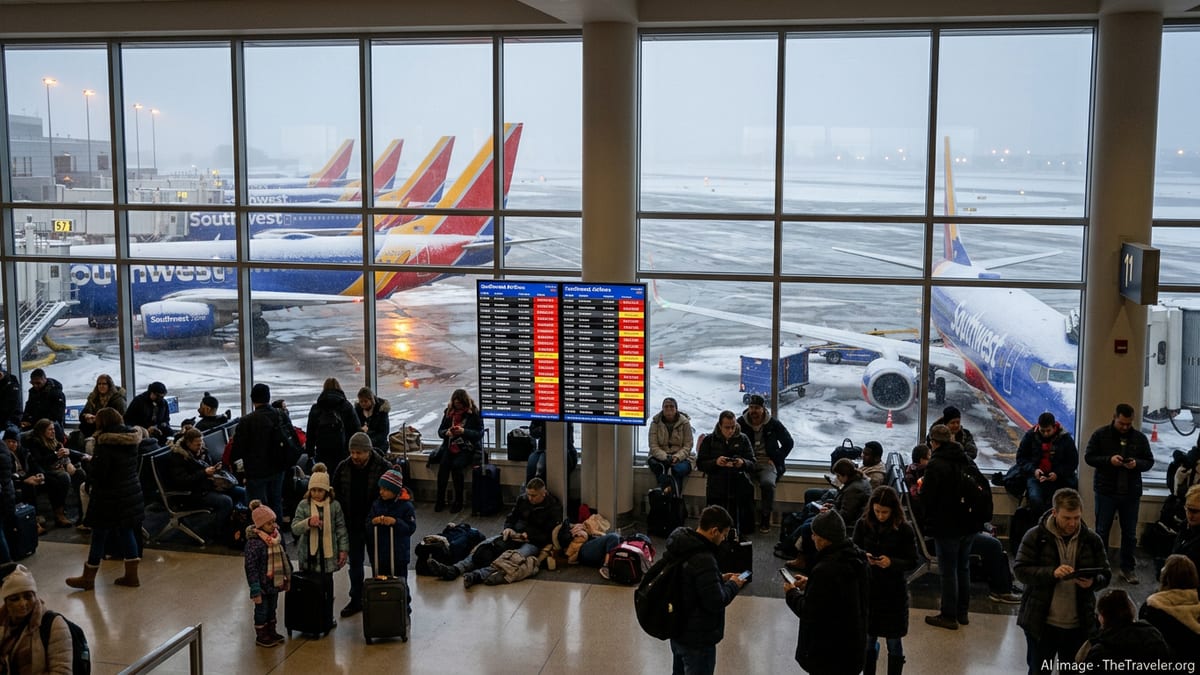
Storm-Battered Midwest Becomes Epicenter of Flight Disruption
As Winter Storm Iona tracks across the central United States, Chicago and Des Moines have emerged as key flashpoints for air travel disruption. Heavy snow bands, periods of freezing rain and shifting winds are limiting runway availability and forcing airlines to trim schedules, with Southwest Airlines among the most visibly affected at both Chicago Midway and Des Moines International Airport.
Publicly available flight-tracking data and airport boards on Sunday show clusters of Southwest cancellations on core Midwest routes, including services linking Chicago and Des Moines with Denver, Dallas, Phoenix and other major hubs. The pattern reflects a familiar winter-weather dynamic in which a handful of key airports absorb the brunt of a national disruption, creating bottlenecks that ripple outward across the system.
Broader reporting on this winter season indicates that airlines had already been navigating repeated storm systems in January and February, including Winter Storm Fern, which produced some of the largest U.S. cancellation totals since the pandemic. Within that already stressed context, Iona’s fast-moving snow and ice have added another layer of operational strain just as carriers were attempting to restore more reliable winter performance.
In Chicago, where Southwest concentrates its operations at Midway, the combination of active winter weather and strong crosswinds has periodically reduced airport capacity. In Des Moines, relatively modest runway and gate resources leave less margin for disruption, so even a limited number of cancellations can quickly cascade into long delays as aircraft and crews fall out of position.
Southwest Schedule Buckles Under Cancellations and Rolling Delays
According to published coverage of national flight operations this winter, Southwest has already faced several intense weather-related disruption days in 2026, with cancellation totals edging into the high hundreds and low thousands networkwide during major storms. Those earlier shocks revealed how quickly the airline’s high-frequency, point-to-point model can become imbalanced when weather shuts down or constrains a few key cities.
Winter Storm Iona appears to be following that same playbook, but with a distinct Midwest focus. Sunday departure boards and passenger reports indicate that many Southwest flights involving Chicago and Des Moines are either canceled outright or delayed for several hours. Once cancellations reach a certain threshold, later flights often inherit the disruption as aircraft and crew rotations are revised in real time, creating rolling delays that last well beyond the worst of the weather.
Travel industry analyses of recent storms describe how airlines increasingly preemptively cancel flights to avoid aircraft and passenger strandings later in the day. In the case of Iona, Southwest seems to be leaning on this approach in Chicago and Des Moines, cutting segments in the morning and early afternoon to reduce the risk of late-night misconnects and diversions once visibility and runway conditions deteriorate.
While such strategies can protect safety and operational resilience, they also translate into longer lines at customer service counters and heavier call and app traffic as passengers scramble to secure remaining seats. With Iona affecting multiple Midwestern hubs at once, rebooking options are limited, meaning some travelers may be forced to wait an extra day or more for the next available Southwest flight.
Chicago and Des Moines Airports Strain to Manage Passenger Flow
The storm’s timing and geography are putting particular pressure on Chicago Midway International Airport, one of Southwest’s largest bases, and on Des Moines International, which serves as a key regional gateway. Reports from recent winter events in the region describe how a combination of runway plowing, deicing queues and periodic ground stops can quickly snarl terminal operations, even when total snowfall is moderate.
At Midway, the dominance of a single carrier amplifies the visibility of any disruption. When Southwest trims a bank of departures or arrivals, gate areas, baggage claims and security checkpoints feel the impact almost immediately, as passenger volumes suddenly swell in concentrated time windows. The result is often longer waits for check in, crowded gate hold rooms and limited seating for travelers who are facing multi-hour delays.
Des Moines faces a different challenge. As a smaller airport with fewer gates and less ability to absorb large numbers of stranded passengers, even a few canceled flights can quickly fill terminal seating and test local hotel and ground transport capacity. Publicly available information from earlier winter storms in the Upper Midwest shows that regional airports often rely on expanded staff hours and temporary holding areas to manage surges when airlines cancel or consolidate flights.
Airport operators across the Midwest have been signaling through advisories and social media posts during recent storms that passengers should arrive early, use airline apps to confirm departure times and be prepared for last-minute gate changes. Winter Storm Iona’s impact on Southwest’s Chicago and Des Moines operations fits that broader pattern of short-notice adjustments and operational improvisation.
Travelers Face Tough Choices on Rebooking and Alternative Routes
For passengers, the practical consequences of Iona’s disruption are playing out in rebooking choices and contingency planning. Travel guidance published during recent winter storms emphasizes the importance of acting quickly when cancellations begin, as remaining seats on later flights and on competing airlines can disappear within hours during major weather events.
In the current pattern, Southwest travelers in Chicago and Des Moines are weighing whether to wait for the airline’s next available flight, reroute through alternative cities or, in some cases, shift to other carriers or modes of transport entirely. When storms span multiple days and affect clusters of airports at once, driving to a different departure point or targeting early-morning flights the following day can sometimes offer better odds of getting out.
Consumer-focused reporting this winter also highlights passenger rights when flights are canceled for weather. U.S. regulations require airlines to provide refunds if a flight is canceled and the customer chooses not to travel, even on nonrefundable tickets. For those who elect to continue their trip, airlines typically offer fee waivers and the ability to rebook within a specified travel window, but compensation for hotels or meals is not guaranteed when disruptions are attributed to weather.
With Iona still impacting parts of the Midwest, many travelers are taking a wait-and-see approach, monitoring their flight status repeatedly and keeping backup options in mind. The experience mirrors earlier storms this season, in which passengers learned to expect shifting departure times and dynamic gate changes as airlines adjusted to evolving forecasts.
Storm Iona Adds Pressure to an Already Scrutinized Airline
Winter Storm Iona is hitting Southwest at a sensitive moment for its brand and network strategy in Chicago and the broader Midwest. The carrier has recently been in the spotlight for planned shifts in its Chicago presence, including its decision to consolidate at Chicago Midway and withdraw from O’Hare later this year. This strategic retrenchment has prompted debate among frequent flyers and aviation observers about the airline’s long term role in the region.
Against that backdrop, another visible round of weather driven cancellations and delays in Chicago and Des Moines underscores how closely public perception of an airline’s reliability is tied to performance during peak stress events. Analyses of earlier storms this year pointed out that, while all major U.S. carriers suffered significant disruption during severe systems like Winter Storm Fern, Southwest drew particular attention because of its dense schedules at weather sensitive airports and its history of high profile operational meltdowns.
Industry commentary suggests that carriers are using each successive storm as a test of new playbooks, technology tools and staffing plans designed in the wake of past disruptions. For Southwest, Iona represents another opportunity to demonstrate improvements in crew scheduling, communication and day-of-operations decision making, even as challenging conditions in the Midwest make perfect performance impossible.
As Winter Storm Iona continues to move through the region, the full measure of its impact on Southwest’s Chicago and Des Moines operations will likely become clearer in the days ahead. For now, passengers are confronting familiar winter travel realities: packed terminals, uncertain departure times and the hope that the next storm on the horizon will be kinder to the country’s already stretched air travel system.