

More news on this day
Hundreds of U.S. passengers were left stranded across Massachusetts on Friday as lingering effects of a powerful Northeast blizzard triggered fresh travel disruption at airports in Boston, Hyannis, Nantucket and Martha’s Vineyard, with 161 flight delays and 30 cancellations reported across multiple carriers.
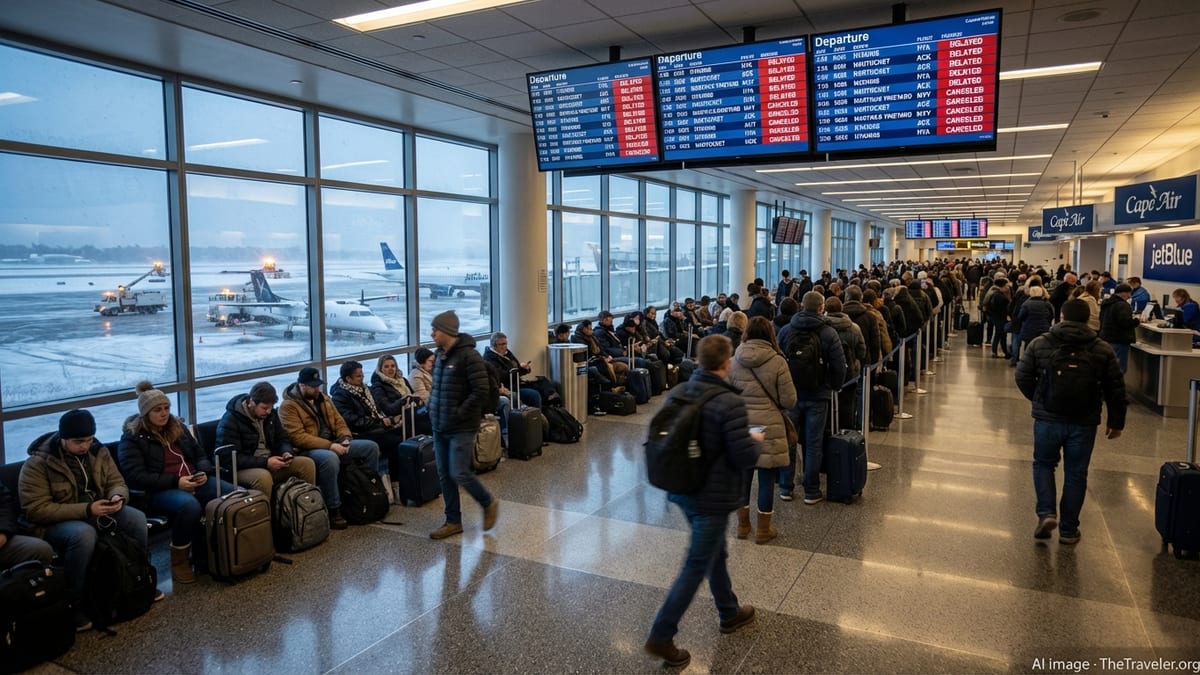
Storm Fallout Keeps Massachusetts Flyers Grounded
The latest wave of disruption comes as airlines and airports continue to recover from the February 2026 North American blizzard, a historic system that has battered New England all week with heavy snow, coastal flooding and hurricane force gusts. While the most intense conditions have eased, operational backlogs, crew dislocations and equipment constraints are still rippling through the network, particularly at smaller regional airports that rely on tightly scheduled turboprop and commuter jet operations.
On Friday, Boston Logan International Airport again ranked among the hardest hit facilities nationwide, with dozens of arrivals and departures delayed as carriers worked through deicing queues and slot restrictions. Regional spokes in Hyannis, Nantucket and Martha’s Vineyard saw a disproportionate share of cancellations as airlines prioritized mainline routes and limited flying to periods when winds and visibility allowed safe operations.
Flight tracking data showed at least 161 delays and 30 cancellations tied to Massachusetts airports through the afternoon, affecting Cape Air’s dense web of short hops as well as services operated by JetBlue, Republic Airways, PAL Airlines and other regional partners. Many of the canceled flights linked island communities to Boston and New York, leaving travelers with few surface transport alternatives in wintry conditions.
Regional Carriers Bear Brunt of Island and Cape Disruptions
Cape Air, which serves as a lifeline carrier for Cape Cod and the islands, has been especially affected by the storm’s aftermath. The airline relies on small Cessna and Tecnam aircraft that are more sensitive to crosswinds and runway contamination, and its schedule depends on quick turns and frequent cycles between Boston, Hyannis, Nantucket and Martha’s Vineyard. With gusty winds and ongoing snow removal operations limiting available slots, the carrier consolidated frequencies and scrubbed a number of departures, stranding passengers at both mainland and island terminals.
JetBlue and Republic Airways, already hit hard earlier in the week as the nor’easter effectively froze operations at Boston Logan, continued to face rolling delays as aircraft and crews repositioned into the region. JetBlue, which uses Boston as a major focus city and operates seasonal and shuttle-style services to the islands, was forced to rework its schedule repeatedly as airfield conditions and air traffic control flow programs changed throughout the day.
PAL Airlines and other smaller operators connecting New England with Atlantic Canada also reported knock-on disruptions. Some cross border flights were held or canceled as carriers coordinated with Canadian airports that were managing their own weather related backlogs. Passengers on those routes faced complex rebookings, often requiring overnight stays in Boston or alternative routings through larger hubs when seats were available.
Passengers Face Long Lines, Limited Options and Uncertain Timelines
At Boston Logan, lines at airline counters and customer service desks stretched deep into terminal concourses as travelers tried to salvage winter school break trips or make it home after days of rolling disruptions. Many passengers arriving from unaffected parts of the country found that their onward Cape and islands connections had been canceled, forcing them to seek scarce hotel rooms in the city or attempt last minute ferry and bus combinations, themselves vulnerable to the storm’s lingering impacts.
At Hyannis, Nantucket and Martha’s Vineyard, the situation was in some respects more acute. With limited daily departures and a heavy reliance on regional flights, travelers often had few same day alternatives when cancellations hit. Some families waiting to leave the islands reported that they had already rebooked two or three times this week as successive waves of weather and operational limits forced airlines to trim schedules again and again.
Airports urged passengers not to head to the terminal without confirmed and updated flight information, emphasizing that same day standby options were extremely limited. Public address announcements and social media feeds repeatedly stressed the need to check with airlines before departing for the airport, as delay estimates and gate assignments continued to shift in near real time.
Airlines Roll Out Waivers as Recovery Continues
In response to the prolonged disruption, carriers serving Massachusetts extended and expanded travel waivers covering affected dates and routes. JetBlue, which has already canceled a significant portion of its Northeast schedule this week, continued to allow customers booked to or from Boston and nearby storm hit airports to change travel dates without additional fees, subject to fare differences and booking windows. Similar policies were in place at major network airlines whose regional affiliates, including Republic Airways, operate flights into Logan and the Cape and islands airports.
Cape Air issued advisories encouraging travelers to accept rebooking onto later flights rather than attempting to hold out for same day departures that could still be canceled if winds or visibility again deteriorated. The carrier signaled that its priority was to move stranded passengers in an orderly fashion as weather windows opened, rather than restore full frequency immediately.
Operational planners caution that, even as runways are cleared and storm warnings expire, the recovery can take several days. Aircraft and crew rotations must be rebuilt, maintenance intervals adjusted after days of groundings, and gate and slot times renegotiated with air traffic control. For smaller airports that depend on a handful of daily flights, a single canceled rotation can ripple across an entire weekend of travel.
Authorities Urge Caution as More Winter Weather Threatens
State transportation officials and airport managers across Massachusetts urged travelers to remain flexible and prepare for continued disruption as the broader Northeast aviation system works back toward normal. While forecasters expect conditions to gradually improve, residual snow showers, coastal winds and refreezing overnight could still interrupt operations, particularly at exposed island airfields and on approach paths over open water.
Travelers heading to or from Boston, Hyannis, Nantucket and Martha’s Vineyard over the coming days were advised to build additional buffer time into itineraries, keep a close eye on airline alerts and consider travel insurance or flexible ticket options during the height of winter storm season. Officials also highlighted the importance of packing essential medications, chargers and a change of clothes in carry on bags, given the elevated risk of irregular operations and unexpected overnights.
For now, hundreds of passengers remain in limbo, sleeping in terminal seating areas or in hastily booked hotel rooms as airlines slowly rebuild the web of flights that connects coastal Massachusetts to the rest of the country. With February’s historic blizzard already ranking among the most disruptive winter events in recent years, both carriers and travelers are bracing for the possibility that the ripple effects on schedules could linger well beyond the end of the storm itself.