

More news on this day
Thousands of air travelers across the United States are facing long lines, crowded terminals and unexpected overnight stays as a powerful winter storm disrupts flight operations nationwide, with Orlando International Airport emerging as one of the hardest-hit hubs amid hundreds of delays and cancellations by JetBlue, Delta, Spirit, Southwest, American Airlines and other major carriers.
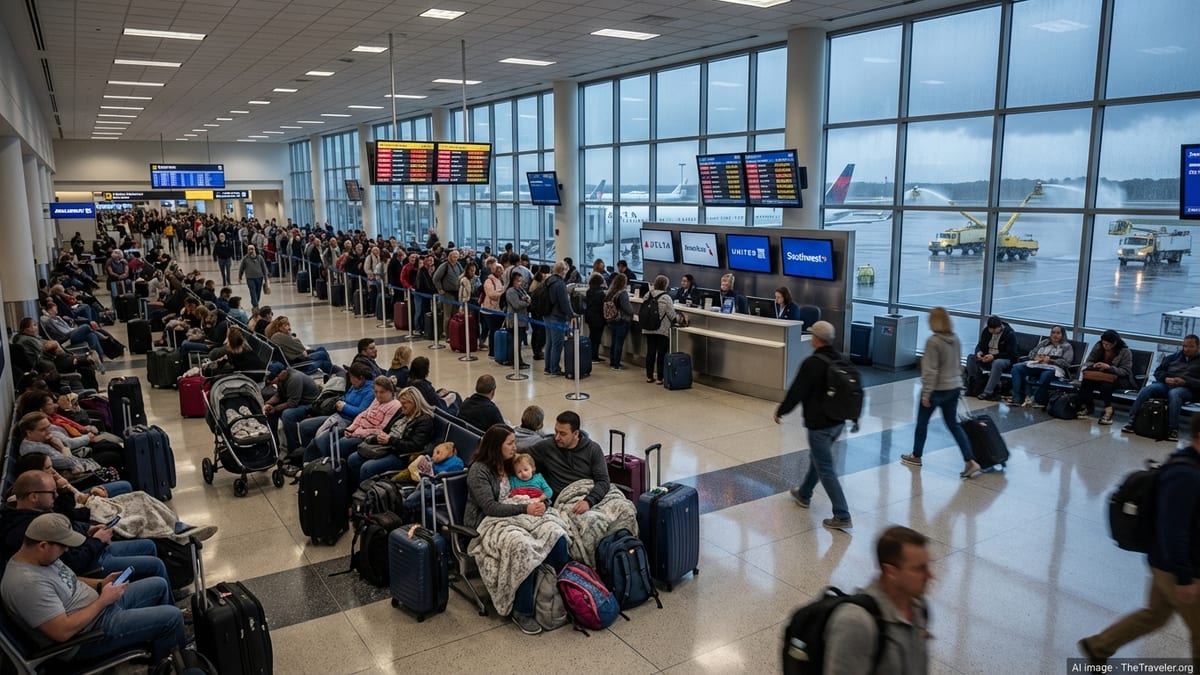
Orlando Becomes a Key Flashpoint in Nationwide Flight Chaos
While much of the worst winter weather is battering the Northeast and Mid-Atlantic, the disruption is rippling deep into Florida, where Orlando International Airport is seeing an outsized impact. According to live flight-tracking data and industry reports, the storm’s cascading effects have translated into roughly 229 delays and 116 cancellations at Orlando alone, turning the normally bustling leisure gateway into a scene of rolling queues and crowded gate areas.
Orlando sits at a critical junction in many airlines’ networks, connecting family vacationers, international tourists and cruise passengers to destinations across the country. As aircraft and crews became trapped at storm-slammed airports further north, schedules into and out of Orlando quickly unraveled. Flights that technically could have operated in calm Central Florida skies never departed because the planes needed were stuck in New York, Boston, Philadelphia and other snowbound cities.
By Sunday morning, stranded travelers reported hours-long waits to speak with airline agents and secure hotel vouchers or rebookings, with some families camping out on terminal floors or in seating areas. The disruption has coincided with peak leisure travel demand, compounding pressure on airlines already juggling packed flights and limited spare capacity.
Airport officials have urged passengers to arrive early, check flight status frequently and be prepared for evolving conditions as carriers rebuild schedules. Even as the storm center remains far to the north, Orlando’s role as a connecting hub means it may feel the operational aftershocks for days.
Winter Storm Hernando and a Punishing Season of Disruption
The latest wave of disruption is being driven by Winter Storm Hernando, which is lashing the Northeast with heavy snow, strong winds and whiteout conditions. Meteorologists warn that the system is combining classic nor’easter characteristics with already saturated ground and existing snowpack, dramatically raising the stakes for airport operations from Washington to Boston.
Airlines and airport authorities have been bracing for this event since late in the week, issuing travel waivers and canceling flights preemptively in an effort to avoid gridlock on runways and taxiways. The tactic reflects lessons learned from previous winter storms this season, including a late-January bomb cyclone that snarled travel across wide swaths of the country and exposed vulnerabilities in staffing, crew scheduling and de-icing capacity.
As Hernando intensified, the number of scrapped flights climbed into the thousands nationwide, with major hubs in New York, Boston and Philadelphia bearing the brunt. That, in turn, created a domino effect: aircraft scheduled to connect through those cities were unavailable for rotations to secondary hubs and leisure markets such as Orlando, Tampa and Fort Lauderdale, as well as inland cities from Atlanta to Chicago.
Industry analysts say the convergence of severe weather and an already constrained aviation system is amplifying the pain for passengers. With aircraft utilization running high and spare planes limited, even a short-lived storm can trigger a multi-day recovery, particularly when it hits multiple major hubs at once.
JetBlue, Delta, American, Southwest and Spirit Lead Cancellations
Across the United States, some of the country’s biggest carriers are reporting the heaviest operational hits from the storm. Data compiled from flight-tracking services and aviation industry outlets shows that JetBlue, Delta Air Lines, American Airlines, Southwest and United have each canceled hundreds of flights as Hernando sweeps across the eastern U.S. Smaller regional operators such as Republic Airways and Endeavor Air, which feed passengers into these larger networks, are also posting significant cancellation tallies.
JetBlue, with major operations in New York and Boston, has been particularly exposed. The airline has scrapped a large share of its schedule in the Northeast, leading to ripple effects at sunbelt destinations where its aircraft and crews would normally fly. Delta and American, both of which operate broad domestic networks with key hubs in the storm’s path, have also cut back aggressively, issuing systemwide waivers to allow travelers to rebook without change fees.
Southwest and Spirit, major players in Florida leisure travel, are contending with both direct weather impacts on routes into the Northeast and the indirect fallout of congestion at connecting airports. For Spirit in particular, the storm comes on the heels of a period of heightened operational scrutiny and financial strain, increasing pressure on the low-cost carrier to manage disruptions while preserving customer confidence and cash flow.
Airlines stress that safety remains the primary factor in any decision to delay or cancel. Low visibility, crosswinds, icy runways and ground-crew safety all play a role in determining whether a flight can operate. Even when conditions improve aloft, it can take hours to clear snow from taxiways, de-ice aircraft and reposition crews, leaving passengers waiting for the system to catch up.
Passengers Stranded, Families Scramble for Alternatives
For travelers on the ground, the operational logic offers little comfort. At Orlando International and airports across the storm-affected region, scenes of frustration and fatigue are playing out in real time. Parents juggle restless children on terminal floors, international visitors work the phones to adjust hotel bookings and theme park reservations, and cruise passengers calculate whether they will still make their departure times from nearby ports.
Some passengers arriving in Orlando have found their connecting flights to the Northeast canceled at the last minute, forcing them to search for scarce hotel rooms along the airport corridor. Others report being rebooked days out, as airlines struggle to find available seats on alternate itineraries. With load factors already high, particularly on routes to and from Florida, options are limited.
Travel advisors and consumer advocates are urging passengers to remain flexible and to prioritize direct communication through airline apps and official channels rather than relying solely on airport counters. Same-day schedule changes, standby lists and creative rerouting through less congested hubs can sometimes shave a day or more off a disrupted trip, though success often depends on elite status, fare class and sheer persistence.
For some travelers, the cost of being stranded is mounting quickly. Extra hotel nights, ride-hail fares, pet boarding extensions and missed work days are all adding to the financial toll. While airlines provide meal vouchers and accommodation in certain circumstances, especially when mechanical issues are involved, weather-related disruptions typically offer passengers fewer guaranteed protections, raising recurring debates about consumer rights in extreme-weather travel crises.
Operational Strains Test Airlines’ Winter Resilience
The latest wave of delays and cancellations is again highlighting the tight margins under which modern airline networks operate. With demand for air travel robust and fleets running near full tilt, there is little slack in the system to absorb sudden shocks. When a storm like Hernando stalls operations across several major hubs simultaneously, it exposes every weak link in scheduling, staffing and aircraft routing.
Carriers have invested heavily in winter resilience in recent years, adding de-icing trucks, expanding snow-removal teams and upgrading forecasting tools to better plan ahead. Yet experts note that the basic physics of winter storms remain difficult to outmaneuver. When heavy snow and strong winds reduce runway capacity, or when safety protocols require ground operations to pause, no amount of digital optimization can fully prevent disruption.
Regional airlines that operate smaller jets on feeder routes are particularly vulnerable. They often have tighter crew rosters and fewer spare aircraft, meaning that a single cancellation or diversion can cascade through multiple subsequent flights. Because many passengers in smaller markets depend on these feeders to reach larger hubs, the impact can be disproportionately severe compared with the number of flights involved.
At Orlando, the effects of these behind-the-scenes challenges are visible in the form of long lines at rebooking counters and departure boards dominated by red and yellow status alerts. Airline managers and operations staff face the delicate task of balancing proactive cancellations that create clearer expectations for passengers against the risk of over-pruning schedules that might have been able to operate if conditions improve faster than forecast.
Travel Waivers, Flexible Policies and What Passengers Can Do
In anticipation of the storm, most major U.S. airlines have rolled out flexible travel waivers for affected routes, including those touching Orlando and other key Florida airports. These waivers typically allow customers to change their travel dates without paying a standard change fee, and in some cases without paying any fare difference if they rebook within a specified time window and keep the same origin and destination.
Passengers whose flights are still scheduled to operate are being urged to make use of airline apps and websites to monitor changes and manage their own rebooking when possible. Digital tools now offer a level of control that would have been unthinkable a decade ago, allowing travelers to switch flights, track standby status and receive push notifications about gate changes or delays in near real time.
For those already caught in the disruption, experts recommend prioritizing early-morning departures on the next available day, when operations are often more stable and crews are freshly positioned. Flexibility in routing can also help: connecting through a secondary hub that is less affected by the storm, even if it means an extra stop, may be preferable to waiting for a nonstop seat that might not open up for days.
Consumer advocates also emphasize the importance of documenting expenses and keeping records of communications with airlines. While weather events typically limit the scope of automatic compensation, it is still worth submitting receipts for review when irregular operations stretch over multiple days, particularly in cases where miscommunication or inconsistent handling can be demonstrated.
Looking Ahead: Multi-Day Recovery Likely
As the storm system continues to churn across the Northeast, aviation forecasters warn that the impact on flight operations will likely extend well beyond the period of active snowfall. Even once skies clear, it can take days for airlines to reposition aircraft and crews, reopen full runway capacity and work through the backlog of displaced passengers.
Orlando International Airport, with its mix of origin-and-destination traffic and connecting flows, is expected to remain a bellwether for the broader recovery. The number of delays and cancellations may gradually decline as the week progresses, but residual disruptions are likely to linger, especially on routes tied to the hardest-hit northern hubs. Travelers with flexible itineraries later in the week are being encouraged to keep monitoring weather and airline advisories, as additional schedule adjustments remain possible.
Airports and carriers alike will be watching closely to see how the system performs under this latest stress test. With climate variability contributing to more frequent and intense storms in some regions, planners are under pressure to refine contingency playbooks that protect both safety and service reliability. The experience of this winter is likely to inform future investments in infrastructure, staffing and technology.
For now, though, the immediate reality for thousands of passengers is far more basic: finding a seat on a plane, a room for the night and a clear path home. As departure boards slowly shift from canceled to scheduled and finally to boarding, the long, uneven process of getting travelers back on the move is only just beginning.