

More news on this day
Passengers traveling with Air Canada across Canada, the United States, Switzerland and Mexico are facing mounting disruptions as an impending winter storm triggers dozens of cancellations and rolling delays at major hubs including Montreal, Zurich, Mexico City and Dallas/Fort Worth, straining airport operations at the height of a busy winter travel period.
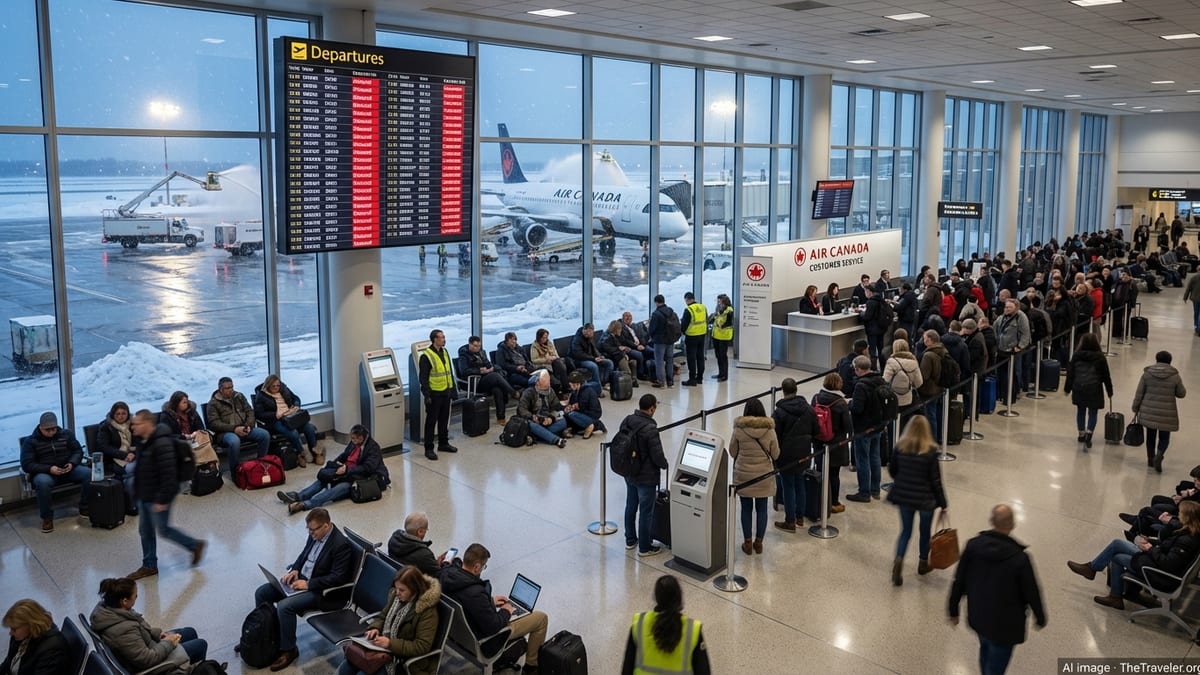
Storm System Adds Fresh Turbulence to a Fragile Winter Schedule
The latest round of disruption is unfolding just days after a powerful winter system snarled operations at Toronto Pearson and other Canadian hubs earlier in February, underscoring how vulnerable tightly timed airline networks remain to weather shocks. Meteorologists are tracking a new low pressure system sweeping east across North America this weekend, bringing snow, freezing rain and gusty winds to key Air Canada markets, including Quebec and the U.S. Midwest, with knock-on effects into Europe and Mexico.
On February 20 and 21, flight-tracking data and airport operations reports pointed to at least several dozen Air Canada cancellations and more than a hundred delays systemwide, concentrated at Montreal–Trudeau International Airport, Toronto Pearson, Calgary and Vancouver. A significant share of those flights were international, connecting to or from cities such as Zurich, Mexico City and Dallas/Fort Worth, where partner airlines and shared terminal resources magnified the impact of each schedule change.
The pattern reflects a broader winter marked by repeated storm-related disruptions in Canada and the United States. Earlier this month, a snowstorm in southern Ontario and the Great Lakes region forced Air Canada and other carriers to cancel and delay hundreds of flights at Toronto Pearson over a two-day period, with the ripple effects still being felt in aircraft rotations and crew availability as the new system approaches.
With the impending storm threatening fresh snowfall, low visibility and crosswinds at major hubs, operational planners at Air Canada have been trimming schedules and preemptively canceling select departures in an attempt to preserve the integrity of the remaining network and reduce the risk of aircraft and crews ending up out of position.
Montreal at the Epicenter as Cancellations Mount
Montreal–Trudeau International Airport has emerged as one of the most affected hubs as the storm approaches, with periods of snow, gusting winds and deteriorating visibility forecast across the weekend. Airport departure boards on Saturday showed multiple Air Canada services scrubbed or delayed, particularly regional operations into Quebec, Atlantic Canada and the U.S. Northeast, where smaller aircraft and shorter runways are especially sensitive to winter conditions.
Travel disruption in Montreal comes on top of the carrier’s recent strategic adjustments on some cross-border routes. In parallel with weather-related disruptions, Air Canada has suspended a planned seasonal nonstop link between Montreal and Seattle that had been set to launch this spring, reflecting softer Canada–U.S. demand and a more cautious approach to capacity deployment on transborder routes. For passengers, the immediate concern is less long-term network planning than the short-notice cancellations affecting weekend departures.
Inside Montreal’s terminal, travelers reported long lines at service counters and rebooking kiosks as agents attempted to re-accommodate affected passengers on later flights, often via Toronto or Vancouver. With many northbound and eastbound routes simultaneously affected by weather, options for same-day rebooking were limited, forcing some passengers into overnight stays in Montreal or alternative routings through U.S. hubs when seats were available.
Airport authorities reminded passengers to arrive early, monitor their flight status closely and come prepared for longer waits at security and border control. Portable cots and bottled water were pre-positioned near some gates as a contingency in case extended ground holds or aircraft swaps stranded passengers onboard or in the gate areas for longer than anticipated.
Zurich and Transatlantic Links Feel the Knock-On Effects
Across the Atlantic, operations at Zurich Airport have also felt the strain as the North American storm system disrupts the flow of Air Canada aircraft and crews. While weather in Switzerland itself has remained relatively manageable, delays and cancellations originating in Canada have cascaded into the transatlantic schedule, forcing adjustments to evening departures and early-morning arrivals.
Air Canada’s presence in Zurich is part of a broader transatlantic and connecting strategy that includes recent interline partnerships with European carriers, enabling passengers to reach destinations such as Istanbul and other points across Europe via Swiss and German gateways. When long-haul flights from Canada operate late or not at all, those onward connections can quickly unravel, leaving travelers in Switzerland scrambling to secure new itineraries or overnight accommodation.
Ground handling teams in Zurich have focused on minimizing turnaround times for aircraft that do arrive, attempting to recover punctuality where possible. However, tight crew duty limits and frozen slots at congested North American airports have limited the ability to make up lost time. Some Zurich departures bound for Canada have been held on the ground while dispatchers awaited updated weather and runway condition reports from Montreal and Toronto.
For passengers, the most visible signs are departure boards dotted with revised times and occasional cancellations, along with announcements urging those connecting onwards to Latin America or secondary European cities to contact their airlines for updated boarding passes and routing options.
Mexico City and New Mexican Routes Caught in the Crossfire
Farther south, Air Canada’s growing network in Mexico has also been touched by the disruption. Mexico City, a key gateway in the carrier’s Latin America strategy, saw some northbound services to Vancouver and Montreal delayed or rescheduled as aircraft and crews were held back in Canada or re-assigned to cover priority routes affected by the storm.
The timing is particularly challenging for Air Canada, which has recently announced an expansion of its Mexico offerings for the coming summer season. The airline plans to launch a new nonstop route between Montreal and Guadalajara in June, while increasing frequencies on existing services to Cancun, Monterrey, Mexico City and Puerto Vallarta from Canadian hubs. That growth underscores Mexico’s importance as both a leisure and business market for the carrier, even as short-term weather events highlight the fragility of the wider network.
In Mexico City’s Benito Juárez International Airport, passengers transiting between Canadian and Mexican cities reported waits at immigration and airline counters as they sought confirmation that connecting flights would operate as scheduled. For some, rebooking routed them through alternative Canadian gateways such as Toronto or Vancouver instead of Montreal, adding flight time but preserving same-day arrival.
Airport staff in Mexico City noted that while local weather remained largely favorable, the dependence on aircraft arriving from weather-affected Canadian cities meant that gate assignments and departure times were shifting frequently. Travelers were urged to remain near their gates and monitor terminal displays, as boarding times could change on short notice once delayed inbound aircraft were cleared to land.
Dallas/Fort Worth and U.S. Hubs Struggle with Cascading Delays
In the United States, Dallas/Fort Worth International Airport has been one of several major hubs caught up in the ripple effects of winter weather, particularly as the same system that is impacting Canadian cities pushes colder air and mixed precipitation across parts of Texas and the central U.S. While Air Canada’s direct presence at Dallas/Fort Worth is limited compared with that of American Airlines, shared airspace constraints, runway de-icing operations and crowded skies have all contributed to delays affecting cross-border traffic.
The disruptions come on the heels of a bruising experience for American carriers during Winter Storm Fern earlier in February, which forced American Airlines and others to cancel thousands of flights nationwide and severely disrupted operations at Dallas/Fort Worth. Although the current system is not expected to trigger the same scale of cancellations, any slowdown at such a critical U.S. hub tends to ripple outward across connecting networks, including those of partner and codeshare airlines.
For Air Canada passengers connecting through U.S. gateways on joint itineraries, this has translated into extended layovers, missed connections and occasional overnight stays. Customer service desks in Dallas/Fort Worth and other large U.S. airports have been busy rebooking passengers onto alternative routings, sometimes via Chicago, Denver or Houston when northbound flights to Canada are oversold or delayed beyond crews’ duty windows.
U.S. airport officials have continued to advise travelers to build extra time into itineraries that involve winter connections and to be prepared for schedule changes up until departure. For northbound passengers, requirements for customs and immigration on arrival in Canada add another layer of complexity when last-minute rebookings alter their entry point into the country.
Network Strain Across Canadian Hubs from Vancouver to St. John’s
Beyond Montreal and Toronto, the impending storm has exacerbated an already strained situation across Air Canada’s domestic network. In recent days, Canadian travelers have faced a combination of severe winter weather and high seasonal demand that has translated into elevated levels of cancellations and delays at major airports including Vancouver, Calgary, Montreal, Toronto and St. John’s.
Data compiled this week showed that Canadian carriers together registered more than 70 cancellations and over 500 delays in a single day, with Air Canada accounting for a significant share. Regional affiliates operating under the Air Canada Express brand, as well as other carriers, have also struggled with snow, strong winds and blowing snow in both western and eastern provinces, limiting the ability to operate smaller regional jets and turboprops safely on schedule.
In Vancouver and Calgary, shifting storm tracks have led to rapidly changing runway conditions, at times requiring temporary pauses for plowing and de-icing that backed up departure queues. In Atlantic Canada and Newfoundland, where St. John’s International Airport is often exposed to high winds and blowing snow, airlines faced tough decisions on whether to attempt landings or divert flights to alternate airports until conditions improved.
These operational challenges have highlighted the delicate balance airlines must strike between safety margins and schedule reliability. Air Canada has emphasized that safety remains the overriding priority and that flights will not depart or land unless conditions meet strict regulatory and company standards, even if that means longer waits and canceled trips for passengers.
How Air Canada Is Responding and What Passengers Can Do
Faced with the latest storm-related disruption, Air Canada has activated its standard suite of irregular-operations measures, including flexible rebooking options, closer coordination with airport authorities and real-time monitoring of runway and airspace conditions. The airline has urged customers with travel booked over the storm period to check their flight status frequently using official channels and to ensure their contact details are up to date so they can receive notifications about schedule changes.
Where flights are canceled in advance of departure, affected travelers are being offered the choice of rebooking on the next available flight, changing their travel dates or, in some cases, adjusting their origin or destination within a defined geographic zone. For routes where alternative seats are scarce, particularly over busy weekends, some passengers are opting for travel vouchers or refunds in order to re-plan their trips outside of the storm window.
Consumer advocates recommend that passengers document all communications with the airline, retain receipts for any out-of-pocket expenses such as hotels and meals and familiarize themselves with both Air Canada’s tariff and local passenger rights regulations. While weather is typically categorized as an extraordinary circumstance that can limit cash compensation, airlines may still provide goodwill gestures or reimburse certain costs, especially when disruptions are prolonged.
At the airport, travelers can improve their chances of a smoother experience by arriving early, packing essential medications and valuables in carry-on bags, and considering travel insurance policies that offer trip interruption coverage. Those connecting internationally through hubs like Montreal, Zurich, Mexico City or Dallas/Fort Worth should factor in extra time for security and border procedures, as queues tend to lengthen significantly when multiple banks of flights are disrupted at once.
Outlook for the Coming Days as Storm Threat Persists
Forecasters expect the winter storm to move steadily eastward over the next 24 to 48 hours, with the heaviest snow and mixed precipitation shifting from central Canada and the upper Midwest toward Quebec, the Atlantic provinces and parts of the northeastern United States. For Air Canada and its passengers, that trajectory suggests that disruptions could continue in waves, even as operations stabilize in some western markets.
Operational planners will be watching closely for opportunities to restore normal schedules, particularly on high-demand routes linking Canadian hubs with major U.S., European and Mexican cities. However, the complex choreography of aircraft rotations and crew assignments means that the aftershocks of the storm could be felt for several days beyond the last snowflake, especially on long-haul routes where aircraft utilization is tightly optimized.
Travel industry analysts note that the current turbulence comes at a time when airlines in North America and Europe are already contending with tight labor markets, congested airspace and infrastructure constraints. These factors limit the sector’s ability to absorb shocks and bounce back quickly from weather events, leaving passengers more exposed to even modest disruptions.
For now, travelers booked on Air Canada services through Montreal, Zurich, Mexico City, Dallas/Fort Worth and other affected airports are being advised to maintain flexibility, monitor conditions and be prepared to adjust their plans on short notice as the storm system continues its march across the continent.