

More news on this day
A powerful winter storm hammering the Northeast has triggered fresh travel turmoil across the Midwest on February 24, as Cleveland-Hopkins International Airport reports 15 flight delays and 25 cancellations affecting United Airlines, JetBlue, Endeavor Air and Republic Airways, with knock-on disruption spreading to key hubs in Detroit and Chicago.
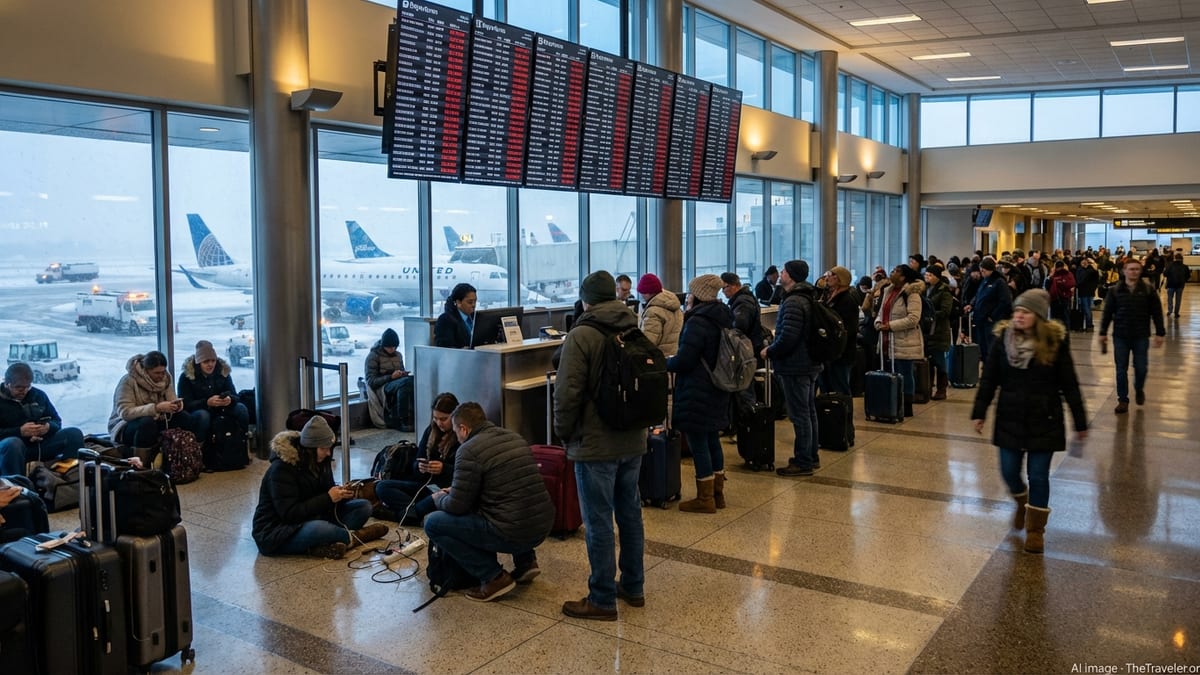
Storm-Battered Network Sends Disruptions Into Cleveland
The latest wave of schedule problems at Cleveland-Hopkins comes as U.S. airlines contend with more than 2,000 cancellations nationwide on Tuesday, following a historic blizzard that blanketed much of the Northeast with heavy snow and high winds over the weekend. With major hubs in Boston, New York and Newark still digging out and operating on reduced schedules, Midwestern airports such as Cleveland are now absorbing secondary shocks from the wider system breakdown.
Although Cleveland itself has avoided the worst of the snowfall, the airport’s role as a connector on routes to and from weather-battered Eastern hubs has left its operations vulnerable. Aircraft and crews that were due to rotate through LaGuardia, JFK, Newark and Boston have been displaced or delayed, leaving gaps in schedules that are now showing up as cancellations and late departures in Ohio.
Airport officials said the 25 cancellations and 15 delays logged through Tuesday morning represent a snapshot of a broader pattern of rolling disruption that is likely to continue through at least midweek. Travelers booked on regional and mainline services with United, JetBlue, Endeavor Air and Republic Airways are bearing the brunt of the latest cuts at Cleveland-Hopkins.
United, JetBlue, Endeavor and Republic Feel the Strain
Among the carriers impacted in Cleveland, United Airlines is facing particular pressure as it works to stabilize its Midwest and East Coast operations after several days of weather-related schedule changes. United, which relies heavily on regional partners such as Republic and Endeavor to feed traffic into larger hubs, has been forced to trim some shorter routes and consolidate frequencies to keep its most critical connections moving.
JetBlue, already one of the hardest-hit U.S. airlines during this week’s storm due to its concentration in the Northeast, is now contending with follow-on impacts in markets like Cleveland. The carrier’s growing presence at Cleveland-Hopkins, including links to Boston and New York, has made it sensitive to any disruption rippling out of those cities, and Tuesday’s cancellations underscore how fragile those new connections can be in severe weather.
Endeavor Air and Republic Airways, both regional operators flying under major-brand flags, are also grappling with the operational squeeze. With aircraft scattered away from their normal bases and crew duty limits coming into play after days of extended shifts, these feeder carriers have had to scrub some flights or substitute equipment, contributing to the 40 disrupted departures and arrivals in Cleveland alone.
Ripple Effects Hit Detroit and Chicago Passengers
While the immediate numbers at Cleveland-Hopkins may appear modest compared to the thousands of nationwide disruptions, the consequences for passengers traveling through Detroit and Chicago are more significant. Many of the delayed and canceled flights serve as vital links between Cleveland and larger Midwest hubs, where travelers connect onward to the West Coast, the South and international destinations.
Flights operating between Cleveland and Chicago in particular have been under pressure as Chicago’s major airports manage their own weather and congestion challenges. Even small schedule changes on these high-traffic corridors can cause missed connections and extended layovers, especially for travelers who started their journeys at smaller regional airports and rely on Cleveland as a stepping stone.
Detroit-bound passengers are seeing similar effects. With airlines prioritizing aircraft and crew on trunk routes into the most constrained hubs, some secondary services into Detroit have been rescheduled or consolidated. That leaves travelers from Cleveland facing tighter connection windows or, in some cases, overnight stays if their replacement flights do not align with long-haul departures out of Michigan and Illinois.
Passengers Confront Long Lines, Tight Connections and Limited Options
For travelers on the ground in Cleveland on Tuesday, the operational statistics translate into long lines at check-in counters and rebooking desks, as well as crowded gate areas where multiple flights are vying for the same aircraft. With so many planes and crews out of position nationwide, same-day alternatives are frequently limited, particularly for those traveling on the most popular morning and evening business-bank departures.
Airlines are urging customers with departures scheduled from Cleveland, Detroit or Chicago over the next 24 to 48 hours to check their flight status frequently and to make use of mobile apps for rebooking when possible. Many carriers, including United and JetBlue, have issued flexible travel waivers for storm-affected routes, allowing passengers to change dates without standard fees, though fare differences may still apply on some itineraries.
Airport staff at Cleveland-Hopkins have added extra personnel in key areas to help manage crowding and provide updated information. However, with delays and cancellations often being decided in real time based on evolving weather and air traffic control constraints, even well-prepared passengers may find their plans changing with little notice.
Slow Recovery Expected as Airlines Rebuild Schedules
Aviation analysts say that, although the worst of the snow and wind has now passed, the U.S. air travel system remains in a delicate recovery phase. It can take several days for carriers to reposition aircraft and crews, clear maintenance backlogs and restore normal frequencies after a nationwide event of this scale. As a result, airports like Cleveland, which sit at critical junctions between the Northeast and the Midwest, are likely to continue seeing intermittent disruptions.
With additional weather systems possible later in the week and winter still far from over, travelers using Cleveland-Hopkins, Detroit and Chicago are being advised to build extra time into their journeys and to keep contingency plans in mind. That could include booking earlier flights than strictly necessary, traveling with carry-on luggage only when feasible, and staying alert for schedule updates throughout the day.
For now, the 15 delays and 25 cancellations in Cleveland serve as a reminder that even when storms move on, their impact on aviation lingers. As airlines work to restore reliability, passengers across the Midwest are being caught in the crosscurrents of a fragile national network still struggling to find its footing after one of the most disruptive winter weather events of the season.