

More news on this day
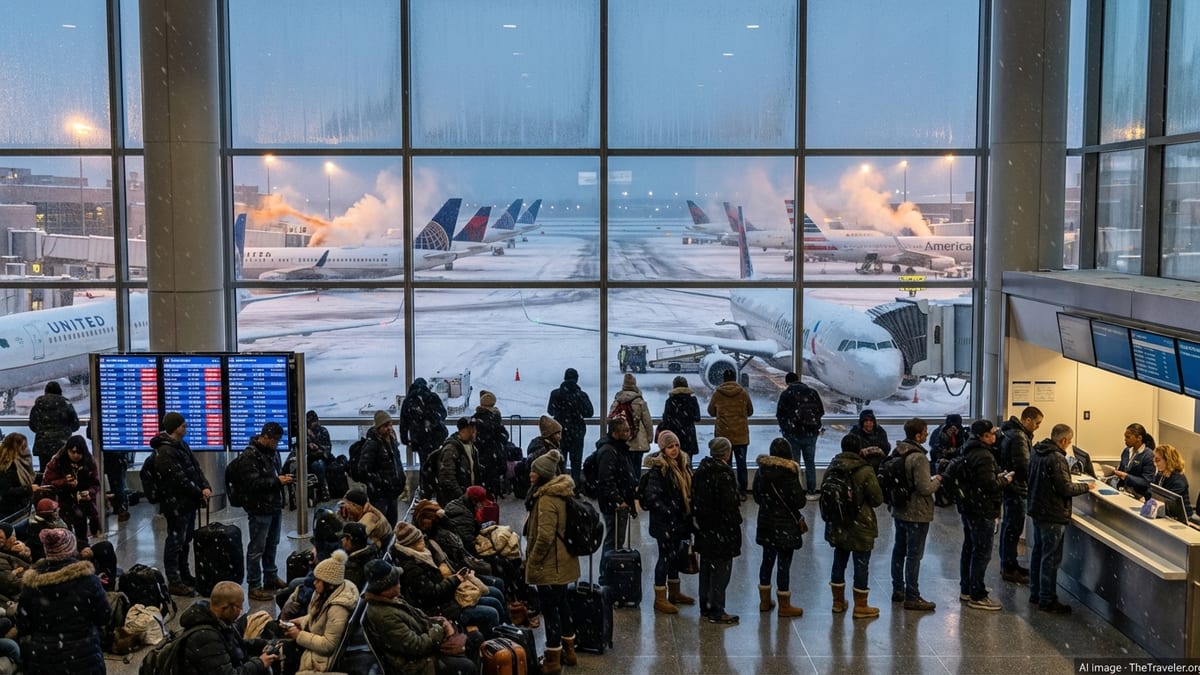
A fast‑moving winter storm sweeping across the Northeast and Midwest on February 22 has triggered major travel disruptions at Newark Liberty International Airport, with 458 flights canceled and 95 delayed, severely affecting heavily traveled corridors between New York, Boston and Chicago and stranding thousands of passengers on some of the country’s busiest business routes.
Storm Slams Critical Northeast–Midwest Air Corridors
The latest winter system bearing down on the Interstate 95 corridor and into the upper Midwest has hit one of its most vulnerable choke points: the air routes linking New York, Boston and Chicago. Newark Liberty, a primary hub for United Airlines and a key gateway for Delta Air Lines and American Airlines traffic, has borne the brunt of the disruption, with hundreds of flights grounded as snow, ice and low visibility settled over the region.
By late afternoon on Sunday, operations data showed 458 cancellations and 95 delays tied to Newark’s schedule, with many of those flights operating on shuttle-style routes between Newark and Boston Logan as well as Newark and Chicago O’Hare. Those three airports, together with New York’s Kennedy and LaGuardia, form a dense network that typically carries tens of thousands of travelers a day, meaning a shutdown in one location quickly cascades across the system.
Airlines and airport officials said the combination of heavy, wet snow, strong crosswinds and extended deicing times made it impossible to maintain normal throughput on already tight schedules. Even flights that were technically able to depart often lacked available gates, crews or connection windows, forcing last-minute cancellations that rippled to downline airports hours away from the main storm center.
Newark Liberty Becomes the Epicenter of Disruptions
At Newark Liberty, long a bellwether for weather-related chaos in the New York region, the storm’s impact became clear shortly after daybreak as departure boards began to fill with red “canceled” and “delayed” notices. Airport officials issued multiple weather advisories urging travelers to confirm their flight status with airlines before heading to the terminals, warning that conditions were expected to deteriorate through the evening.
The cancellations hit a broad mix of domestic and international flights, but short-haul regional services bore the heaviest load, particularly those linking Newark with Boston and Chicago. Many of these flights operate with smaller regional jets that are more susceptible to disruptions from crosswinds and runway contamination, and they require frequent deicing in heavy snow, further straining ground operations.
Inside the terminals, long lines formed at check‑in counters and self‑service kiosks as passengers scrambled to rebook or secure hotel vouchers. Overhead announcements urged travelers to use airline mobile apps and customer service chat tools rather than queuing in person, but intermittent connectivity and limited inventory on later flights left many facing overnight stays or lengthy detours through alternate hubs in the Midwest and Southeast.
United, Delta and American Scramble to Reprotect Passengers
United Airlines, which counts Newark as one of its most important hubs, shouldered a significant share of the 458 cancellations as it worked to consolidate thinly booked departures and preserve long‑haul flights where possible. The carrier rolled out a broad travel waiver for customers ticketed to or from Newark, New York and Boston, allowing free changes within a limited date window and encouraging voluntary rebooking to less weather‑sensitive times.
Delta Air Lines and American Airlines, with sizable operations at both Boston Logan and New York’s airports, quickly followed with their own weather waivers. Delta focused on maintaining core shuttle frequencies between New York and Boston while trimming marginal mid‑day flights more vulnerable to operational bottlenecks. American shifted some passengers via its hubs in Philadelphia and Charlotte to bypass the worst of the storm, though those reroutes added hours and additional connections to many itineraries.
Airline representatives emphasized that, while the raw number of cancellations looked severe, proactive schedule cuts were designed to give passengers more certainty and reduce the likelihood of extended ground holds and tarmac delays. They argued that canceling flights a day or even several hours in advance allows more orderly rebooking and helps ensure that the flights which do operate can depart and arrive close to schedule, instead of compounding delays late into the night.
Travelers Face Missed Connections, Overnight Stays and Frustration
For travelers, the storm translated into a day of missed connections, lost weekends and improvised overnight stays both at Newark and at downline airports such as Boston and Chicago. Families returning from school breaks or visiting relatives found themselves separated when only some members could be rebooked on the few remaining seats out of the region. Others accepted multi‑stop routings through distant hubs rather than waiting days for a nonstop seat to open up.
Business travelers on the high‑yield shuttle routes between New York and Boston reported sitting on the tarmac for extended deicing cycles before being forced back to the gate when crosswinds exceeded safe operating thresholds. Several passengers described terminal concourses crowded with rolling suitcases and impromptu laptop workstations as people turned gate areas into makeshift offices while they waited for updates from airline mobile apps that were themselves struggling to keep pace with rapid schedule changes.
Hotel availability near Newark Liberty tightened quickly by mid‑afternoon as airlines began issuing vouchers, with many passengers directed to properties several miles away and advised to factor in additional time for morning shuttle services likely to be slowed by untreated or refreezing roadways. Ride‑share prices surged around the airport and nearby train stations, adding an extra financial sting to an already difficult day of travel.
Operations Constrained by Safety Protocols and Deicing Delays
Behind the scenes, airline operations centers and air traffic control facilities were contending with a complex mix of safety requirements and finite ground resources. Deicing, essential during active snowfall, can add 30 minutes or more to a departure cycle for each aircraft, sharply reducing the number of flights that can operate from a given gate over the course of a day. At Newark, where gate space is already at a premium during peak periods, that slowdown quickly cascaded into long queues of aircraft waiting for both deicing trucks and departure slots.
Pilots reported fluctuating visibility and changing runway conditions as snowfall rates varied over the course of the day. Each change required updated performance calculations, runway inspections and, in some cases, temporary suspensions of operations while plows cleared accumulated snow and slush. Even when runways were technically open, strong crosswinds at certain times placed operational limits on smaller regional jets, forcing last‑minute equipment swaps or outright cancellations on thinner routes.
Air traffic managers also implemented flow‑control programs, metering departures from Newark and arrivals into Boston and Chicago to avoid overwhelming radar sectors and airport surfaces already working near their weather‑reduced capacity. Those programs often result in ground delay programs, where aircraft are held at their origin rather than being allowed to depart into airborne holding patterns, a tactic that improves safety but pushes some flights outside legal duty limits for flight crews.
Ripple Effects Felt in Boston, Chicago and Beyond
While Newark was the storm’s most visible flashpoint, the disruption radiated across the network to Boston Logan, Chicago O’Hare and satellite airports as aircraft and crews fell out of position. Flights leaving Boston for New York and Newark were among the earliest to be trimmed from schedules, as airlines anticipated that returning those aircraft to Boston later in the day would be difficult or impossible. That created knock‑on cancellations for travelers starting their journeys in New England, even before the heaviest snow reached the city.
In Chicago, where operations were more resilient thanks to extensive winter‑weather infrastructure and experience, the storm still produced a measurable slowdown as flights bound for the New York area were delayed or scrubbed entirely. Passengers connecting in Chicago to transatlantic departures frequently found that their short hops to Newark had disappeared, forcing airlines to shift them to alternative gateways such as Washington or direct Chicago departures where seats were available.
The combined effect was a patchwork of disruptions that extended far beyond the immediate storm zone. Travelers departing from smaller markets in the Midwest and Mid‑Atlantic saw flights to Newark removed from departure boards because there would be no available gate or connection window upon arrival, even if local weather at their home airport remained relatively benign.
Airlines Issue Flexible Waivers and Urge Passengers to Postpone Trips
With forecasts calling for continued snowfall, gusty winds and subfreezing temperatures through late Sunday and into Monday morning, major carriers urged passengers with nonessential travel to postpone their trips. United, Delta and American all broadened their weather waivers to cover a wider swath of airports across the Northeast and Midwest, including Boston and Chicago, in an effort to reduce load factors on the limited flights that would continue to operate.
The waivers generally allow one‑time changes without fees for passengers scheduled to travel during the storm window, provided they rebook within a specified time frame and maintain the same origin, destination and cabin. Some airlines also relaxed fare difference rules, especially on short‑haul routes, to make it easier for customers to shift to off‑peak days later in the week when crews and aircraft are expected to be back in position.
Carriers highlighted digital tools such as mobile apps, text alerts and automated rebooking flows as the fastest way for travelers to adjust plans, noting that call centers were handling heavy volumes and likely to experience extended wait times. Even so, many passengers opted to work with airport agents in person, hoping that human discretion might unlock creative options not immediately visible in automated systems.
Outlook: Slow Recovery as Crews and Aircraft Return to Position
Though snowfall totals are expected to taper off by early Monday, aviation analysts cautioned that the recovery at Newark and across the New York–Boston–Chicago corridor will likely take well into the start of the workweek. Flight crews who timed out after long duty days and extended ground delays on Sunday will require mandated rest periods, limiting the number of early‑morning departures that can be staffed on Monday even if runways and taxiways are clear.
Airlines plan to deploy spare aircraft and position additional crews into the region as conditions allow, but that effort depends on weather improvements at feeder hubs and on the broader national network avoiding new disruptions. Any residual snow squalls, icing or strong winds in the Northeast could further slow the return to normal schedules, particularly for regionals that operate with narrower staffing margins than the large mainline carriers.
For travelers, the message from airlines and airport officials remains consistent: check flight status frequently, allow extra time to reach the airport on potentially slick roads and be prepared for last‑minute changes as operations adjust to shifting conditions. While the tally of 458 cancellations and 95 delays at Newark Liberty reflects a single intense day of disruption, the storm’s true impact will be measured in the days ahead as carriers work to reconnect passengers and restore one of the country’s most important air corridors.